Tesla Semi Is Coming to Europe, but the Freight Math Gets Harder
This August archive examines the questions European fleets needed answered before the September reveal.
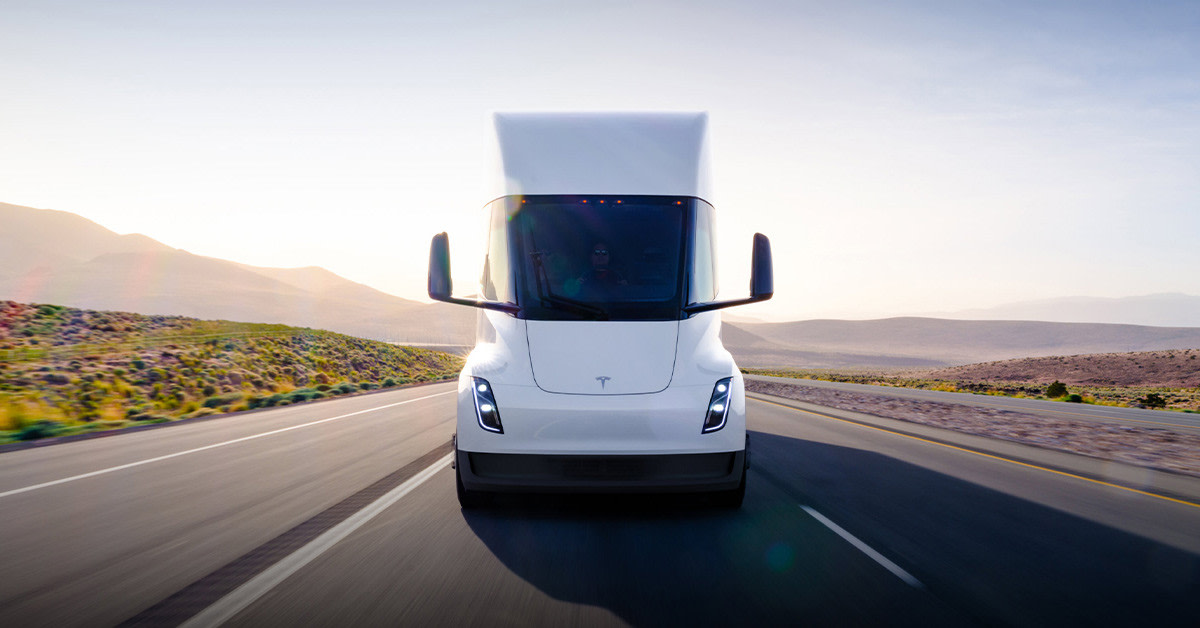
Photo: Tesla
This August archive examines the questions European fleets needed answered before the September reveal.
The original August account said Tesla would reveal European specifications and launch details for its battery-electric Class 8 truck at IAA Transportation in Hannover, Germany, in September. That is more meaningful than simply shipping a North American Semi across the Atlantic for a motor-show appearance. Europe has its own weight, dimension, axle and operating rules, and fleets will need numbers built around those rules before they can judge the truck.
Tesla’s current Semi specification sheet already looks formidable: up to 500 miles (about 805 km) of estimated range, energy consumption of 1.7 kWh per mile, up to 800 kW of drive power, and charging at up to 1.2 MW. But the European launch will be decided by a less glamorous set of questions: how much freight it can legally carry, where it can recharge, how quickly Tesla can support it and whether the operating cost beats established electric and diesel trucks on real routes.
What Tesla Has Actually Announced
Tesla’s announcement is a promise to provide the missing European details at IAA Transportation, not confirmation that customer deliveries have begun. Auto Express reports that the European specification will be unveiled at the Hannover show, while the current Tesla Semi product page still presents the truck through its North American configurations.
Those configurations are now much more detailed than the old 300-mile and 500-mile headlines:
- The Standard Range Semi is rated at an estimated 325 miles (523 km), weighs less than 20,000 lb (9,072 kg) as a tractor and has an 82,000-lb gross combination weight rating.
- The Long Range version is rated at an estimated 500 miles (805 km) and lists a 23,000-lb (10,433-kg) tractor curb weight.
- Both are listed at 1.7 kWh per mile (about 1.06 kWh/km), with up to 800 kW of drive power and 60 percent of range recoverable in 30 minutes on Tesla’s 1.2-MW Megacharger.
Tesla also attaches important conditions to the range figure. Its estimate assumes an 82,000-lb gross combination weight, 55-mph driving, 20°C weather, flat ground and an aerodynamic dry-van trailer. That is useful engineering context, but it is not the same thing as a European motorway test through winter weather, hills and tightly timed freight operations.
Payload Matters More Than The 805-Km Headline
A truck makes money by moving cargo, not by winning a range comparison.
The Long Range Semi’s 23,000-lb tractor weight converts to roughly 10.4 tonnes before a trailer or cargo is attached. That number cannot be dropped directly into a European payload calculation because tractor, trailer and axle configurations differ, and Tesla has not yet published the homologated European setup.
European rules do give zero-emission trucks some help. The EU’s weights-and-dimensions framework allows the maximum authorized weight of a vehicle combination containing a zero-emission motor vehicle to rise by up to two tonnes to compensate for the propulsion technology. The consolidated EU directive also provides additional allowances for zero-emission motor vehicles in several axle configurations.
That allowance does not make battery mass disappear. A fleet still needs to know the Semi’s legal axle loads, fifth-wheel position, compatible trailer arrangement and usable payload on the exact routes it operates. A truck that can travel 800 km but gives away too much revenue-generating cargo capacity can lose to a shorter-range rival that fits the job more efficiently.
This is one of the most important numbers Tesla can disclose in Hannover. European operators need a payload figure they can compare with an equivalent diesel tractor and with electric models already being sold by established truck manufacturers.
Megawatt Charging Is A Capability, Not Yet A Network
Tesla says its Megacharger can deliver up to 1.2 MW and add 60 percent of the Long Range Semi’s range in 30 minutes. That is the right scale for heavy freight: a few hundred kilowatts can be fast for a passenger EV but painfully slow for a truck carrying several times the battery capacity.
The difficult part is putting that power where trucks can actually use it. A depot may need several megawatts of grid capacity if multiple tractors return together. Public sites need pull-through layouts, room for trailers, reliable payment and booking systems, and enough power that a queue does not destroy a driver’s schedule.
Europe is building toward that future, but it is not finished. A 2025 European Commission market-readiness assessment estimated that 410,000 to 600,000 zero-emission heavy-duty vehicles could be operating by 2030, with battery-electric models accounting for as much as 90 percent of them. The Commission concluded that mandatory infrastructure targets would provide only about half of the charging and refuelling capacity expected to be needed by then, leaving the rest for additional market investment.
Tesla therefore needs to explain whether European Semi customers will rely on dedicated Megachargers, the emerging Megawatt Charging System ecosystem, or both. It also needs to show how sites will be deployed beyond a few showcase corridors. The connector matters, but site access, uptime and grid power matter more.
Europe Is Not Waiting For Tesla
The Semi may be the most recognizable electric heavy truck, but it will not enter an empty market.
Volvo Trucks, Scania, Mercedes-Benz Trucks, MAN and other manufacturers already offer battery-electric heavy vehicles for regional, distribution and selected long-haul work. The European Commission counted more than 100 battery-electric heavy-duty models in series or small-series production by the end of 2024 across the market’s vehicle segments.
That competition changes Tesla’s pitch. Passenger-car buyers may accept a new service model and some uncertainty to own a distinctive EV. Commercial fleets are buying uptime. They need predictable parts supply, roadside support, repair turnaround, financing, charging planning and software that fits dispatch operations.
Tesla can still bring useful advantages. Its focus on efficiency is exactly right for a vehicle that consumes enormous amounts of energy, and a centrally positioned driver seat could simplify left- and right-hand-drive production. The company’s experience integrating vehicles, charging hardware and software could also create a strong fleet package.
But European truck makers understand local bodies, trailers, regulations and service expectations. Tesla has to prove that its integrated approach is better enough to offset being the newcomer.
What Fleets Need After the September Reveal
A regional offer is useful only if Tesla publishes a proper European specification sheet rather than another range promise.
Fleets should look for five things:
- Homologated range and consumption under a clearly defined European duty cycle.
- Tractor curb weight, axle ratings and usable payload with common European trailer configurations.
- Charging compatibility and rollout plans, including whether the truck can use open MCS sites as well as Tesla hardware.
- Order timing, pricing and delivery markets, instead of a broad statement that Europe is coming later.
- Service and uptime support for fleets operating across borders.
The 500-mile figure earns attention. The freight math will earn orders.
Tesla has spent years turning the Semi from a dramatic 2017 reveal into a truck with published range, weight, power and charging specifications. Europe is the tougher test because it forces the company to translate those specifications into a different regulatory and operating system. If Tesla provides credible payload, charging and support plans, the Semi could become a serious new option for European fleets. Without those details, Europe’s electric-truck transition will carry on without waiting for Tesla.
Related Articles
- Scania’s 105-Truck Wibax Deal Shows Where Electric Freight Works First
- ChargeHub and AXSO Want to Reserve Electric Truck Charging Before the Megawatt Chargers Arrive
- How Electric Trucks Are Reshaping Commercial Transportation
Update, October 2026: This analysis was written before Tesla’s September 2026 European presentation. North American figures are not European homologated specifications.