Kia EV5 vs Sportage Hybrid and PHEV: Which Fits Canada Best?
The Kia EV5, Sportage Hybrid and Sportage PHEV put three electrified powertrains in one Canadian showroom. Here is who should buy each one.
The 2027 Kia EV5, 2026 Sportage Hybrid and 2026 Sportage Plug-in Hybrid turn one Canadian showroom visit into a powertrain decision.
All three are five-seat compact SUVs. All three reduce gasoline use. Their ownership demands, however, are completely different. The Sportage HEV works like a familiar gas vehicle, the PHEV rewards regular charging without making it mandatory, and the EV5 makes home charging the centre of the experience.
This is a specification and ownership-context comparison, not a road test. Prices, range, efficiency and equipment reflect Kia Canada information checked on August 13, 2026.
Quick Verdict
Choose the 2026 Sportage HEV EX if there is no reliable place to plug in. It starts at $41,495 MSRP, includes AWD, produces 232 hp and uses a rated 6.7 L/100 km combined. It is the simplest and least expensive answer.
Choose the 2027 EV5 Wind FWD if home charging is dependable and longer trips fit the local fast-charging network. Its 457-km range, 81.4-kWh battery, heat pump and native NACS port make it the best route away from gasoline. At $47,495 MSRP, it costs $6,000 more than the Sportage HEV EX before fees, incentives and financing differences.
Choose the 2026 Sportage PHEV EX if a typical day stays inside 53 km, but remote travel or uncertain public charging makes a full EV uncomfortable. It starts at $46,395 MSRP, comes with AWD and has the strongest output here at 268 hp. The catch is simple: without frequent charging, it becomes an expensive hybrid carrying a larger battery.
The late-arriving EV5 Light FWD has a tempting $43,495 MSRP, but Kia schedules it for the fourth quarter of 2026 and lists 335 km of target range. It is a wait-and-save option, not the most useful comparison for someone shopping today.
| Item | 2026 Sportage HEV EX | 2026 Sportage PHEV EX | 2027 EV5 Wind FWD |
|---|---|---|---|
| Starting MSRP | $41,495 | $46,395 | $47,495 |
| Drivetrain | AWD | AWD | FWD; Wind AWD is $49,995 |
| Output | 232 hp; 271 lb-ft | 268 hp; 271 lb-ft | 214 hp; 218 lb-ft |
| Battery | 1.49 kWh | 13.8 kWh | 81.4 kWh |
| Electric range | Not plug-in | 53 km, then hybrid operation | 457 km |
| Energy use | 6.7 L/100 km combined | 2.8 Le/100 km weighted; 6.6 L/100 km in hybrid operation | Electricity use varies by trim and conditions |
| Charging | None required | About 2 hours on Level 2 | About 7 hours on 11-kW Level 2; about 30 min from 10–80% DC under Kia conditions |
| Maximum towing | 2,000 lb | 2,000 lb | 1,800 lb |
| Best fit | No home charging | Short daily driving plus long remote trips | Reliable home charging and readiness to go electric |
Kia EV5 and Sportage electrified SUV gallery
14
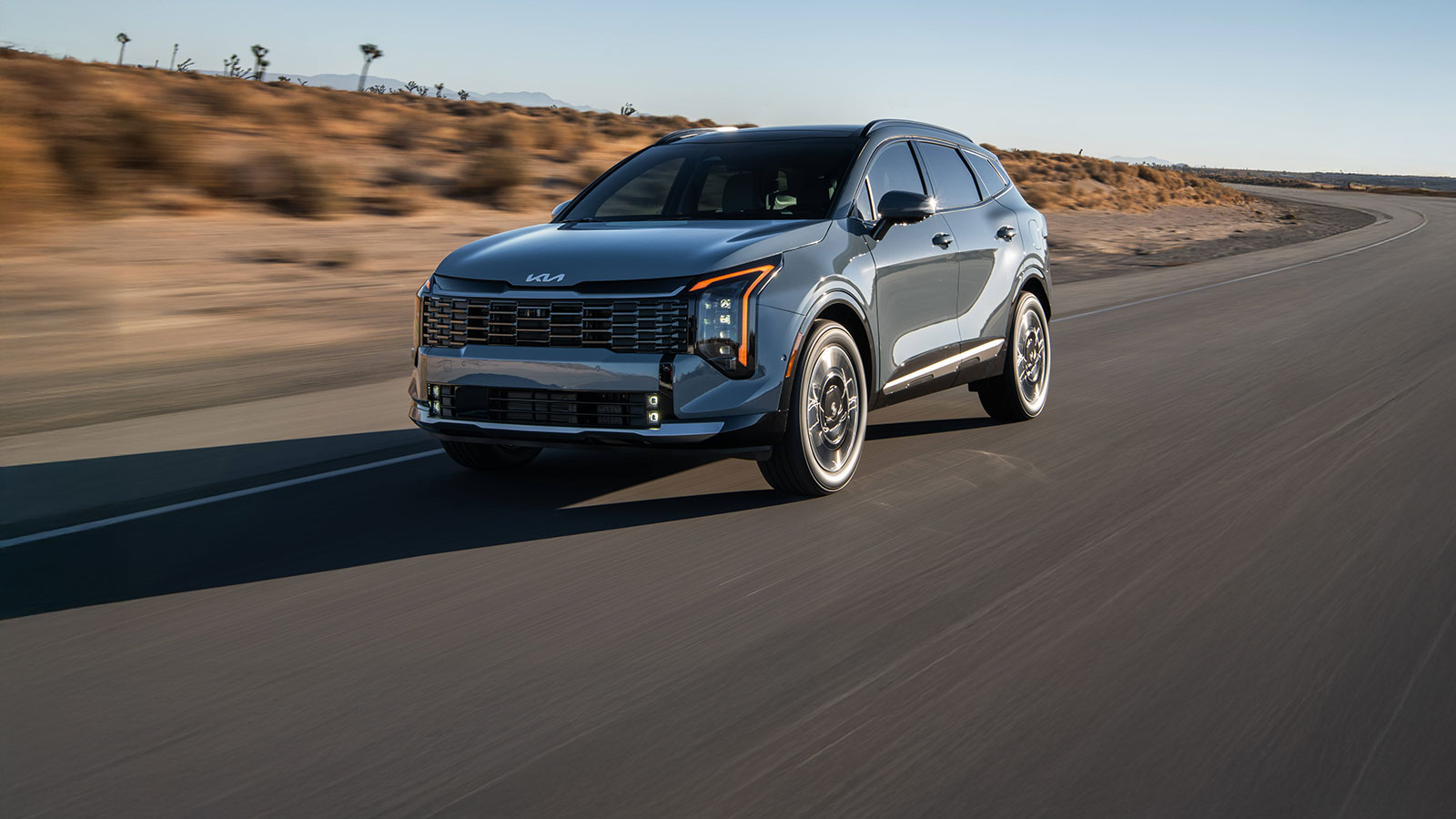
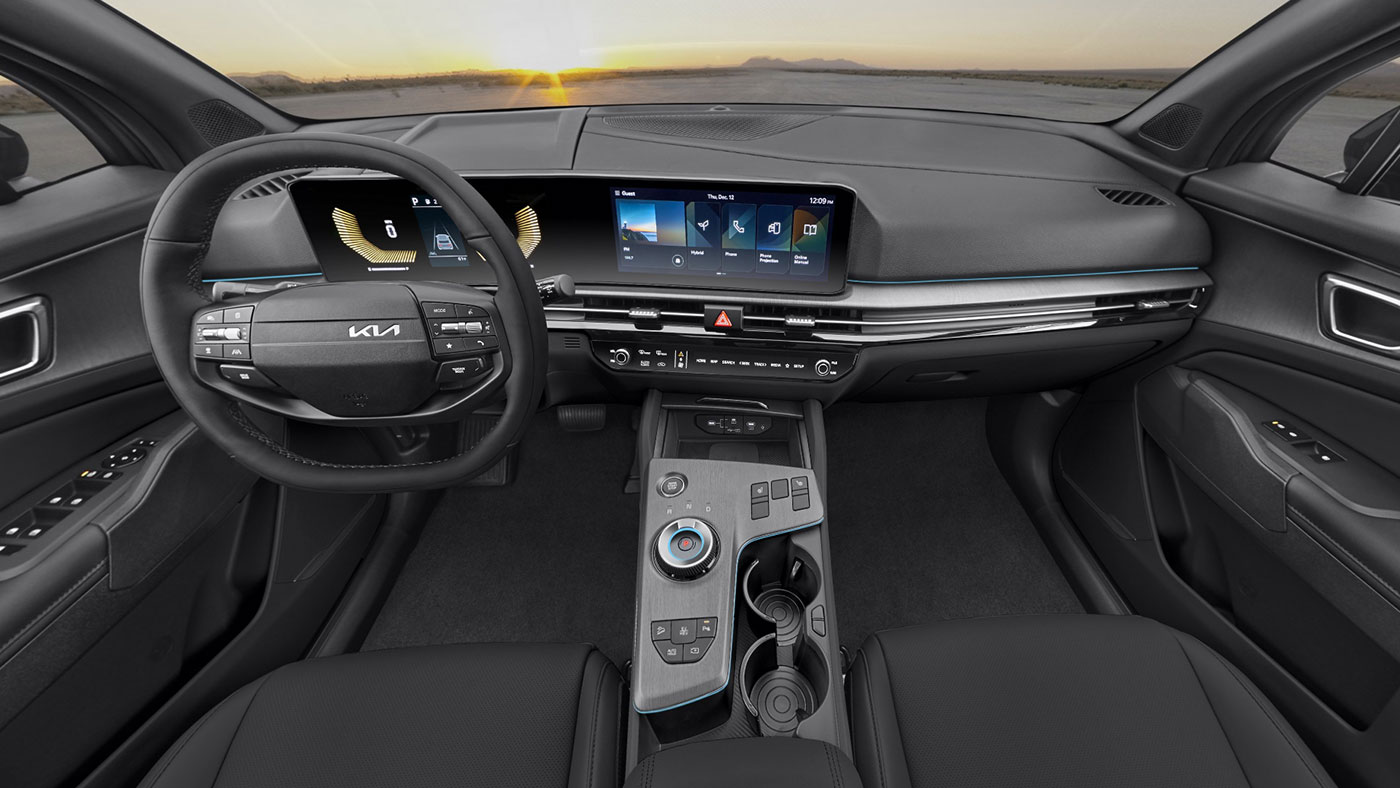
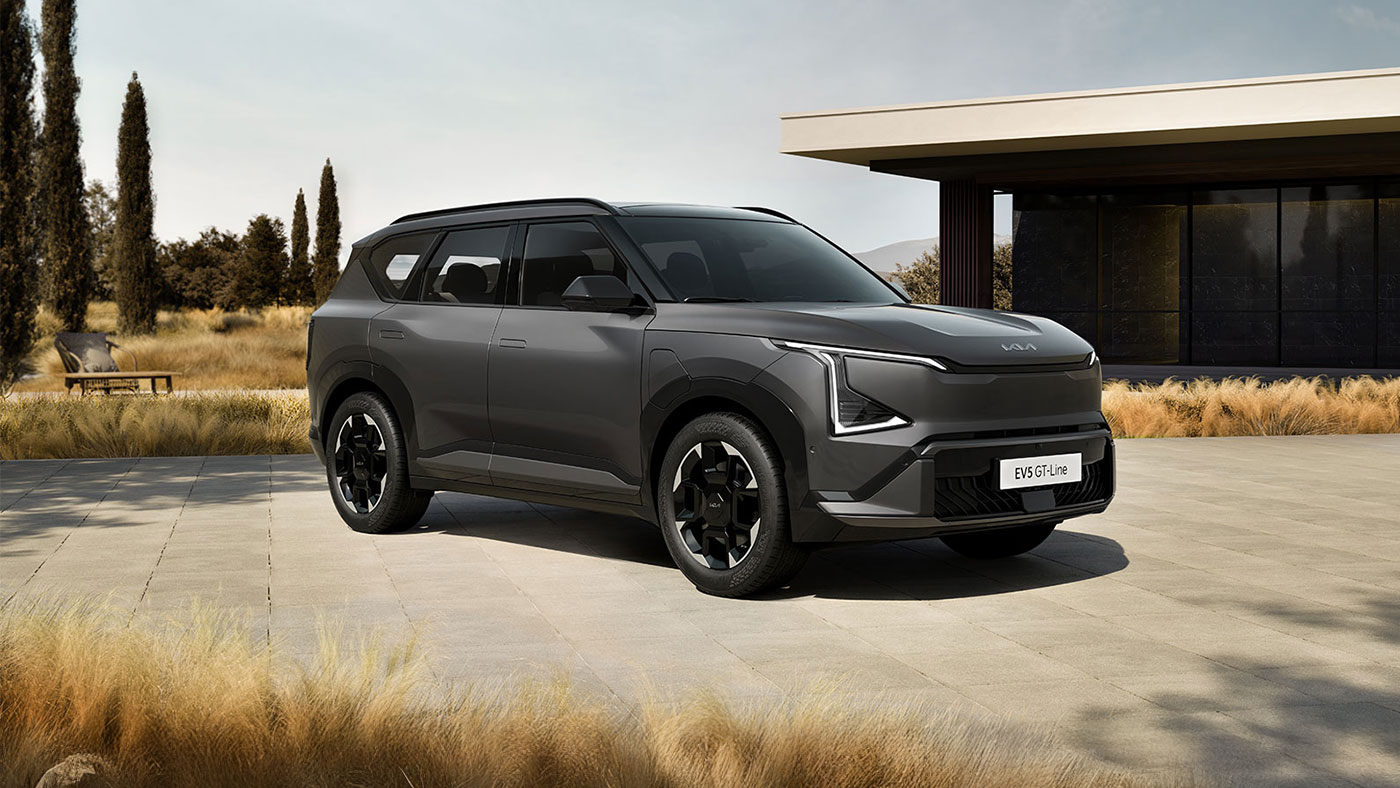
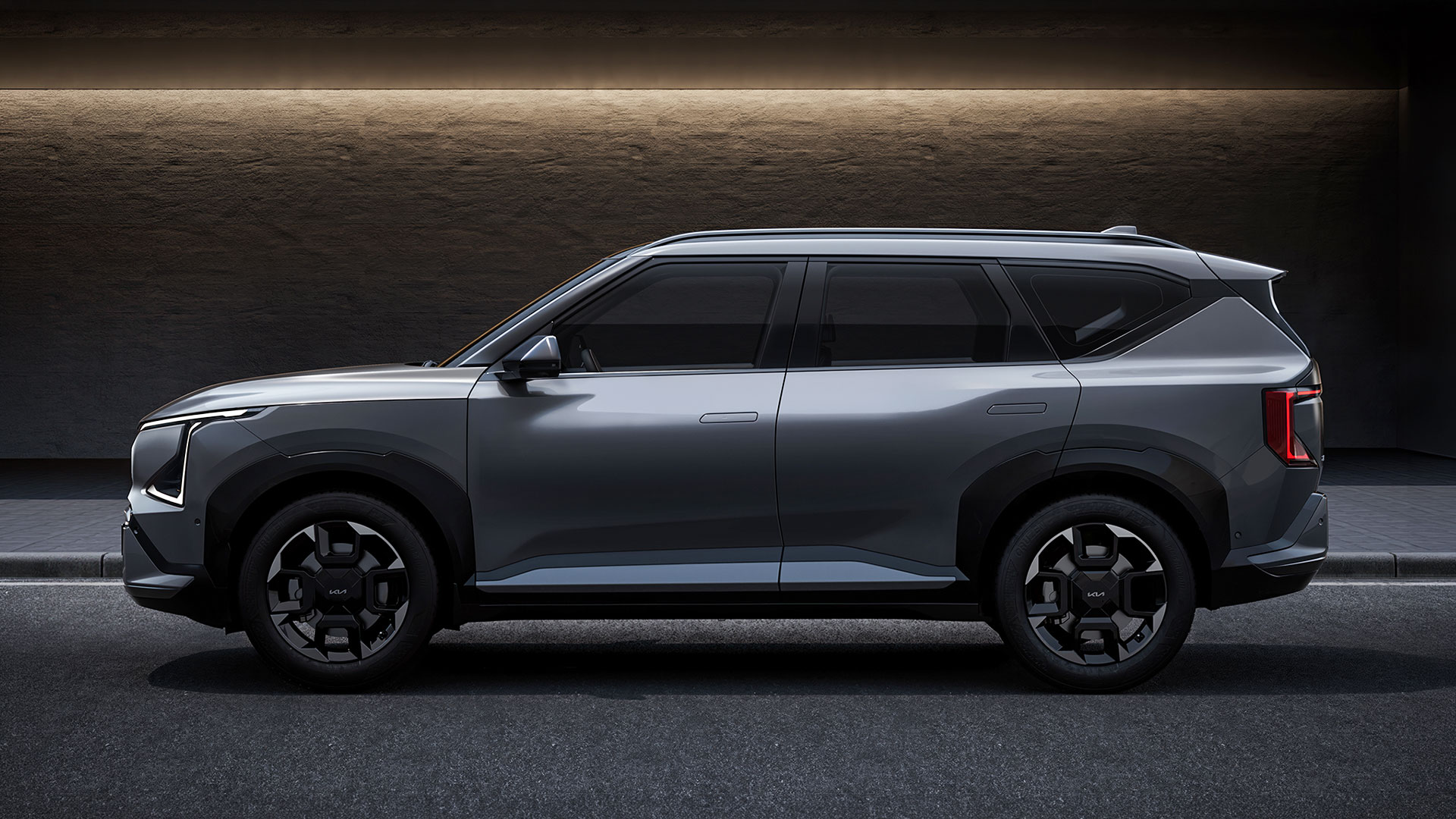
The EV5 is the dedicated electric choice, with native NACS charging and 457 km of range in Wind FWD form. Image: Kia Canada.
The Hybrid Is the Easy Default
The Sportage HEV EX is the choice that asks the least from its owner. There is no charging cable, app routine or public-network planning. Fill its 52-litre tank, drive it like any other automatic SUV and let the small battery recover energy while slowing down.
Kia pairs a 1.6-litre turbocharged engine with an electric motor for 232 hp and 271 lb-ft. AWD and a six-speed automatic are standard. The official 6.7 L/100 km combined figure is not EV-like energy use, but it is useful efficiency in a roomy SUV that can travel wherever gasoline is available.
The HEV also has the strongest cargo configuration of the Sportage pair. Kia lists up to 1,119 litres behind the second row with the adjustable floor lowered and up to 2,087 litres with the seats folded. The PHEV battery removes the lower-floor option.
At $41,495 MSRP, the HEV leaves a meaningful price buffer for fuel. Whether an EV eventually recovers its higher purchase cost depends on electricity and gasoline prices, annual kilometres, insurance, financing, incentives and how long the vehicle stays in the household. A blanket payback claim would be misleading.
The hybrid’s limitation is equally clear: every longer trip still burns gasoline. It reduces consumption without eliminating the pump.
The PHEV Only Wins If It Gets Plugged In
The Sportage PHEV EX costs $4,900 more than the HEV EX and only $1,100 less than the EV5 Wind FWD. That narrow gap makes charging behaviour more important than the badge.
Its 13.8-kWh battery provides 53 km of electric range. A driver with a 35-km round-trip commute and overnight charging could complete much of the week on electricity. A driver covering 100 highway kilometres each day will use gasoline regularly after the electric portion is depleted.
Kia estimates about two hours on a Level 2 charger. That is short enough to refill at home overnight or during a workday. Repeatedly ignoring the plug sacrifices the reason to carry the extra battery and charging hardware.
The PHEV has two practical advantages over the EV5. It includes AWD at its base price, and a fuel stop restores long-distance range in minutes. That matters for cottages, remote winter routes, towing trips and households that cannot tolerate a charging detour.
It is also the most powerful option in this comparison, with 268 hp and 271 lb-ft. Performance is not the main reason to choose it, but the extra output helps explain why the PHEV feels like more than an economy trim on paper.
The compromise appears in cargo packaging. Kia lists 977 litres behind the second row and 1,855 litres with it folded. Those remain useful numbers, but both trail the HEV’s maximum configuration. The PHEV also retains an engine, transmission, exhaust and fuel system, so it does not offer the mechanical simplicity of a battery EV.
The EV5 Is the Best Electric Answer, Not the Universal Answer
The EV5 Wind FWD is where Kia’s full-electric argument becomes convincing. Its 81.4-kWh battery supports 457 km of range, while a heat pump helps manage cabin heating more efficiently in cold conditions. The 214-hp front motor makes 218 lb-ft of torque.
Kia also sells a Wind AWD for $49,995. Its two motors produce 261 hp and 284 lb-ft, while official range falls to 439 km. That $2,500 step is reasonable for buyers who genuinely need AWD, though winter tires still matter more for braking and cornering grip than the number of driven axles.
Every Canadian EV5 uses a native NACS port. Kia estimates about 30 minutes for a 10-to-80-percent DC session on a suitable 350-kW charger under favourable conditions. The EV5 is a 400V vehicle, so the charger’s headline output does not mean the vehicle will accept 350 kW. Charging speed changes with battery temperature, state of charge and station conditions.
At home, Kia estimates roughly seven hours from 10 to 100 percent on an 11-kW Level 2 supply. Most owners will add only the energy used that day, not perform a near-empty refill every night.
The EV5 makes the most sense with a dedicated home parking space and a properly installed Level 2 circuit. Condo dwellers with dependable workplace or building charging can also make it work. Depending entirely on public fast charging erodes both convenience and cost predictability.
For road trips, use MotorLinks’ NACS buyer guide to check more than the connector. Station compatibility, route coverage, payment and cold-weather charging behaviour all matter.
AWD Changes the Price Comparison
Comparing base prices alone flatters the EV5 because the Wind FWD drives only its front wheels. Both Sportage electrified models include AWD.
The equivalent EV5 Wind AWD costs $49,995. That puts it $8,500 above the Sportage HEV EX and $3,600 above the Sportage PHEV EX. In exchange, it eliminates gasoline, adds considerably more electric range than the PHEV and produces more torque than either Sportage.
Do not choose AWD reflexively. A front-drive EV5 on excellent winter tires may fit an urban household better than an AWD model on compromised all-seasons. Choose the second motor for steep roads, deep snow, loose surfaces or a repeatable traction need—not as a substitute for winter rubber.
The Sportage pair also leads for towing. Both can pull up to 2,000 lb when properly equipped, versus 1,800 lb for the long-range FWD EV5. Trailer weight, tongue load, passengers and cargo must all stay within the exact vehicle’s ratings. Towing will also cut EV range, sometimes substantially.
Match the Powertrain to the Parking Space
The buying decision starts at home, not on the specification sheet.
Buy the Sportage HEV if:
- home or workplace charging is unavailable or unreliable
- the lowest upfront price matters most
- long remote drives happen often
- maximum cargo flexibility and 2,000-lb towing are useful
Buy the Sportage PHEV if:
- there is reliable Level 2 charging
- most daily driving fits inside 53 km
- gasoline backup removes a real travel constraint
- standard AWD and 268 hp justify the price over the HEV
Buy the EV5 Wind FWD if:
- home charging is easy
- 457 km covers normal travel with a sensible winter buffer
- eliminating gasoline matters more than standard AWD
- the household is comfortable planning occasional fast-charging stops
Buy the EV5 Wind AWD if:
- the EV5 ownership case works and the routes genuinely benefit from AWD
- 439 km leaves enough cold-weather and highway margin
- the $49,995 MSRP fits after comparing full written quotes
Wait for the EV5 Light FWD if the $43,495 price is essential, 335 km is enough and a Q4 2026 arrival fits the schedule.
Incentives and Complete Quotes Matter
Do not compare these vehicles using MSRP alone. Freight, dealer fees, paint, accessories, financing rates, insurance and available government programs can change the order.
EV and PHEV eligibility can also depend on the exact trim, transaction value, buyer, delivery date and remaining program funding. Check MotorLinks’ current Canadian EV incentive guide, then ask the dealer to show any incentive on the written purchase agreement.
Compare like with like: the Sportage HEV EX, Sportage PHEV EX and EV5 Wind are equipped differently. A cheaper trim that needs several options may not produce the lowest drive-away price.
Bottom Line
The Sportage HEV EX is the rational default. It is the least expensive, needs no plug, includes AWD and delivers useful family-SUV efficiency.
The EV5 Wind FWD is the best choice for a household ready to go electric. Its 457-km range, heat pump, NACS port and $47,495 MSRP create a strong package if charging at home is routine.
The Sportage PHEV EX occupies the narrow middle. It makes sense for a disciplined charger whose daily driving is short but whose longer routes still favour gasoline. If it will rarely be plugged in, buy the HEV. If home charging is easy and public charging fits the travel pattern, buy the EV5.
FAQ
Which one should Canadians buy?
Choose the Sportage HEV without charging access, the EV5 Wind with reliable home charging, or the Sportage PHEV when a 53-km electric commute and gasoline backup match the same household.
Which is cheapest?
The Sportage HEV EX starts at $41,495 MSRP. The Sportage PHEV EX is $46,395 and the EV5 Wind FWD is $47,495. The $43,495 EV5 Light FWD is scheduled for Q4 2026.
How far do the plug-in models drive electrically?
Kia lists 457 km for the EV5 Wind FWD and 439 km for the Wind AWD. The Sportage PHEV provides 53 km before continuing as a hybrid.
Which one can tow more?
The Sportage HEV and PHEV are rated for up to 2,000 lb when properly equipped. Kia lists 1,800 lb for the long-range FWD EV5.
Sources
- Kia Canada: EV5, Sportage HEV and Sportage PHEV comparison
- Kia Canada: 2027 EV5 specifications
- Kia Canada: 2026 Sportage Hybrid specifications
- Kia Canada: 2026 Sportage PHEV specifications