2026 Cadillac OPTIQ vs Volvo EX40 in Canada: Range or City-Friendly Size?
The Cadillac OPTIQ offers more range, cargo space and native NACS, while the Volvo EX40 is smaller and quicker to fast-charge. Here is how Canadians should choose.
The 2026 Cadillac OPTIQ and 2026 Volvo EX40 arrive at almost the same point on a Canadian luxury-EV shopping list, but they solve very different problems.
The Cadillac is closer to a mid-size crossover in usable space. It offers rear- or all-wheel drive, up to 510 km of Cadillac-estimated range, a native NACS charging port and a cabin built around a 33-inch display. The Volvo is a true compact: shorter, easier to place in a city and sold in Canada with a 402-hp Twin Motor AWD powertrain, up to 418 km of Natural Resources Canada-rated range and a stated 28-minute fast-charge window.
Pricing tilts toward Cadillac. The OPTIQ starts at $57,399 MSRP in rear-wheel-drive Luxury or Sport form, while an AWD Luxury or Sport starts at $61,899. Volvo lists the EX40 from $64,995 MSRP before freight and other charges. That makes the closest AWD-to-AWD Cadillac comparison about $3,100 less before fees and options.
Quick Verdict
Choose the Cadillac OPTIQ Luxury AWD if this will be the household’s main vehicle. It costs less than the entry EX40 before fees, has more listed range, provides more cargo room, uses a native NACS port and includes Super Cruise capability with a three-year trial. Its 440-hp AWD system also edges the Volvo on output.
Choose the Volvo EX40 Core Twin Motor if the vehicle will spend more time in a downtown garage than on a cross-country route. The Volvo is substantially shorter, still very quick, supports Apple CarPlay and Android Auto, and gives a simple 10-to-80-percent charging estimate. It is the more manoeuvrable choice, but buyers pay more for less range and cargo capacity.
The short answer is OPTIQ for the stronger all-round value; EX40 for the smaller footprint and familiar Volvo interface.
| Item | 2026 Cadillac OPTIQ | 2026 Volvo EX40 |
|---|---|---|
| Canadian base MSRP | $57,399 RWD; $61,899 AWD | $64,995 Twin Motor AWD |
| Maximum listed range | 510 km RWD; 450 km AWD (Cadillac-estimated) | 418 km Twin Motor AWD (NRCan estimate) |
| Battery | 85 kWh | 82 kWh nominal |
| AWD output | 440 hp, 498 lb-ft | 402 hp, 494 lb-ft |
| DC fast charging | 150 kW; up to 122 km added in about 10 minutes | 10–80% in about 28 minutes at a 200-kW charger |
| Charge port | Native NACS | CCS; adapter needed for supported Tesla Superchargers |
| Maximum cargo with rear seats folded | 1,614 litres | 1,400 litres |
| Maximum towing | Check the exact configuration with Cadillac | 900 kg (1,984 lb) |
| Phone integration | Google built-in; no factory Apple CarPlay or Android Auto | Google built-in, Apple CarPlay and Android Auto |
| Best fit | Primary family EV and frequent longer trips | Urban luxury EV and smaller garages |
2026 Cadillac OPTIQ and Volvo EX40 comparison gallery
14
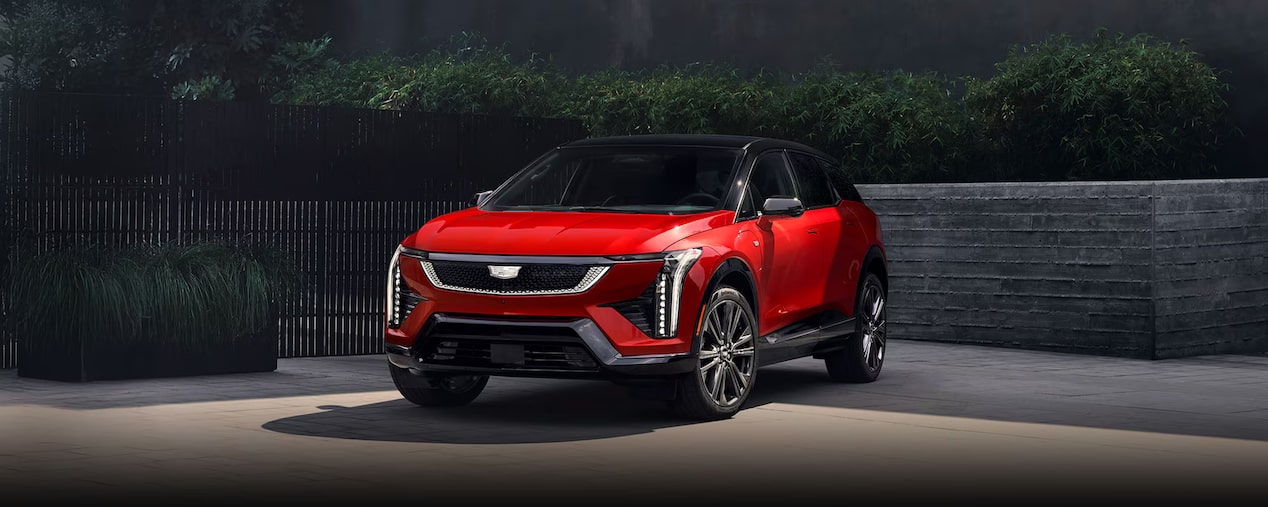
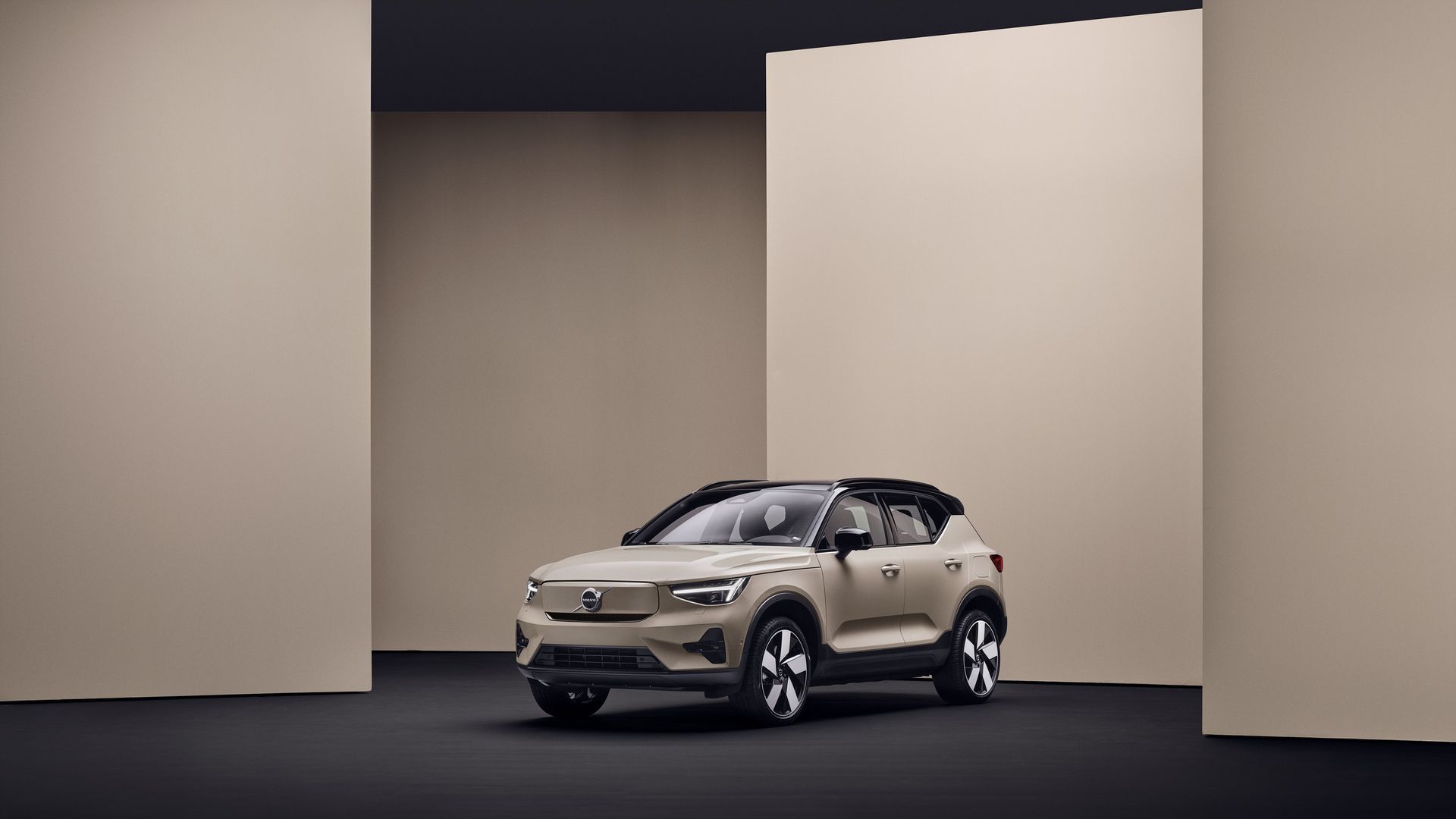
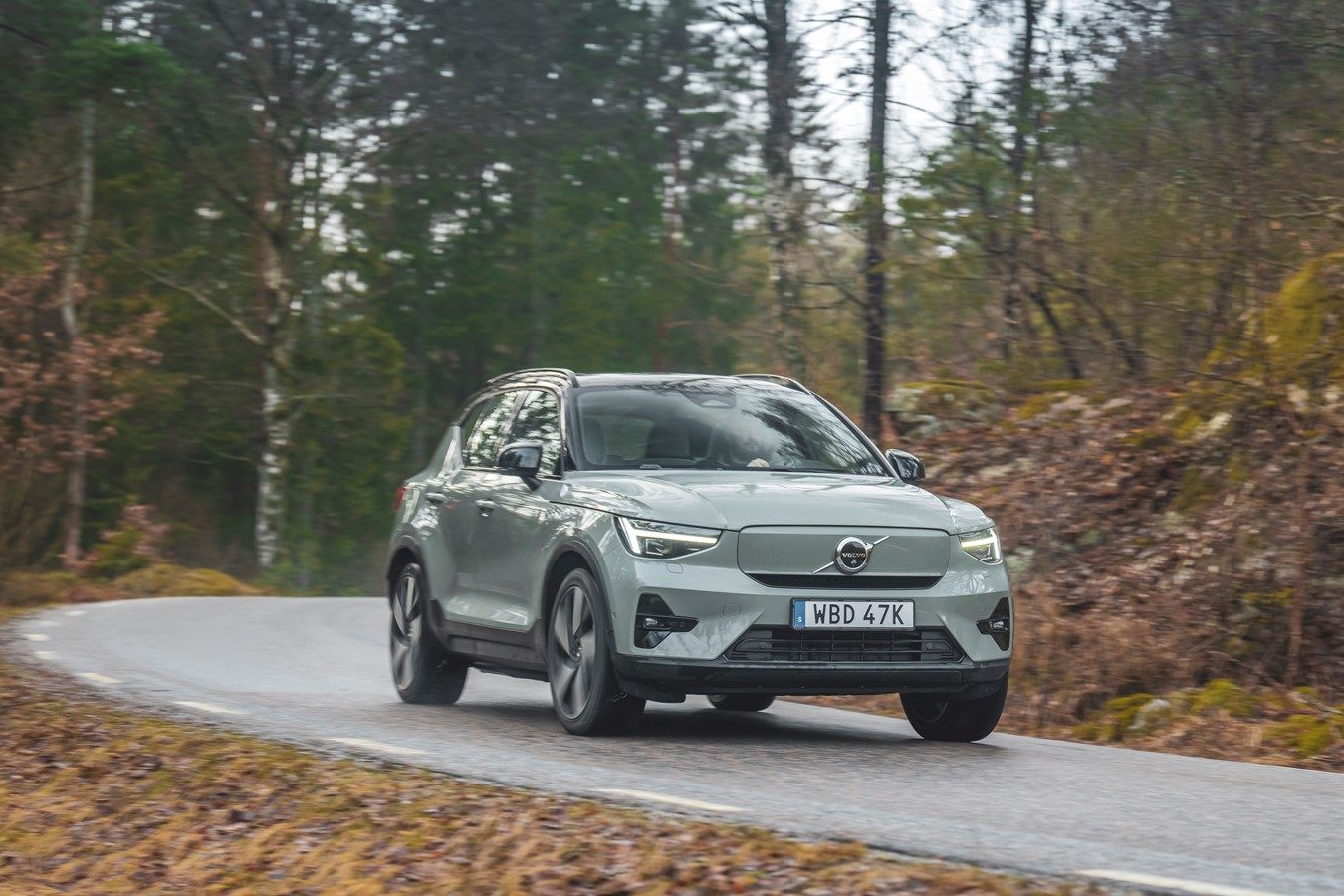
The OPTIQ is the longer, roomier choice, and its low roofline keeps the extra size from looking bulky.
The Cadillac Is the Better Value Before Incentives
The OPTIQ does not merely start lower because Cadillac offers a rear-drive base model. Its AWD price is lower too.
Canadian pricing data for the 2026 lineup puts the Luxury and Sport RWD trims at $57,399 MSRP. Adding dual-motor AWD raises either to $61,899. Premium Luxury and Premium Sport start at $60,499 with rear-wheel drive or $64,999 with AWD.
Volvo Canada lists the 2026 EX40 from $64,995 MSRP. Freight, dealer charges, paint, wheels and packages can move either vehicle well beyond those entry figures, so the clean comparison is MSRP against MSRP rather than one brand’s advertised all-in price against the other’s base sticker.
That leaves the AWD Cadillac about $3,096 less before fees. The RWD OPTIQ widens the opening-price gap to $7,596, although a rear-drive Cadillac and an all-wheel-drive Volvo are not direct winter-drivetrain equivalents.
Neither vehicle should be assumed to qualify for a purchase rebate based on the headline alone. Program rules, transaction value, buyer eligibility and remaining funding can change. Check MotorLinks’ Canadian EV incentive guide and make the retailer show any incentive on the written quote before treating it as part of the budget.
The OPTIQ Has the Range Advantage
Cadillac Canada lists up to 510 km of Cadillac-estimated range for the single-motor RWD OPTIQ and up to 450 km for an available dual-motor AWD configuration. Volvo Canada lists up to 418 km for the 2026 EX40 Twin Motor AWD.
The fairest AWD-to-AWD reading gives Cadillac a 32-km advantage on the published maximums. The rear-drive OPTIQ stretches that gap to 92 km, but it also gives up the Volvo’s standard AWD traction.
Those figures are not perfectly interchangeable. Volvo describes its 418-km number as based on an NRCan-approved test cycle, while Cadillac labels its public figures as Cadillac estimates. Wheels, trim equipment, weather and driving speed will affect the real result. The useful conclusion is not that every OPTIQ will travel exactly 32 km farther; it is that Cadillac offers the larger official range buffer.
For a driver who regularly links Toronto and Ottawa, Calgary and Edmonton, or Vancouver and the Interior, that buffer has value. For a commuter covering 40 km a day and charging at home, both vehicles provide ample everyday range.
Volvo Publishes the Better Full-Session Charging Claim
The charging comparison needs more care than comparing peak numbers.
The EX40 uses an 82-kWh nominal battery, and Volvo estimates a 10-to-80-percent charge in about 28 minutes at a 200-kW DC fast charger. The company also says route guidance can precondition the battery before arrival, which is particularly important in Canadian winter temperatures.
The OPTIQ uses an 85-kWh pack and peaks at 150 kW. Cadillac says the standard model can add up to 122 km of estimated range in about 10 minutes at a suitable public DC charger. That sounds strong, but it is not the same measurement as a complete 10-to-80-percent session, and Cadillac does not publish an equivalent time on its Canadian model page.
Volvo therefore wins on transparency and likely ideal full-session speed. Cadillac counters by starting with more range, so the driver may arrive later or need fewer charging stops in the first place.
Home charging is competitive. Both include an 11-kW-class onboard setup, while Cadillac offers a 19.2-kW AC charger on selected configurations. That higher AC rate only matters with a compatible circuit and wall unit; many Canadian homes will use a lower-amperage Level 2 installation that cannot supply the maximum.
Native NACS Gives Cadillac the Easier Road-Trip Connector
The 2026 OPTIQ has a native NACS port, allowing direct physical connection at compatible Tesla Superchargers. Cadillac says its app provides access to more than 250,000 public chargers across Canada and the United States, including compatible Supercharger locations.
The EX40 uses CCS. Volvo supports access to compatible Tesla Superchargers through an approved NACS adapter, but that means carrying and using an extra piece of hardware. The Volvo’s own 28-minute claim also assumes a suitable 200-kW DC charger, not that every Supercharger will reproduce the same result.
Native fit does not make every NACS site compatible or fast. Network authorization, charger generation, voltage and vehicle software still matter. MotorLinks’ native NACS versus adapter guide explains why the plug shape is only one part of the charging experience.
For a new EV purchase intended to last many years, Cadillac has the cleaner connector arrangement. The Volvo remains usable across both networks, but its owner must manage the adapter transition.
The OPTIQ Is More Family SUV Than Compact Crossover
The size difference is easy to underestimate when both vehicles are marketed as compact luxury SUVs.
Cadillac publishes up to 1,614 litres of cargo capacity with the rear seats folded. Volvo lists a maximum of 1,400 litres in the same broad seating configuration and up to 536 litres with the second row raised. Measurement methods can differ, but the Cadillac’s longer body and roomier rear section create a real practical advantage.
The Volvo’s counterargument is urban usability. At 4,440 mm long, it is nearly half a metre shorter than the Cadillac. That matters in narrow condo spaces, century-home garages and street parking. It also makes the EX40 easier to place without turning it into a tiny, underpowered runabout.
Bring the actual bulky items to a showroom when possible. A stroller, dog crate, hockey bag or rear-facing child seat tells more than a maximum-litre figure. Families should also check rear visibility in the OPTIQ because its low roof and sloped rear glass trade some visual openness for style.
Cadillac Wins the Dashboard Spectacle; Volvo Keeps Phone Choice
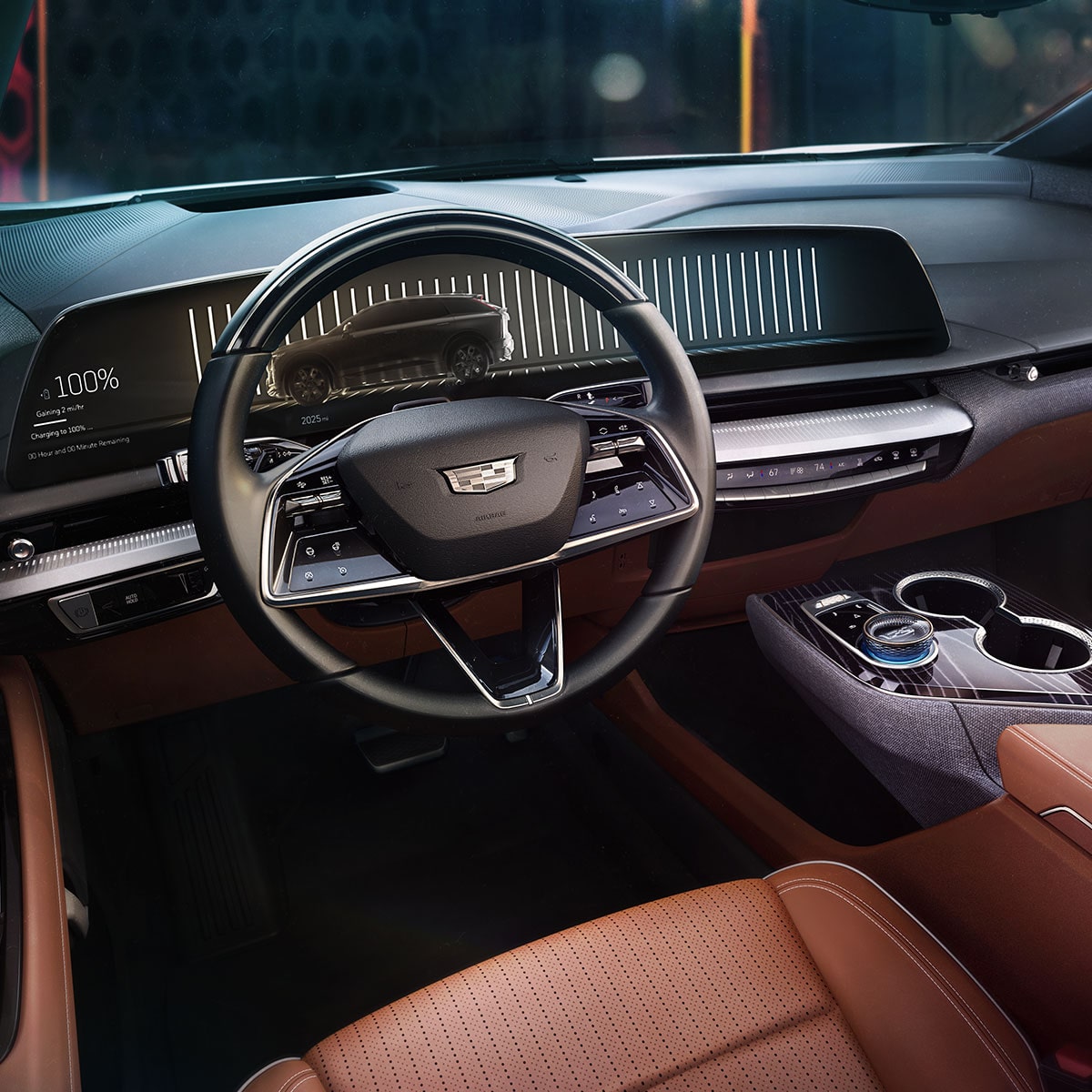
The OPTIQ’s cabin is built around a curved 33-inch diagonal display with Google built-in. A 19-speaker AKG audio system and Super Cruise hands-free driver-assistance capability with a three-year trial are standard highlights. The presentation feels more overtly luxurious than the Cadillac’s entry price suggests.
The catch is phone integration. Cadillac does not provide factory Apple CarPlay or Android Auto, so owners are expected to use the built-in Google environment and GM’s connected services. That approach works well for route planning and battery-aware navigation, but buyers who want their phone interface on every trip should test the system before signing.
Volvo combines a 9-inch centre touchscreen with a 12.3-inch driver display, Google built-in, Apple CarPlay and Android Auto. The screens look modest next to Cadillac’s wall of pixels, yet the system preserves more choice for drivers already invested in a phone ecosystem.
Volvo includes its Google digital-services package for four years, after which new terms or fees may apply. Cadillac also notes that subscriptions are required for the full functionality of some connected features. Ask both retailers what remains operational without a paid data plan after the included period ends.
Which One Makes More Sense in a Canadian Winter?
The AWD OPTIQ and EX40 both make sense for winter, but drivetrain alone is not the deciding factor. Good winter tires matter more for braking and steering on snow and ice.
The Cadillac’s extra published range provides more cold-weather margin. Its native NACS port also removes the adapter step at compatible Superchargers, which is welcome when a connector is covered in road spray and the temperature is well below freezing.
The Volvo is easier to manoeuvre in a tight snow-lined parking space, and its route-based battery preconditioning supports the stated fast-charge performance when the navigation system is used properly. Its 900-kg tow rating may also cover a small utility trailer, although towing will reduce range substantially.
Whichever vehicle wins, arrange home charging before delivery and precondition the cabin while plugged in. That saves battery energy for the road instead of using it to warm a cold interior after departure.
Who Should Buy Each One?
Choose the Cadillac OPTIQ if:
- maximum range and cargo room matter more than compact dimensions
- native NACS access will simplify regular highway travel
- Super Cruise capability and the 33-inch display are meaningful features
- a lower AWD starting MSRP leaves more room for winter tires and home charging
- the vehicle needs to work as the household’s primary family EV
Choose the Volvo EX40 if:
- a short footprint is essential for the garage or daily parking
- standard AWD and quick acceleration are priorities
- Apple CarPlay or Android Auto is non-negotiable
- a published 28-minute 10-to-80-percent estimate is more useful than maximum range
- the household prefers Volvo’s understated cabin and control layout
Bottom Line
The Cadillac OPTIQ is the stronger buy for most Canadian households. It undercuts the EX40 in comparable AWD form, offers more range and cargo capacity, delivers slightly more power and has the more future-friendly native NACS setup. Cadillac has given its smallest EV enough substance that the luxury badge is not doing all the work.
The Volvo EX40 remains the smarter city choice. It is substantially shorter, properly quick, easy to understand and friendlier to drivers who want Apple CarPlay or Android Auto. Its 28-minute charging estimate is also clearer than Cadillac’s distance-added claim.
Start with the OPTIQ if both fit the garage. Move to the EX40 when compact dimensions and phone integration are worth more than the Cadillac’s range, room and lower entry price.
FAQ
Should Canadians buy the Cadillac OPTIQ or Volvo EX40?
Choose the OPTIQ for range, cargo capacity, native NACS and overall value. Choose the EX40 for its shorter city-friendly footprint, clear fast-charging estimate and support for Apple CarPlay and Android Auto.
Which has more range, the Cadillac OPTIQ or Volvo EX40?
Cadillac lists up to 510 km for the rear-wheel-drive OPTIQ and up to 450 km for AWD. Volvo lists up to 418 km for the EX40 Twin Motor AWD.
Which charges faster, the Cadillac OPTIQ or Volvo EX40?
Volvo gives the stronger directly usable session estimate: 10 to 80 percent in about 28 minutes at a 200-kW charger. Cadillac lists a 150-kW peak and up to 122 km added in about 10 minutes, not a directly comparable 10-to-80-percent time.
Does the 2026 Cadillac OPTIQ have a native NACS port?
Yes. The 2026 OPTIQ uses a native NACS port. The EX40 uses CCS and needs a compatible adapter for supported Tesla Supercharger access.