Rivian R2 vs Hyundai IONIQ 5 in Canada: Wait or Buy Now?
The Rivian R2 promises more adventure capability and up to 531 km of range, but the Hyundai IONIQ 5 is available now with known Canadian pricing and 18-minute charging.
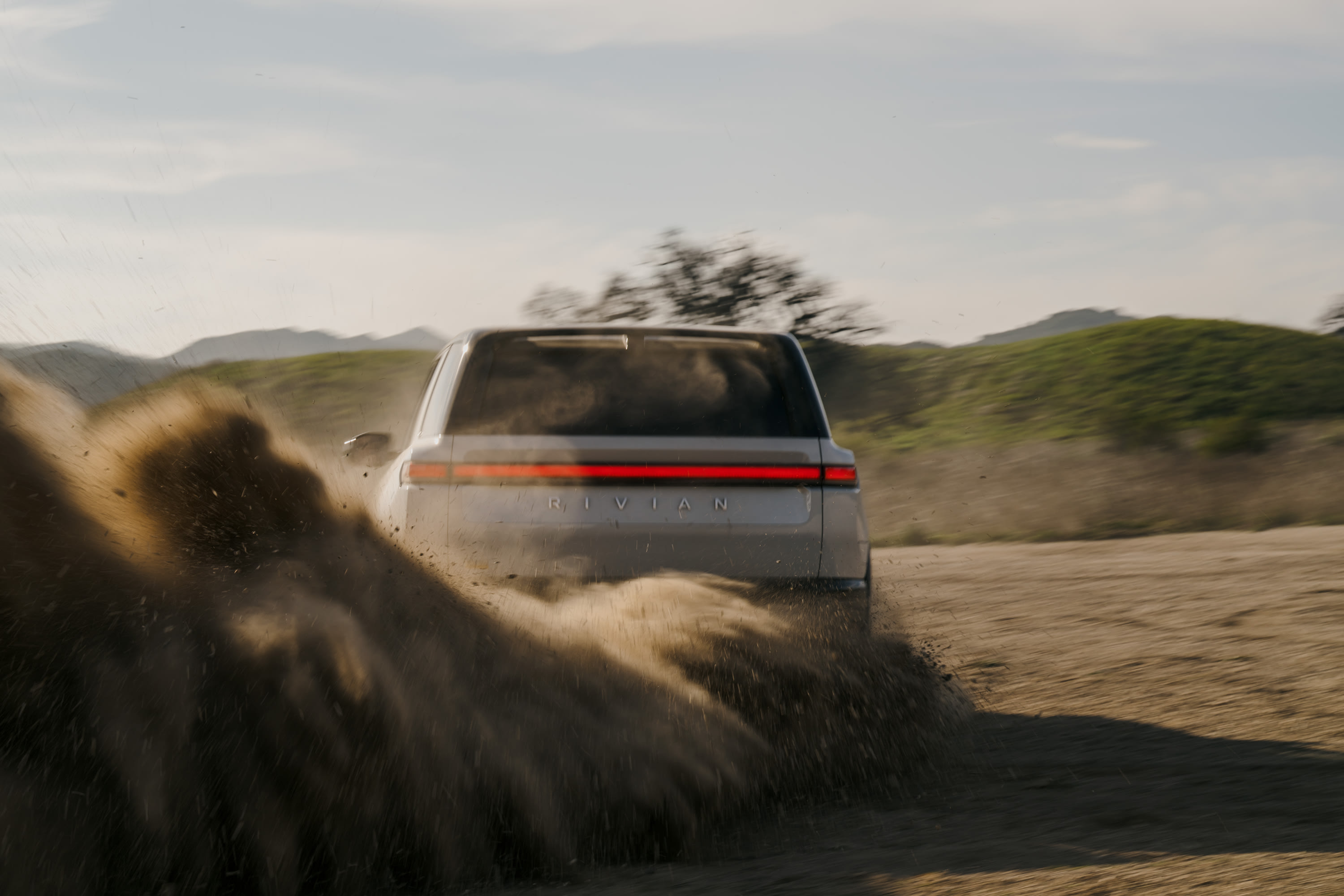
Image: Rivian
The Canadian story still begins with a wait. Rivian’s Canadian product page says coming 2027, without a local price or a more precise delivery window.
That puts Canadian shoppers in a different position from early U.S. buyers. The R2 is no longer an abstract concept: its range, performance, dimensions, storage, charging and towing claims are published, although the Canadian page does not verify completed U.S. deliveries. Yet someone who needs an electric crossover in Canada can already order a 2026 Hyundai IONIQ 5 with known prices, up to 504 km of listed range and one of the quickest published charging times in the class.
The decision is not simply Rivian personality versus Hyundai practicality. It is whether the R2’s extra capability is worth a year of uncertainty.
October Source Update
Hyundai’s generic URL now opens 2027. The recovered 2026 page still supports the 504-km RWD figure and 18-minute claim; its visible 463-km heading conflicts with that detailed 504-km legal note, so match drivetrain and year. The adapters are J1772 for AC and CCS1 for DC, despite the manufacturer’s loose “CCS AC” wording. Rivian’s “under 30 minutes” is an upper-bound claim, not an exact 30-minute result from which a precise 12-minute gap can be calculated. The Canadian page is not evidence of completed U.S. deliveries.
Quick Verdict
Buy the Hyundai IONIQ 5 if the vehicle is needed in the next 12 months. It has published Canadian pricing, an established sales and service network, a native NACS port, up to 504 km of listed range and a claimed 10-to-80-per-cent charging time of about 18 minutes on a suitable 350-kW charger.
Wait for the Rivian R2 if an upright cabin, 245 mm of ground clearance, greater towing capacity and a more outdoors-focused layout matter enough to accept unresolved Canadian pricing and timing. R2 Premium and Performance also carry a higher 531-km EPA-estimated range, though those will not necessarily be the affordable trims.
The clean answer is IONIQ 5 for availability, charging speed and certainty; R2 for capability, storage and character. A Canadian reservation holder should not abandon the R2 automatically, but should keep shopping until Rivian publishes a local price and delivery window.
Canada Comparison
| Item | Rivian R2 | 2026 Hyundai IONIQ 5 |
|---|---|---|
| Canadian timing | Coming in 2027; exact delivery window not published | Available to configure now |
| Canadian price | Not announced | $55,499 MSRP for Preferred Long Range; $57,499 MSRP for Preferred Long Range AWD, before additional fees |
| Listed range | 442 km Standard; 531 km Premium and Performance | 504 km Preferred Long Range RWD; 463 km Preferred Long Range AWD |
| Battery and drive | Battery capacity not stated on Canadian page; RWD Standard, AWD optional on Standard, dual-motor AWD on Premium and Performance | 84-kWh battery; RWD or dual-motor AWD |
| Charging claim | 240 km added in 15 minutes; 10-80% in under 30 minutes | 10-80% in about 18 minutes on a suitable 350-kW charger with the supplied CCS DC adapter |
| Charging port | Native NACS | Native NACS; Hyundai says J1772 AC and CCS1 DC adapters are included |
| Ground clearance | 245 mm | 160 mm |
| Maximum towing claim | 1,600 kg Standard; 2,000 kg Premium and Performance with appropriate equipment | Up to 1,588 kg for Long Range models when properly equipped |
| Published storage | 2,550 L total; 2,249 L rear area with seats folded; 812 L behind rear seats | 770 L behind rear seats; 1,680 L with rear seats folded |
| Best fit | Buyer willing to wait for a more capable, upright adventure EV | Buyer who values availability, rapid charging and known ownership support |
The Biggest Difference Is Certainty
Hyundai Canada lists the IONIQ 5 Preferred Long Range at a $55,499 MSRP and $58,536 including published additional fees, before sales tax. The Preferred Long Range AWD is listed at $57,499 MSRP and $60,536 with those fees. Dealer charges and incentives can change the transaction, so buyers still need a written quote, but the starting point is visible.
Rivian Canada does not yet provide that starting point. Its R2 page lists three model families and says they are coming in 2027, but Canadian prices are absent. Currency conversion is not a reliable substitute. Canadian pricing also has to account for equipment, freight, import costs, market positioning and whatever policy environment exists when deliveries begin.
That uncertainty matters more than a small range difference. A household replacing an aging vehicle, ending a lease or planning around a growing family cannot build a useful payment comparison from a blank price field.
There is also no sound basis to assume the R2 will qualify for a federal or provincial incentive. Eligibility depends on the final Canadian price, configuration, buyer, program rules, timing and available funding. MotorLinks’ Canadian EV incentive guide is the better place to check the framework when a delivery date is real.
For someone who needs a vehicle soon, the IONIQ 5 wins this section by default. The R2 becomes a serious Canadian buying recommendation only after Rivian turns 2027 into a price and a delivery month.
Range Depends on the Trim, Not Just the Badge
R2 has the higher headline number. Rivian lists 531 km of EPA-estimated range for both Premium and Performance. The rear-wheel-drive Standard is listed at 442 km, while a longer-range RWD option and dual-motor AWD are shown as optional, without separate Canadian range figures.
Hyundai lists 504 km for the rear-wheel-drive IONIQ 5 Preferred Long Range and 463 km for Preferred Long Range AWD. Both use an 84-kWh battery.
That produces two different comparisons:
- R2 Premium or Performance has a 27-km published advantage over the longest-range IONIQ 5.
- IONIQ 5 Preferred Long Range has a 62-km published advantage over the base R2 Standard figure.
Those estimates come from manufacturer information and will move in the real world. Winter temperature, highway speed, snow, cabin heat, tires, roof accessories and payload all reduce range. Rivian also notes that some R2 range figures remain preliminary estimates based on the EPA test cycle.
The R2 therefore does not win range automatically. It wins only in the upper variants, which are also likely to carry higher prices. Canadian buyers should compare the exact trim they can order, not the best number from one model against the cheapest version of the other.
Hyundai Has the Charging-Time Advantage
Both vehicles solve the connector question cleanly. The R2 has a native NACS port and Rivian says it can use more than 21,000 Tesla Superchargers across the United States and Canada. Hyundai also equips the current IONIQ 5 with a native NACS port and says the vehicle includes J1772 AC and CCS1 DC adapters.
The difference is speed on the right equipment.
Hyundai’s 800-volt electrical architecture supports a claimed 10-to-80-per-cent charge in approximately 18 minutes on a suitable 350-kW DC charger. Because many of those high-output chargers use CCS connectors, Hyundai specifies use of the supplied CCS DC adapter for that claim.
Rivian says the R2 can add 240 km in 15 minutes and move from 10 to 80 per cent in under 30 minutes under optimal conditions. That is perfectly usable for road trips, but the IONIQ 5’s published charging window is meaningfully shorter.
Neither number is guaranteed at every stop. Battery temperature, starting state of charge, charger output, weather and site conditions affect the result. Some Tesla Superchargers also will not deliver the IONIQ 5’s maximum possible charging performance. The Hyundai advantage appears most clearly at compatible high-power 800-volt chargers.
For frequent long-distance travel, IONIQ 5 has the better charging hardware case. R2 counters with straightforward Supercharger access and Rivian’s route planning, but the two claims do not establish an exact 12-minute difference: “under 30” is not a measured 30-minute session.
R2 Is the More Capable Utility Vehicle
The Rivian’s strongest argument starts where pavement gets rough.
R2 has 245 mm of ground clearance, compared with 160 mm in Hyundai Canada’s IONIQ 5 specifications. Rivian also publishes a 25-degree approach angle, 26-degree departure angle and 20.6-degree breakover angle. R2 Performance adds semi-active suspension and drive modes that include Rally, Snow and Soft Sand.
Towing also favours Rivian. R2 Standard is listed at 1,600 kg, while Premium and Performance rise to 2,000 kg with the appropriate equipment. Hyundai publishes a maximum of 1,588 kg for long-range IONIQ 5 models when properly equipped.
The IONIQ 5 is still useful. Its flat floor, sliding and reclining rear seat, vehicle-to-load capability and hatchback shape work well for commuting, family trips and camping. Available AWD and a standard battery-temperature management system also suit Canadian winters.
It is not built around the same mission. The Hyundai is a road-focused crossover with clever packaging. The Rivian is an adventure SUV scaled down from the R1 family. Buyers who regularly tow, reach rough trailheads or navigate deeply rutted cottage roads have a concrete reason to wait for R2.
Cargo Figures Need Context
Rivian publishes 2,550 litres of total storage, including the front trunk, rear cargo area and other compartments. It lists 812 litres behind the rear seat and 2,249 litres in the rear area with the seats folded.
Hyundai lists 770 litres behind the second row and 1,680 litres with it folded. The IONIQ 5 also has a small front compartment, but Hyundai does not combine it into the same headline total on the Canadian specification page.
R2 therefore has the larger published numbers, but manufacturer cargo methods are not always identical. Shape matters as much as volume. Rivian’s upright roof, split tailgate, drop-down rear glass and 40/20/40 rear seat should be especially useful for tall gear, dogs, skis and long items. Hyundai counters with a lower, car-like load floor and a rear seat that slides to trade passenger space for cargo room.
Anyone carrying a specific stroller, dog crate, bicycle or set of hockey bags should measure the opening and usable floor rather than buying from litres alone. On the available numbers and body shape, however, R2 looks like the stronger gear carrier.
Performance Is a Question of Priorities
R2 ranges from quick to genuinely wild. Rivian lists the 350-hp rear-wheel-drive Standard at 6.1 seconds from zero to 100 km/h, the 450-hp Premium at 4.8 seconds, and the 656-hp Performance at 3.8 seconds.
Hyundai lists up to 320 hp and 446 lb-ft of torque for the dual-motor IONIQ 5. The regular IONIQ 5 lineup is brisk without turning every commute into a performance demonstration. Buyers chasing much more acceleration can consider the separate IONIQ 5 N, but that is a different and substantially more expensive proposition.
The R2 Performance has the bigger number and more adjustable chassis. The IONIQ 5 has the advantage of being a known product available in rear- or all-wheel-drive form. Most households do not need either vehicle’s quickest version; winter tires, range, payment and charging access will affect daily ownership more often than a launch-control time.
Which One Should Canadians Choose?
Choose the 2026 Hyundai IONIQ 5 if:
- the vehicle is needed before 2027
- a known Canadian purchase price matters
- rapid 800-volt charging is a priority
- Hyundai dealer and service access is more convenient locally
- road-focused comfort matters more than off-road clearance
- 504 km of listed rear-wheel-drive range is enough
Wait for the Rivian R2 if:
- 245 mm of ground clearance solves a real use case
- up to 2,000 kg of towing capacity is useful
- the more upright cargo area and extra storage fit the household’s gear
- Rivian’s design, software and adventure character are worth waiting for
- the purchase can be delayed until Canadian price and delivery details arrive
Reservation holders should set a deadline. If Rivian has not provided a price and credible delivery window by the time the household must replace its current vehicle, shop the IONIQ 5 and other available EVs rather than waiting indefinitely.
Bottom Line
The R2 is the more interesting machine on paper. It offers better ground clearance, stronger towing, more published storage and up to 531 km of range while retaining a manageable two-row footprint. Those published specifications remain manufacturer claims; the Canadian page is not a completed-delivery receipt.
The IONIQ 5 remains the smarter Canadian purchase today. It can be priced, financed, inspected and delivered. Its 18-minute charging claim is a genuine road-trip advantage, its 504-km rear-wheel-drive range is competitive, and its native NACS port removes much of the old network anxiety.
Waiting for R2 makes sense when its capability answers a specific need. Waiting only because it is newer does not. Until Rivian publishes a Canadian price and delivery month, the Hyundai wins on the part of the comparison that matters most: it is a real decision rather than a forecast.
Should Canadians wait for the Rivian R2 or buy a Hyundai IONIQ 5?
Buy the IONIQ 5 if an EV is needed soon, known pricing matters or charging speed is a priority. Wait for R2 if its ground clearance, towing, storage and adventure-focused layout justify delaying the purchase until 2027 and accepting price uncertainty.
Which has more range, the Rivian R2 or Hyundai IONIQ 5?
R2 Premium and Performance have the higher listed figure at 531 km, versus 504 km for the rear-wheel-drive IONIQ 5 Preferred Long Range. The base comparison reverses that result: R2 Standard is listed at 442 km, while IONIQ 5 Preferred Long Range AWD is listed at 463 km.
Which charges faster, the Rivian R2 or Hyundai IONIQ 5?
The IONIQ 5 has the stronger published charging-time claim. Hyundai says it can charge from 10 to 80 per cent in about 18 minutes on suitable equipment, while Rivian says R2 completes the same window in under 30 minutes.
When is the Rivian R2 coming to Canada?
Rivian Canada says 2027. It has not published a Canadian price or more exact delivery window, so buyers should treat both as unresolved.
Sources
- Rivian Canada: R2 specifications and timing
- Hyundai Canada: 2026 IONIQ 5 overview
- Hyundai Canada: 2026 IONIQ 5 trims and pricing
- Hyundai Canada: 2026 IONIQ 5 specifications