
Nissan LEAF vs Tesla Model 3 in Canada: The $5,000 Rebate Changes the Math
The 2026 Nissan LEAF and Tesla Model 3 now sit remarkably close on Canadian price and range, but EVAP eligibility, body style and charging make the decision clearer.
The affordable-EV decision in Canada has taken a strange turn: the 2026 Nissan LEAF starts with a higher sticker price than the Tesla Model 3, yet the Nissan can finish remarkably close once the federal incentive is applied.
Nissan Canada lists the LEAF S Plus at $44,998 MSRP with 488 km of estimated range. Tesla Canada lists the Model 3 Premium rear-wheel drive at $39,490 MSRP with 463 km of EPA-estimated range.
That looks like a decisive Tesla price win until EVAP enters the equation. Transport Canada’s current Electric Vehicle Affordability Program list includes the LEAF S Plus and SV Plus for up to $5,000 on an eligible purchase or 48-month lease. Tesla’s own incentive page says the Model 3 is not currently eligible.
This is no longer a simple $39,490 Tesla versus $44,998 Nissan comparison. It is a close fight between two very different ideas of an affordable EV.
Quick Verdict
Choose the 2026 Nissan LEAF S Plus if you want the longer base-trim range, a crossover-style hatch, conventional instruments, a dealer-supported purchase and up to $5,000 in EVAP support on an eligible transaction. After that full federal incentive, its MSRP-minus-incentive figure is $39,998 before freight, fees, taxes and other deal terms.
Choose the Tesla Model 3 Premium RWD if you prefer a low, efficient sedan, Tesla’s software ecosystem and the cleanest Supercharger road-trip experience. Its $39,490 MSRP is lower before incentives, and Tesla lists faster range addition than Nissan, but the Model 3 currently misses EVAP.
The short answer is LEAF for rebate-supported crossover practicality; Model 3 for sedan efficiency and charging integration.
2026 Nissan LEAF and Tesla Model 3 buyer-guide gallery
14



The third-generation LEAF has become a small electric crossover, giving it a more upright and practical shape than the Model 3 sedan.
Canada Snapshot
| Item | 2026 Nissan LEAF S Plus | Tesla Model 3 Premium RWD |
|---|---|---|
| Listed MSRP | $44,998 before freight, fees and taxes | $39,490 before delivery-related fees, taxes and other charges |
| Current EVAP position | Listed by Transport Canada for up to $5,000 on an eligible purchase or 48-month lease | Tesla says Model 3 is not currently eligible |
| MSRP minus full 2026 EVAP | $39,998 before freight, fees and taxes, if the transaction qualifies | $39,490 before freight, fees and taxes; no current EVAP |
| Listed range | 488 km for S Plus | 463 km EPA estimated for Premium RWD |
| Battery | 75 kWh | Tesla does not publish usable battery capacity on its Canadian product page |
| Power and drive | 214 hp, 261 lb-ft, front-wheel drive | Rear-wheel drive; Tesla does not list horsepower on the Canadian product page |
| DC fast charging | 150 kW maximum; 10% to 80% in about 35 minutes under Nissan’s stated conditions | 175 kW maximum; up to 259 km added in 15 minutes under Tesla’s stated conditions |
| Charging ports | NACS for DC fast charging plus J1772 for Level 1 and Level 2 | NACS for AC and DC charging |
| Body style | Five-seat subcompact electric crossover/hatch | Five-seat electric sport sedan |
| Basic warranty | 3 years/60,000 km | 4 years/80,000 km |
| Battery warranty | 8 years/160,000 km | 8 years/160,000 km for RWD |
| Best fit | Buyer prioritizing incentive eligibility, range, hatchback access and familiar controls | Buyer prioritizing software, road-trip charging, sedan dynamics and a longer basic warranty |
The Rebate Almost Erases The Sticker-Price Gap
The Model 3 starts $5,508 below the LEAF on the two manufacturers’ published MSRP figures. EVAP can reduce the eligible LEAF transaction by up to $5,000, bringing the basic price comparison within $508.
That is the useful headline, but it is not the final invoice.
Tesla’s Canadian homepage currently shows a $42,132 starting price in Ontario, including freight, pre-delivery inspection and certain fees but excluding HST and licensing. Nissan’s published $44,998 figure is an MSRP. Freight, pre-delivery inspection, air-conditioning charges, dealer or regulatory fees, paint and accessories can change the comparison.
Transport Canada also uses the final transaction value, not just MSRP, to determine EVAP eligibility. For most imported EVs the transaction must be $50,000 or less, and the vehicle must be made in Canada or in a country with a Canadian free-trade agreement. The incentive is applied at the point of sale by a participating dealer or authorized seller, subject to the program rules and remaining funding.
The right comparison is therefore:
- a complete LEAF S Plus quote with EVAP shown on the bill of sale
- a same-day Model 3 order summary for the same province
- identical tax assumptions
- the same cash, finance or lease term
- every mandatory fee and optional accessory listed separately
Use MotorLinks’ Canadian EV incentive guide to check the current framework, then get the incentive treatment in writing before placing a non-refundable deposit.
The LEAF Has More Base-Trim Range
The LEAF S Plus carries the stronger official range number: 488 km, compared with 463 km for the rear-wheel-drive Model 3. That gives the Nissan a 25-km paper advantage.
Nissan pairs its 75-kWh battery with 214 horsepower and 261 lb-ft of torque driving the front wheels. It also says the liquid-cooled pack was developed with better extreme-temperature charging performance than the previous LEAF. That matters in Canada, where cold battery temperatures, cabin heat, winter tires, snow and highway speeds can all reduce the distance available between charges.
Tesla does not publish the Model 3 RWD’s battery capacity on its Canadian product page. It does list a zero-to-100-km/h time of 6.2 seconds, 463 km of range and a 175-kW Supercharging maximum.
The Nissan’s 25-km advantage is useful, not transformative. Either vehicle has enough published range for most commutes and routine weekly driving when home charging is available. A buyer regularly covering winter highway distances should estimate the hardest normal day rather than treating either official number as guaranteed.
The comparison changes if the budget stretches. Tesla lists the Model 3 Premium AWD at 570 km and 4.4 seconds from zero to 100 km/h, but its $49,990 MSRP puts it in a different price conversation and still outside the Model 3’s current EVAP position.
The Model 3 Is The Stronger Road-Trip Tool
Both cars use a native NACS connector for compatible DC fast charging, so neither needs a CCS-to-NACS adapter to enter the Tesla Supercharger ecosystem. That is a major improvement over the previous LEAF, which relied on CHAdeMO.
The experience is still easier in the Tesla.
Model 3 navigation can route through Superchargers, show charger information, prepare the battery for a fast-charging stop and connect payment to the driver’s Tesla account. Tesla says the RWD version can add up to 259 km in 15 minutes under its stated test conditions.
Nissan lists a 150-kW quick-charge maximum and says the LEAF can charge from 10% to 80% in about 35 minutes under suitable conditions. Its MyNISSAN app provides access to the Nissan Energy Charge Network, including compatible Tesla Superchargers, and supports Plug & Charge at compatible sites.
The LEAF has one clever hardware advantage at home: it keeps a separate J1772 port for Level 1 and Level 2 AC charging. That means an existing J1772 home, condo or workplace charger can plug in without an adapter, while the NACS port handles DC fast charging.
For a household that mostly charges overnight, the Nissan setup is easy to live with. For frequent long-distance travel, Tesla’s tighter integration and faster published range-addition claim make the Model 3 the stronger road-trip choice.
Crossover Practicality Or Sedan Efficiency?
The biggest everyday difference is visible before either car moves.
The third-generation LEAF is now a small crossover-style hatch. It has a higher roof, a large rear opening and a more upright seating position. That shape is useful for bulky groceries, strollers, pets and passengers who find it easier to step into a taller vehicle.
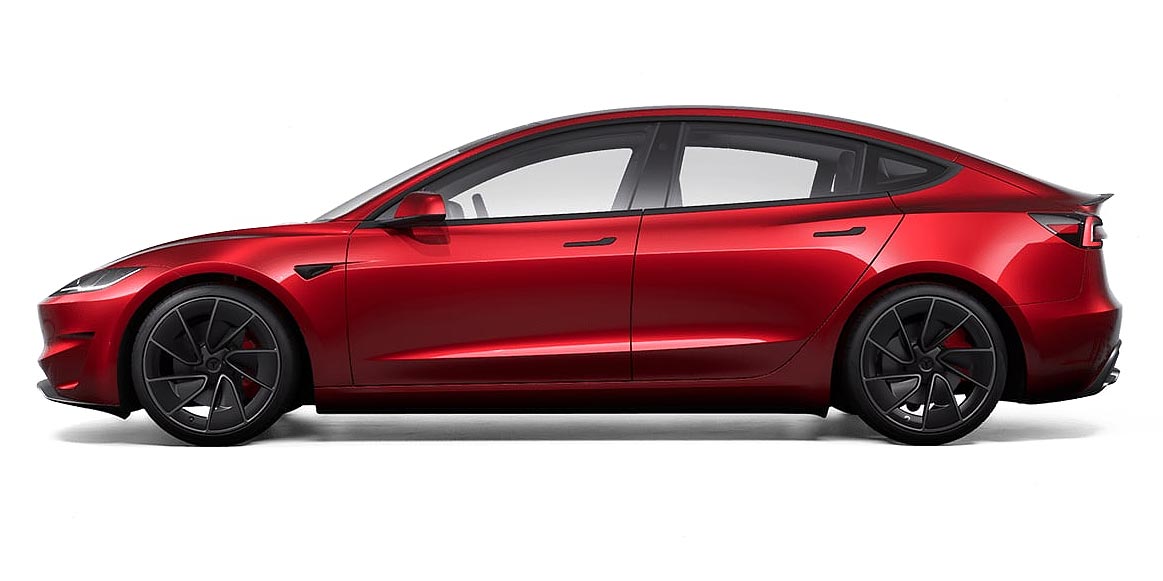
The Model 3 is a low electric sedan. Its aerodynamic shape supports efficiency and highway range, while its rear trunk, underfloor storage and front trunk spread cargo across several compartments. The opening is less useful for tall or awkward items than a hatch, even when the total storage is adequate.
Buyers should test this with actual life rather than a single cargo number. Bring the stroller dimensions, hockey bags, pet crate or mobility equipment that regularly travels in the car. A specification cannot show whether the opening and load floor work for a particular household.
The same applies to seating. The LEAF’s more upright cabin may be easier for rear passengers to enter. The Model 3’s lower driving position and sedan proportions may feel more natural to someone who does not want another crossover.
The Cabins Take Opposite Approaches
The LEAF uses a familiar dashboard layout. The S Plus has dual 12.3-inch displays, wireless Apple CarPlay and Android Auto, and physical controls for frequently used functions. Nissan also includes ProPILOT Assist and its Safety Shield 360 driver-assistance suite.
The Model 3 puts most controls on a central 15.4-inch touchscreen and adds an 8-inch rear display. There is no traditional instrument cluster in front of the driver. Tesla’s interface, phone key, navigation, charging and vehicle settings work as one ecosystem, but the screen-first layout is a genuine preference question.
This choice is clearer after 20 minutes in each car. Set the mirrors, change the cabin temperature, enter a route, pair a phone and find the driver-assistance settings. The better interface is the one that feels obvious during an ordinary commute.
Driver-assistance names should not decide the purchase. Nissan ProPILOT Assist and Tesla’s active-safety or Full Self-Driving (Supervised) features remain assistance systems. The driver must stay attentive and responsible for the vehicle.
Warranty And Service Split The Decision Again
Tesla lists a four-year/80,000-km basic warranty for the Model 3, one year and 20,000 km longer than Nissan’s three-year/60,000-km basic coverage.
Both list eight years/160,000 km of battery coverage for these base rear- or front-wheel-drive versions. Tesla states a minimum 70% battery-capacity retention during its warranty term. Nissan’s exact capacity-loss terms and exclusions should be checked in the Canadian warranty booklet.
Service works differently too. Nissan buyers have a conventional dealer network for sales and maintenance. Tesla handles much of the ownership process through its app, service centres and mobile service where available.
Before signing, check the distance to the nearest qualified service and collision-repair location, typical appointment availability and an insurance quote for the exact trim. A small purchase-price difference can disappear quickly if insurance or travel for service is substantially higher.
Who Should Buy Each One?
Choose the 2026 Nissan LEAF S Plus if:
- the EVAP-supported transaction is confirmed in writing
- 488 km of listed range provides useful winter breathing room
- a hatchback opening and more upright seating fit the household
- conventional instruments, Apple CarPlay and Android Auto matter
- an existing J1772 Level 2 charger should work without an adapter
- local Nissan dealer support is preferable
Choose the Tesla Model 3 Premium RWD if:
- the lower pre-incentive MSRP and complete order price are attractive
- Tesla navigation and Supercharger integration matter on road trips
- a low, efficient sedan is preferable to a small crossover
- the screen-first interface and Tesla app are appealing
- the longer basic warranty matters
- the cargo opening works for the household’s actual gear
Bottom Line
The Nissan LEAF is the better rebate-supported practical buy. EVAP turns a seemingly expensive $44,998 crossover into a close price rival for the Model 3, while the Nissan adds 25 km of listed range, a useful hatch and familiar cabin controls.
The Tesla Model 3 is the better integrated electric road-trip sedan. Its lower MSRP, quicker published charging claim, route planning and seamless Supercharger workflow remain powerful advantages even without the federal incentive.
Neither wins by enough to skip the paperwork. Compare complete written prices, confirm EVAP on the LEAF bill of sale, map the chargers used on real trips and make sure the body style fits the cargo that actually travels. Once those four checks are done, the right answer should be much clearer.
FAQ
Should Canadians buy a Nissan LEAF or Tesla Model 3?
Choose the LEAF for EVAP eligibility, a crossover body, longer base-trim range and conventional controls. Choose the Model 3 for sedan efficiency, quicker road-trip charging, Tesla software and direct Supercharger integration.
Which is cheaper in Canada, the Nissan LEAF or Tesla Model 3?
The Model 3 has the lower listed MSRP. The LEAF S Plus can receive up to $5,000 through EVAP on an eligible transaction, bringing its MSRP-minus-incentive figure within $508 of the Model 3’s listed MSRP. Compare complete quotes because freight and fee presentation differs.
Which has more range, the Nissan LEAF or Tesla Model 3?
The LEAF S Plus has the higher base-trim figure at 488 km, versus 463 km for the Model 3 Premium RWD. Tesla’s more expensive Premium AWD version is listed at 570 km.
Can both cars use Tesla Superchargers?
Yes. Both use native NACS for compatible DC fast charging. The Model 3 has the more integrated workflow because route planning, battery preparation, charger information and payment are built into Tesla’s ecosystem.
Sources
- Nissan Canada: 2026 Nissan LEAF overview, pricing and trims
- Nissan Canada: 2026 LEAF range, charging and features
- Tesla Canada: Model 3 specifications
- Tesla Canada: listed MSRP and incentive status
- Transport Canada: Electric Vehicle Affordability Program
- Transport Canada: EVAP vehicle list