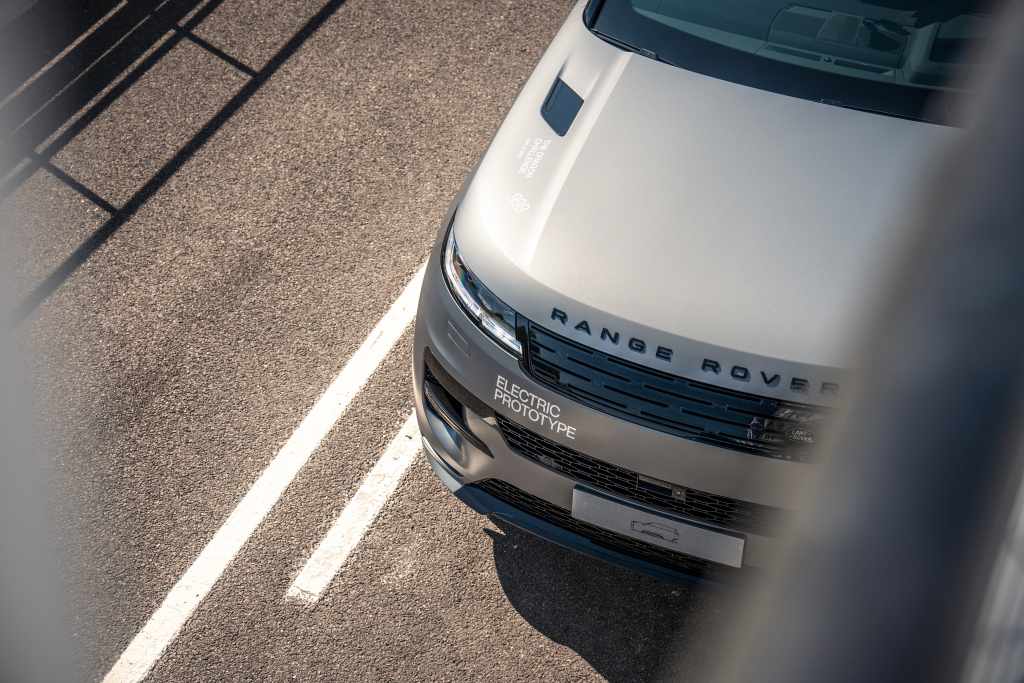
Range Rover Sport Electric vs P460e: Should Canadian Buyers Wait?
The Range Rover Sport Electric arrives later in 2026, but its key specs remain hidden. Here is when Canadian buyers should wait and when the P460e makes more sense.
Range Rover Sport shoppers now have a real reason to pause before signing an order.
The Range Rover Sport Electric is officially coming later in 2026, promising more power, more torque and sharper chassis tuning than any previous Sport. The catch is substantial: Range Rover has not yet published its battery capacity, driving range, charging speed, output, price or Canadian arrival date.
Meanwhile, the Range Rover Sport P460e plug-in hybrid is available now. It combines a 3.0-litre six-cylinder petrol engine with an electric motor, offers meaningful electric commuting range, and keeps a fuel tank for long or remote trips.
That makes this less of a conventional specification battle and more of a timing decision. The Electric is the one to wait for if a fully battery-powered Range Rover Sport is the goal. The P460e is the lower-risk choice if you need the vehicle now, cannot depend on public fast charging, or want one SUV for both electric commuting and long-distance travel.
Quick Verdict
Wait for the Range Rover Sport Electric if you have dependable home charging, can delay the purchase until late 2026 or beyond, and do not want an engine in your next luxury SUV. Its instant torque and model-specific chassis calibration could make it the most convincing performance version of the current Sport, but only if the missing range, charging and price numbers are competitive.
Buy the P460e now if your routes include cottages, remote highways, towing destinations or winter corridors where charging remains inconsistent. It can handle many daily trips on electricity while retaining quick petrol refuelling for journeys that exceed its battery range.
The cautious answer for Canadian buyers is to wait for the full Electric reveal, not necessarily for delivery. Once Range Rover publishes the battery, range, charging curve, port standard, tow rating and Canadian price, shoppers can make a proper comparison. Until then, placing a P460e order is easier to justify than committing emotionally to an EV with no public specification sheet.
| Question | Range Rover Sport Electric | Range Rover Sport P460e |
|---|---|---|
| Availability | Range Rover says later in 2026; Canadian timing not announced | Listed in the current Canadian Range Rover Sport lineup |
| Powertrain | Fully electric; motor layout not disclosed | 3.0-litre six-cylinder petrol engine plus electric motor |
| Output | Not disclosed; Range Rover promises more power and torque than before | 460 PS system output |
| Electric range | Not disclosed | Up to 118 km WLTP; up to 92 km manufacturer-estimated real-world range |
| Fast charging | Not disclosed | DC charging to 80% in under 60 minutes under ideal conditions |
| Canadian price | Not announced | Dynamic SE listed from $120,002 CAD before options and fees |
| Best fit | Home-charging buyer who wants a true EV and can wait | Buyer who wants electric commuting without planning every long trip around chargers |
Range Rover Sport Electric prototype details
13
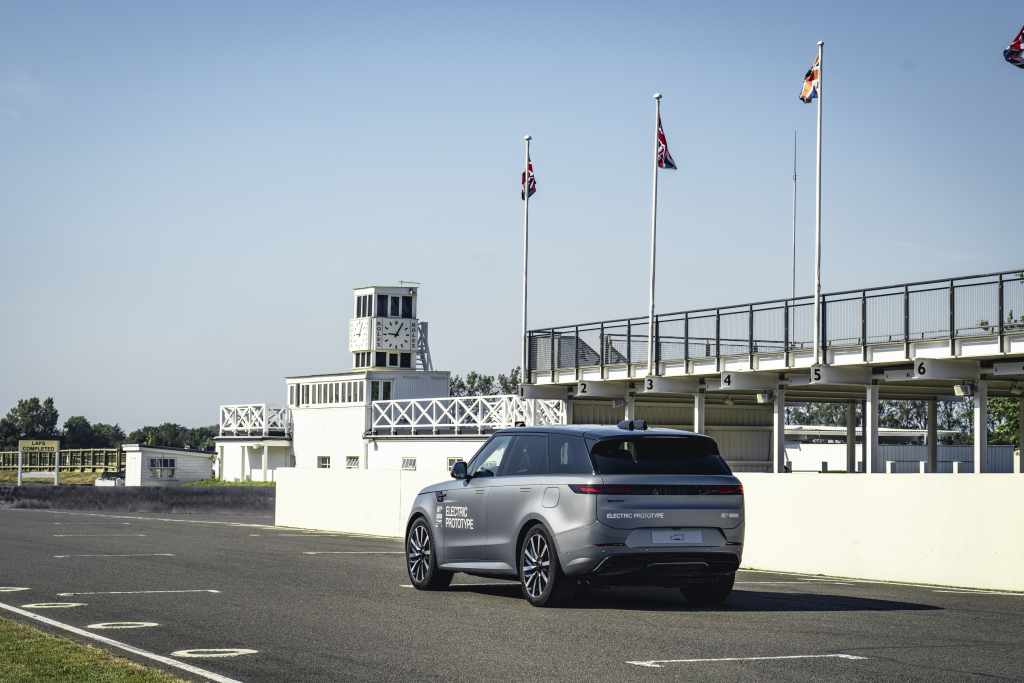
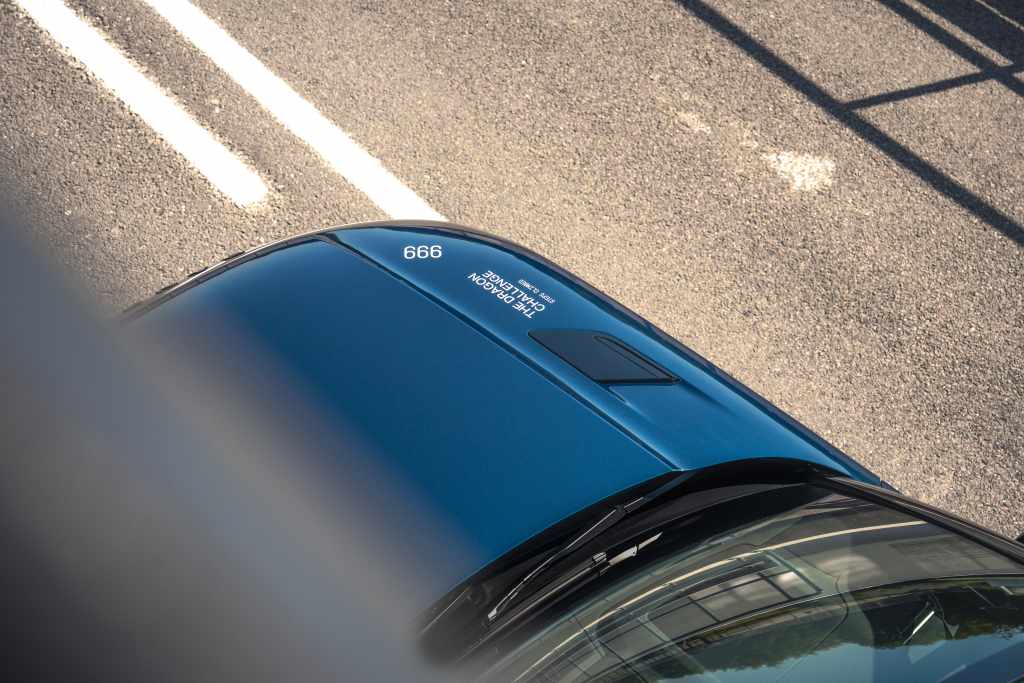
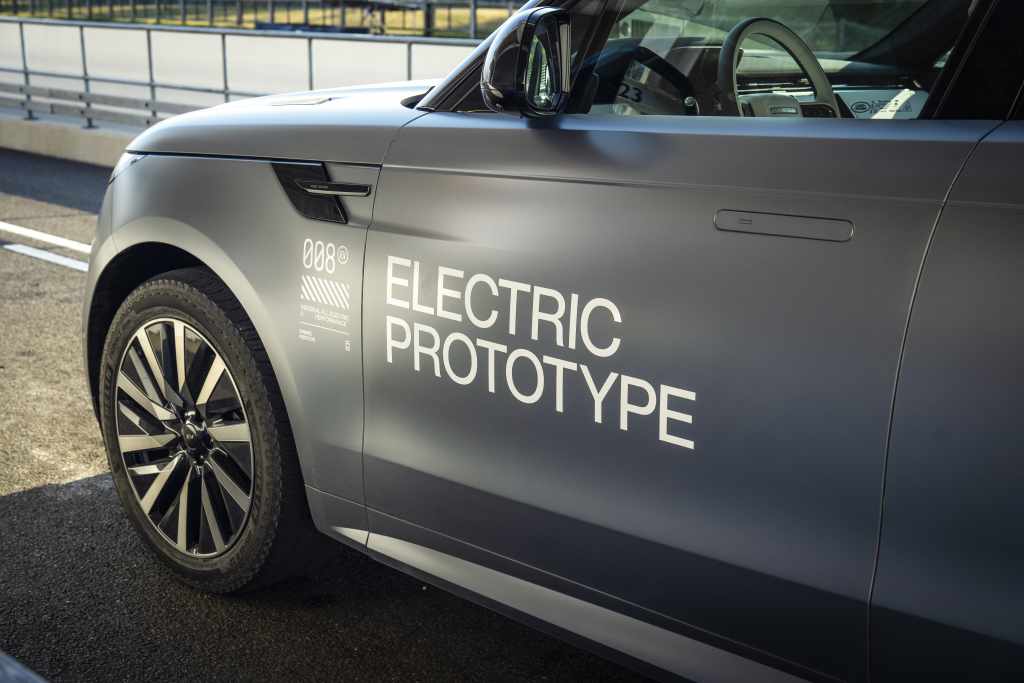
Range Rover has shown a running Sport Electric prototype, but the range and charging figures are still under wraps. Image: Range Rover.
What The P460e Already Gets Right
The P460e is not a token plug-in with enough battery for a short school run. Range Rover’s global specifications quote up to 118 kilometres of WLTP electric range and a manufacturer-estimated 92 kilometres of real-world electric driving. Those are not Canadian certification figures, and winter temperatures can cut the useful distance, but the battery is large enough to cover many suburban commutes without starting the engine.
The powertrain pairs a turbocharged 3.0-litre inline-six with an electric motor for 460 PS of system output. Range Rover quotes 5.5 seconds from 0 to 100 km/h for the P460e. That is properly quick for a large luxury SUV, even if the coming Electric is expected to be faster.
The other unusual feature is DC fast charging. Range Rover says the P460e can charge to 80 per cent in under an hour at a suitable public charger. That is slow beside a modern battery EV, but useful for a plug-in hybrid with a much smaller battery. At home, overnight AC charging remains the routine that makes the most sense.
Range Rover Canada currently lists the P460e as an engine choice for the Sport Dynamic SE, shown from $120,002 CAD before options and fees. The same page also lists the stronger P550e in special versions, but the P460e is the sensible reference point for a buyer who wants a regular-production electrified Sport rather than a limited or flagship model.
Most importantly, the P460e solves the infrastructure problem. A charged battery can handle the quiet daily kilometres, while the petrol engine removes the need to find a working high-power charger on every long route. That flexibility still has real value in Canada, particularly outside the busiest highway corridors.
Why The Electric Could Be Worth Waiting For
The July 16 confirmation from Range Rover is thin on numbers but clear about intent. The company says the Sport Electric will arrive later in 2026, complete the model’s powertrain lineup, and use an advanced chassis tune to deliver a faster and more dynamic experience.
That positioning matters. The full-size Range Rover Electric is supposed to prove that battery power can preserve the brand’s quietness and all-terrain ability. The Sport Electric has the harder job of making that hardware feel genuinely athletic.
A fully electric powertrain brings several natural advantages. There is no engine waiting to wake up under hard acceleration, no transmission shift between power sources, and no need to save a small battery for the end of a trip. Precise motor control can also help traction on slippery surfaces and allow engineers to shape the vehicle’s responses more deliberately.
For an owner who charges at home, the Electric should be simpler in daily use. Plug in at night, leave with a charged battery, and avoid petrol stops. It should also provide the quietest version of the Range Rover Sport experience, which fits the vehicle’s luxury brief even if Range Rover is developing an artificial sound character for harder driving.
The unknown is whether the engineering ambition survives the specification sheet. A powerful electric SUV is easy to make quick. It is much harder to make one efficient, fast-charging, comfortable on broken pavement and credible away from paved roads without its battery mass becoming the dominant sensation.
Six Numbers To Wait For Before Ordering
Range Rover’s next announcement needs to answer six practical questions.
First is usable battery capacity. A large gross figure means little if the protected buffer is substantial, and the usable number helps explain both range and charging time.
Second is Canadian or EPA-rated range, not only a generous WLTP figure. A big, heavy SUV on 22- or 23-inch wheels will consume plenty of energy at highway speed, especially in cold weather.
Third is the 10-to-80-per-cent charging time and charging curve. Peak kilowatts make the headline, but sustained power decides whether a stop is genuinely quick. An 800-volt architecture would help, but Range Rover has not confirmed one for the Sport Electric.
Fourth is Canadian charging-port hardware. Native NACS access would simplify Tesla Supercharger use, while a CCS1 port plus adapter support would require a different ownership routine.
Fifth is towing capacity and the effect of towing on range. The P460e’s petrol backup is a significant advantage for trailer trips unless the Electric combines a strong tow rating with dependable charging access for hitched vehicles.
Sixth is price. The P460e already lives well into six figures in Canada. The Electric could justify a premium with better performance and lower home-charging costs, but a very large gap would make the plug-in hybrid much harder to dismiss.
The Canadian Winter Question
Winter makes the decision more complicated than a simple EV-versus-engine argument.
Both vehicles will lose some electric range in cold temperatures because the battery and cabin need heat. The P460e starts with a smaller electric range, so a severe winter commute may bring the engine into use even when the same route is battery-only in summer. The Electric should have much more total battery capacity, but it also needs enough highway range to preserve a useful safety margin between chargers.
Home charging changes the calculation. A buyer who can precondition the cabin while plugged in and leave every morning with a full battery is in a much stronger position to choose the Electric. A condo resident who depends entirely on public charging may find the P460e easier, though a plug-in hybrid only delivers its environmental and refinement benefits when it is charged regularly.
The worst fit is a P460e that never gets plugged in. Carrying a large battery and electric hardware while relying mainly on petrol misses the point. If home or workplace charging is unavailable, a conventional mild-hybrid Sport may be the more honest current choice while the public-charging situation improves.
Who Should Buy Each One?
Choose the Range Rover Sport Electric if:
- A fully electric powertrain is a requirement rather than a preference.
- Reliable Level 2 charging is available at home or work.
- Most long trips follow well-served charging corridors.
- You can wait for Canadian pricing and delivery timing.
- You value instant response, quiet operation and the newest chassis technology.
Choose the Range Rover Sport P460e if:
- You need a vehicle before the Electric’s complete reveal and delivery ramp.
- Your travel regularly extends beyond dependable fast-charging coverage.
- Cottage, winter or towing routes make quick petrol refuelling valuable.
- Your daily driving fits within much of the P460e’s electric range.
- You can plug in consistently and want flexibility more than purity.
Bottom Line
The Range Rover Sport Electric is the more exciting prospect. It promises to make electric torque and precise chassis control central to the Sport’s identity, not merely add another low-emission powertrain to the catalogue.
But excitement is not enough to place an order. Range, charging, Canadian timing, price, towing and cold-weather performance remain unanswered. Until those numbers appear, the P460e is the known quantity: expensive, complicated, but unusually capable of covering daily kilometres on electricity without turning remote travel into a charging exercise.
Canadian shoppers who do not need a vehicle immediately should wait for the complete Electric specification sheet. Shoppers who need one now and will actually plug it in can buy the P460e without feeling that they chose yesterday’s answer. Its combination of real electric commuting range and petrol-backed travel remains useful precisely because Canada’s charging map is still uneven.
FAQ
Should I wait for the Range Rover Sport Electric or buy the P460e?
Wait if you have reliable home charging, want a fully electric Range Rover Sport and can delay until Range Rover publishes pricing, range and charging specifications. Buy the P460e if you need a vehicle now or regularly travel where dependable fast charging is limited.
When will the Range Rover Sport Electric arrive?
Range Rover says it will arrive later in 2026, with full technical details also due later in the year. Canadian timing and pricing have not been announced.
How far can the Range Rover Sport P460e drive on electricity?
Range Rover quotes up to 118 kilometres WLTP and estimates up to 92 kilometres in real-world conditions. Those are manufacturer figures rather than Canadian certification results, and weather, speed, load and wheel choice can reduce the distance.
Will the Range Rover Sport Electric use NACS in Canada?
Range Rover has not announced the Canadian charging port or adapter plan. Buyers should wait for confirmation instead of assuming native NACS access.