Electrify America's Battery-Backed Charging Hub Shows Where Fast Charging Is Going
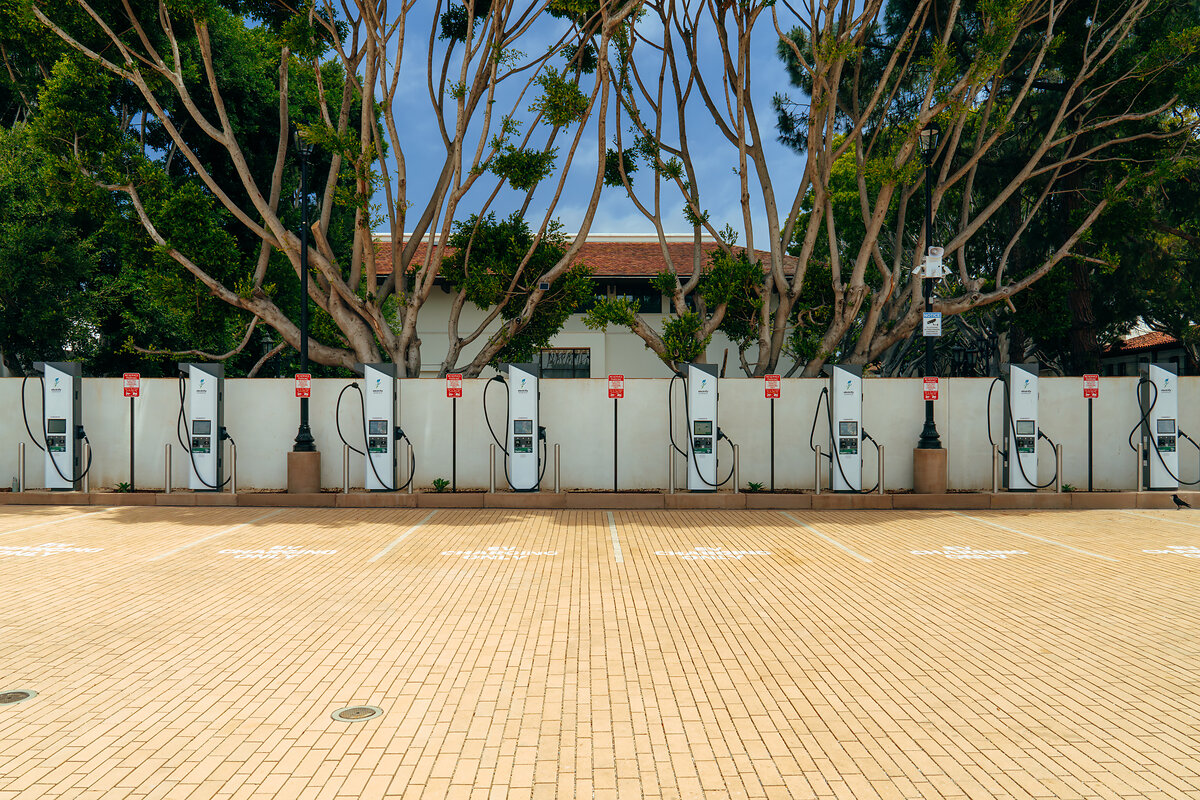
Electrify America's new Santa Barbara charging hub pairs 20 350-kW chargers with a 1.9-MW battery system, showing why battery-backed fast charging matters as EVs move to NACS.
Photo: Press image
Most EV charging announcements are easy to reduce to one number: 150 kW, 250 kW, 350 kW, or whatever the charger cabinet can theoretically push on its best day.
Electrify America’s new Santa Barbara site is more interesting than that. The Carrillo Street station, opened on June 17, 2026, has 20 Hyper-Fast chargers rated up to 350 kW. More importantly, it is paired with a 1.9-MW battery energy storage system, which Electrify America says is its largest public BESS deployment so far.
That sounds like infrastructure plumbing, and in a way it is. But this is the kind of plumbing EV drivers actually feel: shorter queues, more stable charging power, better use of difficult urban sites, and a network that can grow without waiting for every local grid upgrade to be perfect first.
Quick Verdict
The Santa Barbara hub matters because it points to the next stage of public fast charging: bigger stations with batteries behind them, not just isolated high-power stalls.
That does not mean every driver needs to chase battery-backed chargers. If you charge at home, public DC fast charging should still be the backup plan or road-trip tool. But for renters, condo owners, ride-hail drivers, visitors, and anyone who regularly relies on public charging, a 20-stall site with on-site storage is a better answer than a two-stall charger tucked behind a store.
The NACS transition adds another layer. The station opens with CCS connectors, but Electrify America says some connectors will be converted to NACS later this summer as part of its pilot program. That is exactly the messy middle EV drivers are living through in 2026: more vehicles are moving to the North American Charging Standard, while networks still need to support years of CCS-equipped cars already on the road.
What The Santa Barbara Hub Adds
| Item | What Electrify America Announced | Why It Matters |
|---|---|---|
| Charger count | 20 Hyper-Fast DC chargers capable of up to 350 kW | Large-format sites reduce the odds that one broken or occupied stall ruins a stop |
| Battery storage | 1.9-MW battery energy storage system, described as Electrify America's largest public BESS deployment so far | On-site storage can help support high-power sessions where grid capacity is constrained |
| Connector status | CCS at opening, with some connectors planned for NACS conversion later in summer 2026 | The network has to serve both existing CCS cars and the wave of NACS-equipped EVs arriving now |
| Location role | Downtown Santa Barbara, the company's second station in the city | Urban charging is becoming as important as highway-corridor charging for drivers without home plugs |
Why Batteries At Charging Sites Matter
A fast charger is not just a dispenser. It is a very demanding electrical load.
When several EVs plug in at once, the site can ask for a lot of power quickly. That is manageable at some highway plazas and purpose-built sites, but it gets harder in dense urban areas where the grid connection, real estate, permitting, and local demand charges can all complicate the business case.
Battery storage helps by acting like a buffer. The site can store energy when demand is lower, then discharge that energy when drivers arrive in clusters. It does not magically create unlimited power, and the battery itself still has to be charged. But it can smooth peaks, make better use of the existing grid connection, and help high-power charging work in places that might otherwise be too slow or expensive to serve.
That is why the Santa Barbara station is worth watching. Electrify America is not just adding plugs. It is adding a more resilient shape of charging station.
Big Sites Beat Lonely Chargers
EV drivers have learned to distrust single-point failure.
A two-stall site can look fine in an app until one charger is offline and the other is occupied. A four-stall site can work on a quiet Tuesday and fall apart on a holiday weekend. A 20-stall site is not immune to problems, but it gives the network much more room for maintenance, traffic spikes, and real-world driver behavior.
This is also where charging starts to feel less like an experiment and more like fuel retail. Gas stations work partly because there are multiple pumps, clear circulation, and predictable access. Public EV charging needs the same practical thinking. Power rating matters, but stall count, uptime, layout, lighting, payment, plug compatibility, and nearby amenities matter too.
The Santa Barbara hub is one of Electrify America’s large-format California sites, joining locations in Santa Monica, San Diego, and San Francisco. That is the right direction. EV adoption gets easier when charging stops feeling like a scavenger hunt.
The NACS Transition Is Still Awkward
The connector detail is important.
At launch, Electrify America’s Santa Barbara station uses CCS connectors. Later this summer, the company says some of those connectors will be converted to NACS as part of an ongoing pilot program. That is not as clean as opening with every plug already switched over, but it is a realistic snapshot of the market.
New EVs are moving toward NACS. Tesla drivers already expect the smaller connector. Ford, GM, Hyundai, Kia, Toyota, Rivian, Nissan, and others have lined up behind the standard in varying stages. At the same time, many excellent EVs on the road today still use CCS, and those owners cannot be stranded by a rushed conversion.
So the best near-term charging sites will probably look mixed. Some CCS, some NACS, good adapter support where appropriate, and clear app data so drivers know what they are arriving to before they leave the highway or cross town.
For more background on the connector shift, MotorLinks’ NACS explainer is still the right place to start.
What This Means For EV Buyers
If you are shopping for an EV in 2026, the lesson is simple: charging infrastructure is improving, but local charging still matters more than national averages.
Battery-backed hubs are a strong sign for the market. They should make public charging more useful in dense areas, especially for drivers who cannot plug in at home. They also support higher-power charging without making every site dependent on a huge immediate utility upgrade.
But one good hub does not fix every route. Before buying, check the chargers you would actually use: near home, near work, on weekend routes, and along the road trips you repeat. Look at stall count, recent reliability comments, connector type, and whether the vehicle can precondition its battery for DC fast charging.
Also be honest about public charging costs. Fast charging is convenient, but it is rarely the cheapest way to run an EV. If you have reliable home charging, that remains the ownership sweet spot. MotorLinks’ home charging versus fast charging guide covers that math in more detail.
Bottom Line
Electrify America’s Santa Barbara hub is not just another 350-kW station. It is a sign that public charging is maturing from scattered plugs into larger, buffered, more urban-friendly infrastructure.
That matters because EV adoption is increasingly limited by practical confidence, not just vehicle specs. Shoppers want to know whether they can charge without waiting, whether the plug will fit, whether the station has enough working stalls, and whether the local grid can support the demand.
A 20-charger site with a 1.9-MW battery behind it is not the whole answer. But it is a much better question for the industry to be asking.
What is a battery-backed EV charging hub?
A battery-backed EV charging hub combines DC fast chargers with on-site battery storage. The battery can store energy when demand is lower and help support charging sessions when many vehicles plug in.
Why does the Santa Barbara Electrify America station matter?
It pairs 20 chargers capable of up to 350 kW with a 1.9-MW battery energy storage system, making it a useful example of how larger public charging sites can reduce wait times and support high-power charging in grid-constrained locations.
Does the Santa Barbara station have NACS plugs?
Not at opening. Electrify America says the station opened with CCS connectors and that some connectors will be converted to NACS later in summer 2026 as part of its NACS pilot program.
Related Articles
- Why NACS Won the Charging Plug War
- Home EV Charging vs Public Fast Charging: What Actually Costs Less?
- Managed EV Charging Could Make Canada Smarter About The Grid
Update, October 2026: The 1.9 MW figure is battery-system power, not stored energy. The site opened with CCS connectors, with some NACS conversions planned later; check current connector availability before you travel.