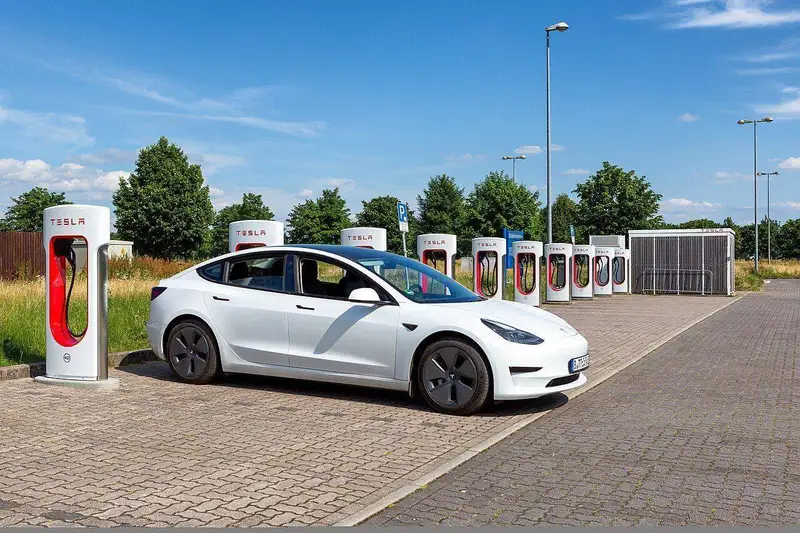
Why NACS Won: The Standard That Changed Everything for EV Charging
By late 2025, the North American Charging Standard has effectively won the charging connector wars. Here's what that means for EV owners and why it matters for adoption.
In November 2025, the North American Charging Standard — once derided as a proprietary Tesla plug — is the de facto charging connector for new electric vehicles sold in the United States. BMW, Ford, GM, Honda, Hyundai, Kia, Lucid, Mercedes, Nissan, Polestar, Rivian, Toyota, Volkswagen, and Volvo have all committed to NACS for their U.S. market vehicles. The SAE, the standards body that formalizes technical specifications for the U.S. automotive industry, officially adopted NACS as J3400 in October 2023. By late 2025, it is everywhere, and the old CCS (Combined Charging System) is fading fast.
How We Got Here
Tesla introduced its proprietary charging connector in 2012 with the Model S. For a decade, Tesla operated the largest and most reliable fast-charging network in the U.S. without sharing its technology. Rivian and Lucid made similar proprietary bets. Meanwhile, the rest of the industry — pushed by regulators and the 2022 Inflation Reduction Act’s domestic content requirements — standardized on CCS1 for North America.
CCS had the institutional backing. It was mandated by the U.S. government for vehicles seeking IRA credits. ChargePoint, Electrify America, and EVgo built thousands of CCS stalls across the country. Ford, GM, and others built CCS-equipped vehicles.
The problem was that CCS in the U.S. was simply not very good. The hardware was unreliable (anyone who has used Electrify America’s older 350 kW stalls has stories of two or three attempts to charge), the software integration was clunky, and the connector design was awkward — heavy, hard to handle in cold weather, and prone to latch failures.
Tesla’s Supercharger network, by contrast, worked. Nearly all the time. The connector was lighter and easier to handle. The Magic Dock (Tesla’s built-in CCS adapter for Superchargers) and the Supercharger network’s uptime — consistently above 99 percent — gave Tesla owners confidence that was simply unavailable elsewhere.
The Dominoes Fell in 2023
Ford’s decision in May 2023 to adopt NACS for future Ford EVs — including the F-150 Lightning and Mustang Mach-E — was the inflection point. Once Ford signed, the rest followed quickly. GM committed in June 2023. By the end of 2023, the SAE’s adoption of NACS as J3400 formalized what the market had already decided.
The practical impact has been enormous. As of November 2025, Tesla’s approximately 15,000 Supercharger stalls in the U.S. are accessible to any NACS-equipped vehicle from any manufacturer. Ford’s BlueOval charge network — built partly through a partnership with Tesla — gives Ford EV owners access to more than 134,000 charge points in North America. GM’s Ultium Charge 360 network similarly has added Supercharger access for GM EVs.
What This Means for EV Owners
If you buy a new EV today — whether it’s a Chevrolet Blazer EV, a Ford F-150 Lightning, a Honda Prologue, or a Toyota bZ4X — it will come with a NACS connector. You can charge it at any Tesla Supercharger without an adapter. You can use the Electrify America network (which is adding NACS plugs alongside CCS), and you can use the growing network of NACS-native charging stations being built by EVgo, ChargePoint, and others.
The one remaining friction point is DC fast charging speeds. Most NACS-equipped vehicles can charge at up to 250 kW on Tesla’s V3 Superchargers, with newer V4 stalls supporting up to 350-500 kW for compatible vehicles. But not all NACS connectors support the highest speeds — the connector itself is limited to around 1 MW for megawatt-class charging (needed for Tesla Semi and some pickup trucks), but most passenger vehicles are capped at 400V-class architectures that limit real-world speeds to 150-250 kW.
The bigger challenge is that legacy CCS vehicles — the Chevrolet Bolt (first generation), Volkswagen ID.4, and others sold before 2023 — still require CCS. The Charging Interface Forum (CharIN) and the Department of Transportation have been working to ensure these vehicles aren’t stranded, but the writing is on the wall: CCS is a transitional technology in North America.
What About the Rest of the World?
The rest of the world is a different story. Europe mandated CCS2 (the European variant of CCS) for all new EVs in 2025, and China’s GB/T standard remains dominant in the world’s largest EV market. NACS is primarily a North American phenomenon, though several Asian automakers are evaluating NACS for global vehicle architectures to simplify supply chains.
For U.S. consumers, though, the standard question is settled. The plug in your new EV will look like the Tesla connector — because it is.
This article is part of Motorlinks’ ongoing EV charging infrastructure coverage. See our NACS adoption explainer for more.