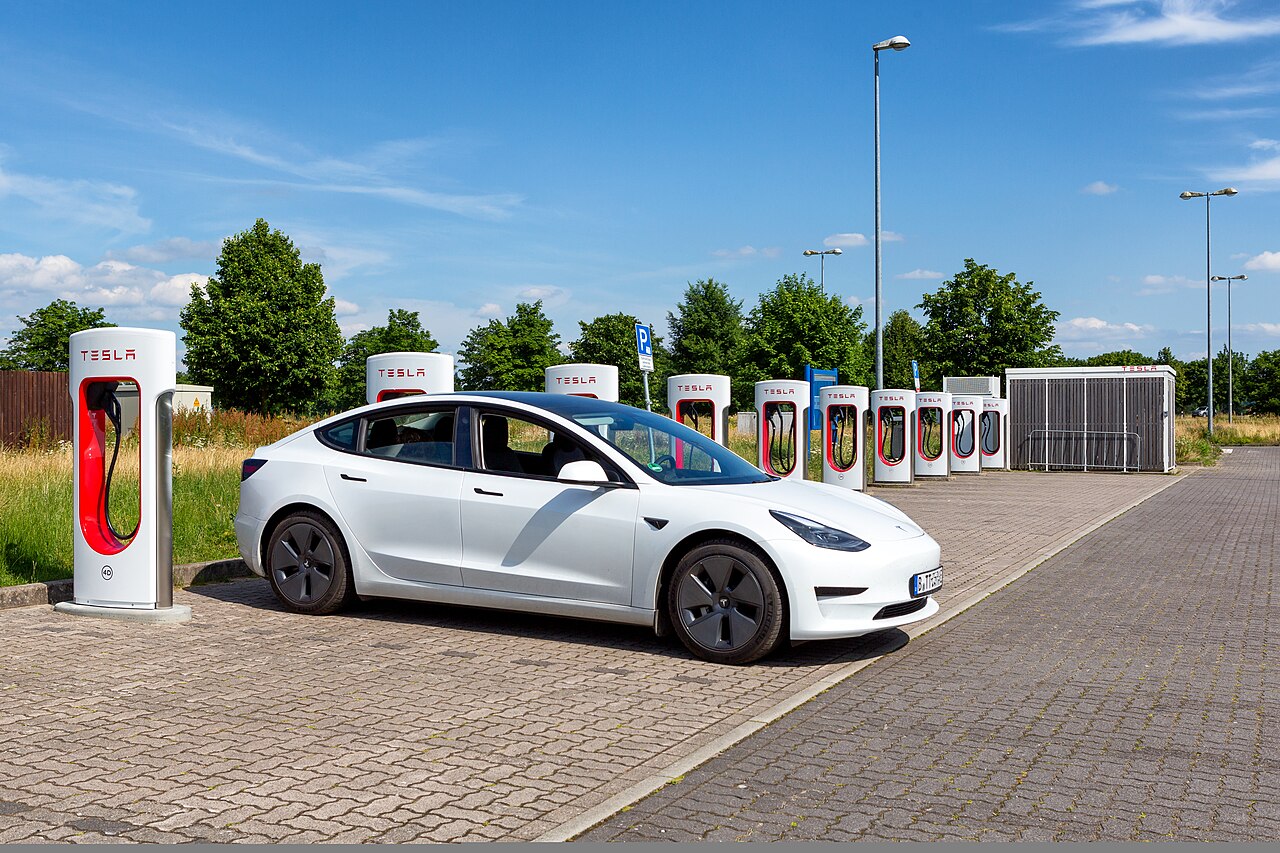
NACS Adoption: Every Automaker's Charging Standard Pivot
The North American Charging Standard has won. Here's the complete breakdown of which automakers have adopted NACS, which models support it, and what it means for EV owners.
The SAE J3400 NACS (North American Charging Standard) is now the de facto charging connector for North American EVs. What began as Tesla’s proprietary plug has become the industry standard in under three years. Here’s where every major automaker stands.
The Winners: Full NACS Adoption
Ford — Beginning in 2024, all new Ford EVs ship with NACS. Existing F-150 Lightning and Mustang Mach-E owners received adapter kits. Ford was the first legacy automaker to commit, unlocking access to Tesla’s Supercharger network of 15,000+ stalls.
General Motors — GM adopted NACS in 2024, with all new Ultium-platform vehicles (Silverado EV, Blazer EV, Equinox EV, Cadillac Lyriq) built with the NACS port from factory. GM also committed to integrating the Supercharger network into its Ultium Charge 360 app.
Rivian — R1T and R2 platform vehicles natively support NACS as of 2025. The R1S SUV and updated R1T Gen 2 come standard with the NACS port.
Honda/Acura — All Honda and Acura EVs launching in North America from 2025 onward use NACS. This includes the Honda Prologue and the upcoming 0 Series EVs.
Toyota/Lexus — Toyota’s 2025 bZ4X and new Lexus RZ models use NACS, with all future BEVs expected to adopt the standard.
Subaru — Solterra gets NACS for 2025.
Porsche/Audi/VW — The Volkswagen Group brands have committed to NACS for all new MEB and SSP platform vehicles in North America, including the Porsche Macan Electric and Audi Q6 e-tron.
Mercedes-Benz — EQ models will adopt NACS starting in 2025.
BMW/Mini — All 2025+ BMW and Mini EVs built on the Neue Klasse platform use NACS.
Hyundai/Kia/Genesis — The E-GMP platform (IONIQ 5, IONIQ 6, EV6, EV9) adopted NACS in 2024 via a new port on refreshed models.
The Holdouts (CCS1 with Adapter)
Stellantis — Ram, Jeep, Dodge, and Chrysler continue to use CCS1 in North America as of late 2025, with a NACS adapter in development for 2026.
Nissan — Ariya uses CCS1. Nissan has not announced NACS adoption as of October 2025, though industry observers expect an announcement before year-end.
Volvo/Polestar — Both brands adopted NACS for new models starting in 2024.
Why NACS Won
Tesla built the most reliable, best-maintained charging network in North America. When Ford CEO Jim Farley tested the Supercharger network during his EV education trips, the reliability difference was stark — CCS networks in the US had roughly 20-25% failure rates at any given time, versus under 5% for Supercharger.
The Biden administration’s infrastructure funding (NEVI) was tied to CCS1 initially, but the SAE’s formal adoption of J3400 NACS as a standard in 2023 removed the regulatory obstacle. The transition has been remarkably fast.
What It Means for You
If you’re buying a new EV in 2025 or 2026, NACS is the standard. You’ll have access to Tesla Supercharger network (15,000+ stalls), the growing NACS-based Electrify America and other networks, and a growing home charging infrastructure built around the J3400 plug.
If you own an older CCS EV, adapters are available and functional, though not as elegant as native integration. The good news: the days of hunting for a working charger are largely over for NACS-equipped vehicles.