2026 Mazda CX-5 vs Toyota RAV4 Hybrid: Which Canadian SUV Makes More Sense?
The redesigned 2026 Mazda CX-5 brings standard AWD, a bigger cabin, and Google built-in, while Toyota's all-hybrid 2026 RAV4 counters with stronger efficiency and 236 hp. Here is how Canadian compact-SUV shoppers should choose.
The compact SUV default answer in Canada used to be easy: if you wanted a mainstream family crossover, you started with the Toyota RAV4 and worked backward from there. The redesigned 2026 Mazda CX-5 makes that conversation less automatic.
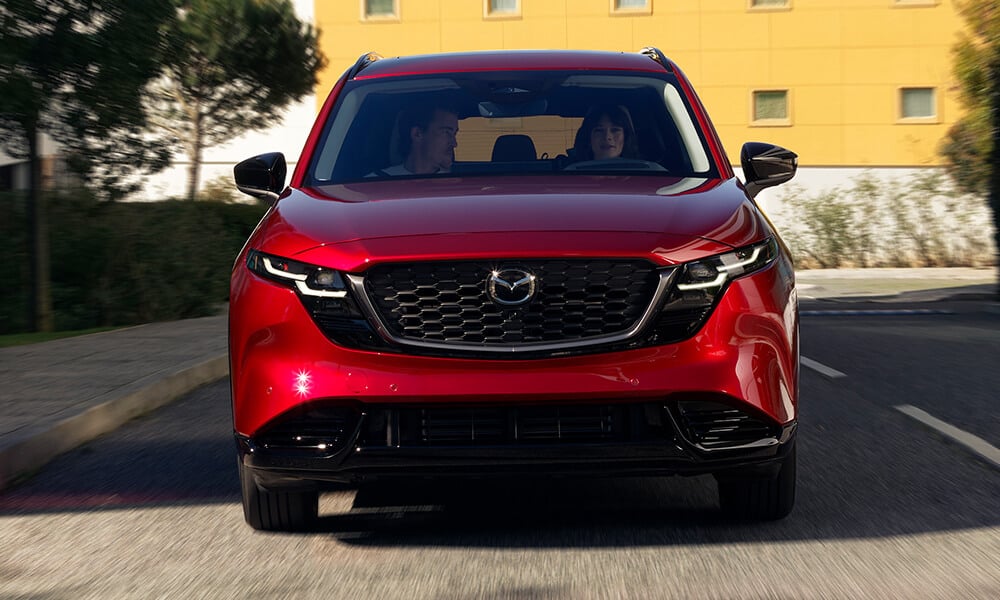
Mazda Canada says the third-generation CX-5 began arriving at Canadian retailers in March, bringing more utility, evolved Kodo design, and the most standard safety features of any Mazda model in Canada. On Mazda’s current product page, the CX-5 uses a 187-hp, 186-lb-ft Skyactiv-G 2.5-litre four-cylinder, a six-speed automatic, and standard i-Activ AWD across the lineup.
Toyota’s answer is very different. Toyota Canada describes the 2026 RAV4 as an all-hybrid compact SUV. The Canadian RAV4 Hybrid LE is listed at 5.1 L/100 km city and 6.0 L/100 km highway, while XLE and higher trims show 236 hp and, on many trims, 1,588 kg / 3,500 lb of towing capacity.
So this is not just another badge comparison. It is Mazda’s standard-AWD, driver-focused gas crossover against Toyota’s hybrid-efficiency machine.
Quick Verdict
Buy the 2026 Toyota RAV4 Hybrid if fuel economy, hybrid resale confidence, and lower day-to-day fuel use matter most. It is the more rational Canadian pick for commuters, high-mileage households, and anyone who wants hybrid efficiency without needing a plug.
Buy the 2026 Mazda CX-5 if you care more about standard AWD, cabin feel, simpler gas-vehicle ownership, and Mazda’s unlimited-mileage warranty structure. It is the more appealing choice for buyers who value the way a compact SUV feels every day and do not drive enough for hybrid fuel savings to dominate the decision.
The short version: RAV4 Hybrid for efficiency and long-run math, CX-5 for feel and standard AWD simplicity.
Canada Snapshot
| Item | 2026 Mazda CX-5 | 2026 Toyota RAV4 Hybrid |
|---|---|---|
| Main pitch | Redesigned gas compact SUV with standard AWD and a more upscale cabin | All-hybrid compact SUV with better fuel economy and strong family-SUV practicality |
| Powertrain | 2.5-litre Skyactiv-G four-cylinder, six-speed automatic, standard i-Activ AWD | 2.5-litre four-cylinder hybrid system; Toyota Canada lists 236 hp on current Canadian trims |
| Output | 187 hp and 186 lb-ft | 236 hp |
| Fuel economy context | Mazda Canada lists up to 7.9 L/100 km highway | Toyota Canada lists LE at 5.1/6.0 L/100 km city/highway and XLE at 5.2/6.1 |
| Towing context | Check the exact trim and accessory package before planning around towing | LE is listed at 794 kg / 1,750 lb; XLE, Woodland, XSE, and Limited show 1,588 kg / 3,500 lb |
| Best buyer | Driver who wants standard AWD, a nicer cabin feel, and fewer hybrid-system questions | Driver who wants lower fuel use, hybrid confidence, and broad compact-SUV practicality |
2026 Mazda CX-5 and Toyota RAV4 Hybrid official image gallery
13
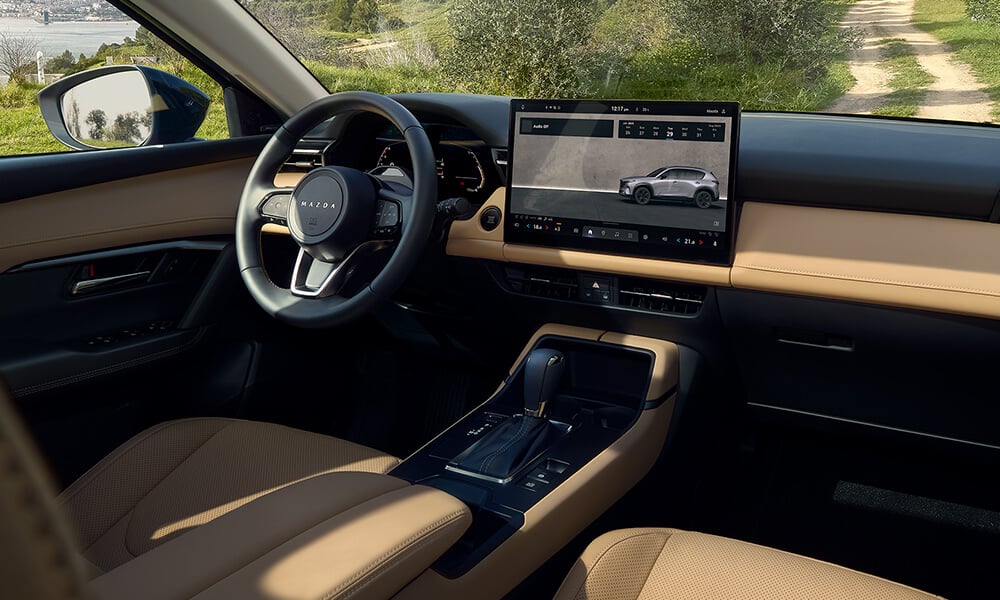

The redesigned CX-5 leans into Mazda feel: standard AWD, a cleaner cabin, and more space than before.
Why The RAV4 Hybrid Is The Sensible Default
The RAV4 Hybrid wins the clean spreadsheet argument.
Toyota Canada lists the base RAV4 Hybrid LE at 5.1 L/100 km city and 6.0 L/100 km highway using approved Government of Canada test methods. Even if real-world numbers move around with winter tires, cold starts, highway speed, and roof racks, the RAV4 starts from a much better efficiency position than a conventional gas CX-5.
That matters in Canada because compact SUVs often become everything vehicles. They commute, do school runs, sit in traffic, carry hockey bags, drive to cottages, and run highway trips in weather that punishes fuel economy. The more kilometres you stack up, the more Toyota’s hybrid advantage compounds.
The 2026 RAV4 also does not feel like a low-output economy play on paper. Toyota Canada lists 236 hp, and most trims above LE show the higher 3,500-lb towing figure. The Woodland trim adds all-terrain tires, Rigid Industries LED fog lamps, bridge-style roof rails and cross bars, unique bumpers, a skid plate, and a cargo-area AC outlet. That gives the RAV4 an outdoorsy branch without turning the whole lineup into lifestyle theatre.
The caution is that “sensible default” does not mean “automatically best.” Toyota’s biggest strength is also what makes it feel predictable. If cabin tactility, steering feel, and quieter design matter more to you than the fuel bill, Mazda has a real opening.
Why The CX-5 Still Has A Case
The CX-5’s argument is emotional, but it is not irrational.
Mazda Canada lists the redesigned CX-5 with standard i-Activ AWD, 187 hp, 186 lb-ft of torque, and a six-speed automatic on all trims. That is not hybrid-quick, and it will not touch the RAV4 Hybrid’s fuel economy, but it gives every Canadian CX-5 buyer the same basic traction story without needing to climb the trim ladder.
The cabin is where Mazda pushes hardest. The new CX-5 brings a 12.9-inch centre touchscreen on GX, available 15.6-inch screen on GT Premium, Google built-in, a 10.25-inch LCD metre set, redesigned rear doors, and more second-row room than the previous model. Mazda’s own FAQ says the 2026 model adds 4.5 inches overall and brings increased rear leg, knee, and headroom with a larger cargo area.
That is important because the old CX-5’s biggest weakness was not personality. It was packaging. The new one sounds like Mazda finally admitted Canadian families needed a bit more room without turning the CX-5 into a bland box.
Mazda’s warranty structure also has Canadian appeal: the product page lists a 3-year new-vehicle unlimited-mileage warranty, 3-year roadside assistance with unlimited mileage, 5-year powertrain unlimited-mileage warranty, and 7-year anti-perforation unlimited-mileage warranty. For drivers who pile on kilometres, that unlimited-mileage framing is not a throwaway detail.
The Fuel-Math Question
This decision should start with annual kilometres.
If you drive a lot, the RAV4 Hybrid’s efficiency advantage is hard to ignore. A commuter doing long daily distances, regular highway runs, or year-round family duty will probably see Toyota’s hybrid system repay some of its premium through lower fuel use and stronger used-market demand.
If you drive less, the CX-5 starts to look more reasonable. A buyer doing mostly short local trips, weekend errands, and moderate annual mileage may care more about the monthly payment, equipment level, dealer experience, and cabin feel than theoretical fuel savings over six years.
There is also a use-case wrinkle: hybrids are excellent in stop-and-go city driving, while conventional gas SUVs often look less bad on steady highway routes. That does not erase Toyota’s advantage, but it does change how much the advantage matters to your own driveway.
Do Not Confuse This With An EV Decision
Neither of these is a battery-electric SUV, and the CX-5 is not a hybrid. That sounds obvious, but it matters because Canada’s affordability conversation is crowded with EV rebates, plug-in incentives, charging access, and NACS port timing.
The RAV4 Hybrid is the lower-fuel-use choice, not a plug-in choice. The CX-5 is the standard-AWD gas choice, not Mazda’s electrified answer. If you are deciding between compact hybrids, plug-in hybrids, and full EVs, use MotorLinks’ Canadian EV incentive guide as a separate check before assuming any rebate applies.
For many families, that makes the RAV4 Hybrid attractive precisely because it avoids the charging question. It lowers fuel use without asking for home charging, condo-board approval, public charger planning, or winter fast-charging patience.
The CX-5 goes even simpler: no hybrid battery strategy to think about, no plug, no charging ecosystem, and no need to explain anything to a skeptical household member. It is just a nicer, roomier Mazda crossover with AWD baked in.
Which One Should Canadians Buy?
Start with the Toyota RAV4 Hybrid if the vehicle will see heavy daily use. It is the better pick for commuters, families tracking fuel costs, high-mileage drivers, and anyone who wants a compact SUV that will feel easy to justify at resale time.
Start with the Mazda CX-5 if the emotional side matters and the annual mileage is moderate. It is the better pick for buyers who like Mazda’s cabin design, want AWD without a package chase, prefer conventional gas ownership, and are willing to spend more at the pump for a vehicle that may feel more personal.
The smartest move is to test-drive both on the same week and price comparable equipment, not just comparable trims. A lightly equipped RAV4 Hybrid and a better-equipped CX-5 can land in a very different place than the badge comparison suggests.
Bottom Line
The 2026 Toyota RAV4 Hybrid is the stronger Canadian recommendation for most practical compact-SUV shoppers. Its fuel economy, 236-hp hybrid system, available 3,500-lb towing rating on key trims, and Toyota hybrid reputation give it a clear everyday-use advantage.
The 2026 Mazda CX-5 is the choice for buyers who are tired of buying only by spreadsheet. It cannot match the RAV4 Hybrid on fuel use, but standard AWD, a more polished cabin, stronger tech, extra room, and Mazda’s unlimited-mileage warranty help it make a credible case.
If fuel cost is the question, buy the RAV4 Hybrid. If the question is which one you will enjoy living with more, the CX-5 deserves a serious look.
FAQ
Should Canadians buy the 2026 Mazda CX-5 or 2026 Toyota RAV4 Hybrid?
Most practical buyers should start with the Toyota RAV4 Hybrid because it is much more efficient and still has strong power on paper. Choose the Mazda CX-5 if standard AWD, cabin feel, and conventional gas ownership matter more than the fuel bill.
Is the 2026 Mazda CX-5 hybrid?
No. Mazda Canada’s 2026 CX-5 page lists a Skyactiv-G 2.5-litre four-cylinder with 187 hp, 186 lb-ft, a six-speed automatic, and standard i-Activ AWD. The Toyota RAV4 is the hybrid in this comparison.
Which is more fuel efficient, the CX-5 or RAV4 Hybrid?
The RAV4 Hybrid is more efficient. Toyota Canada lists the LE at 5.1 L/100 km city and 6.0 L/100 km highway. Mazda Canada lists the 2026 CX-5 at up to 7.9 L/100 km highway.
Which one is better for winter?
Both can make sense for Canadian winter driving. The CX-5 has standard AWD across the lineup, while the RAV4 Hybrid combines available AWD with better fuel economy. Tires will matter more than the badge once snow and ice arrive.