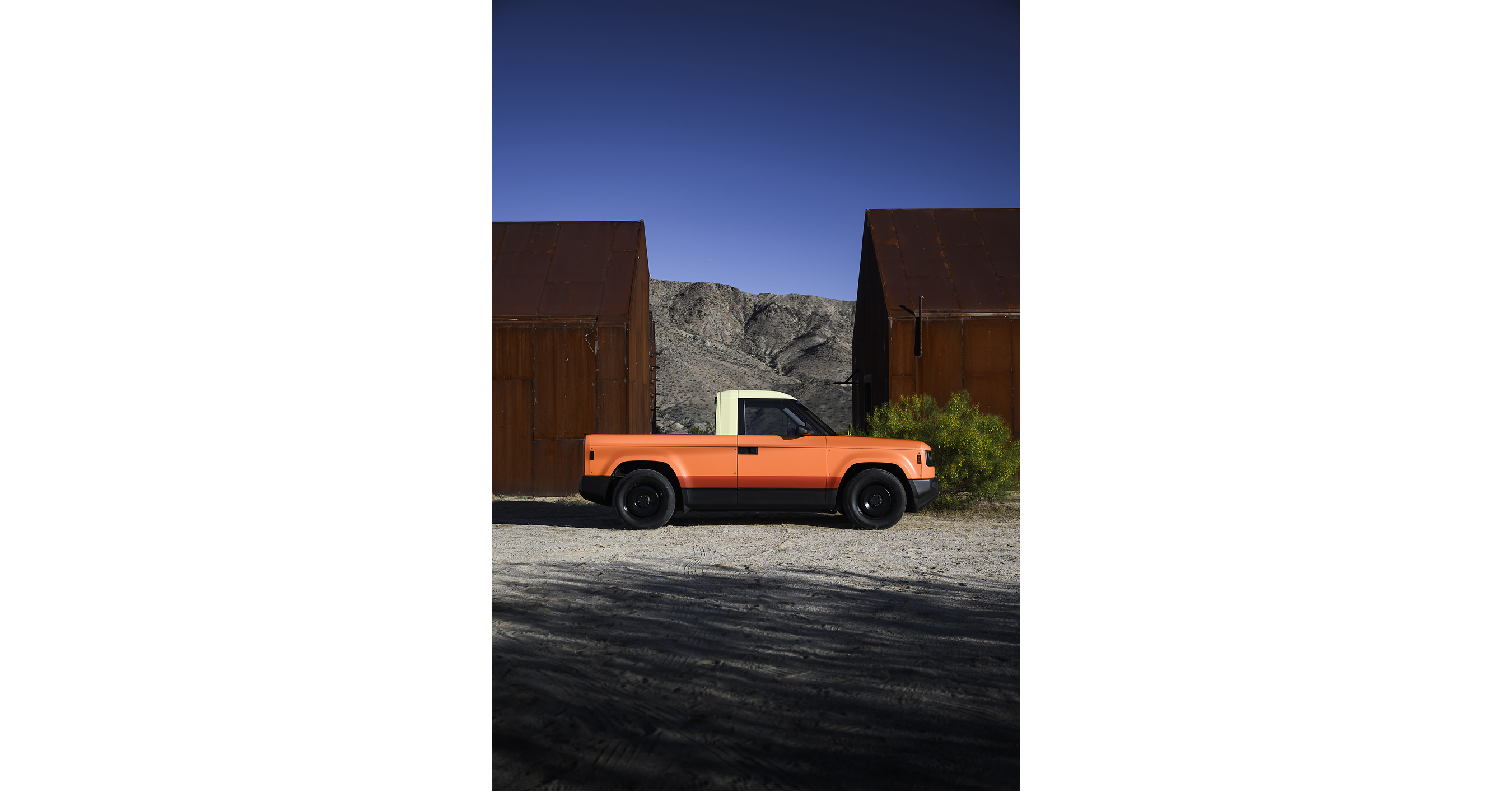
Should You Wait for Slate's Cheap EV Truck or Buy a Ford Maverick Hybrid Now?
Slate's stripped-back electric pickup has real momentum and a mid-$20,000 target, but Ford's Maverick Hybrid already offers five seats, 42-mpg city efficiency, and a much clearer ownership story.
Photo: Slate
Slate figures are pre-production targets, not EPA ratings or delivery promises. Ford’s best hybrid city economy and maximum towing are different configurations: the 4,000-lb claim requires eligible AWD equipment and the 4K Tow Package; it is not the base FWD truck.
Cheap trucks are suddenly interesting again, and not because anyone added more chrome.
The new Slate Truck matters because it is chasing a part of the market most EV startups ignored: buyers who want something genuinely simple, genuinely small, and potentially much cheaper than the average new vehicle. On April 13, 2026, Slate said it had raised $650 million, topped 160,000 reservations, and was still aiming for late-2026 deliveries after opening preorders in June 2026.
That gives the startup more credibility than it had at reveal. But credibility is not the same thing as being the smart buy today.
Because the obvious alternative is not another EV. It is the Ford Maverick Hybrid, which already gives buyers a compact pickup with five seats, a standard hybrid powertrain rated at 42 mpg city, and up to 4,000 pounds of towing when properly equipped.
So if you like the idea of a small affordable truck, should you wait for Slate’s stripped-back EV experiment or just buy Ford’s proven hybrid now?
| Timing | Starting point | Energy / range | Utility headline | Standout angle | |
|---|---|---|---|---|---|
| 2026 Ford Maverick Hybrid | On sale now | $30,535 starting MSRP excluding destination | 42 mpg city with the standard hybrid powertrain | Up to 1,500-lb payload and up to 4,000-lb towing | Known-price compact truck with five seats and real everyday flexibility |
| Slate Truck | Preorders open June 2026; deliveries targeted for late 2026 | Mid-$20,000s target before incentives | 150 miles standard or 240 miles with the larger battery | 1,400-lb payload, 1,000-lb towing, 2 seats standard | Minimalist EV truck with modular accessories and a very low promised entry price |
Wait for Slate if the Price-and-Simplicity Pitch Is Exactly What You Want
Slate’s argument is refreshingly blunt.
The company says the truck will start in the mid-$20,000s, offer either 150 miles or 240 miles of range depending on battery choice, and carry 1,400 pounds of payload. It is small on purpose, basic on purpose, and weirdly charming for exactly that reason. Manual windows, minimal screens, accessory-focused customization, and a two-seat standard cab all tell you Slate is trying to build the anti-overstuffed modern pickup.
That could land with buyers who are tired of trucks becoming luxury objects.
There is also a real EV-specific appeal here. If your daily driving is short, you do not need rear seats, and you mostly want a cheap utility vehicle for local runs, the Slate concept makes more sense than a lot of six-figure electric pickups ever did. It is one of the few new EV ideas that actually feels pointed at buyers who have been priced out of the category.
If Slate gets anywhere close to its promised entry price, it will deserve serious attention.
Buy the Maverick Hybrid if You Need the Better Truck for Normal Life
This is where Ford’s case gets hard to ignore.
The 2026 Maverick is already in showrooms. Ford says it starts at $30,535 before destination, comes standard with a hybrid powertrain, returns 42 mpg city, and can tow up to 4,000 pounds with the right configuration. It also gives you the thing Slate does not in base form: an actual back seat.
That matters more than startup buzz.
The Maverick is not as novel as Slate, but it is dramatically easier to recommend to a normal buyer. You can use it as a commuter, a family errand vehicle, a weekend hardware-store truck, or a road-trip machine without having to think too hard about range, launch risk, or whether the company will hit its production targets.
And while the Maverick is not an EV, it still makes a strong efficiency case. Forty-two mpg city in a pickup is exactly why this truck has stayed relevant even as the market keeps drifting upward in size and price.
Slate’s Biggest Problem Is That Its Most Interesting Qualities Are Also Its Biggest Compromises
The same things that make the Slate cool also make it risky.
A two-seat standard layout is a serious limitation for a lot of buyers. So is 150 miles of base range. Even the larger-battery 240-mile version looks best as a local or regional tool, not a do-everything household truck. And because Slate is still a startup, every promised number comes attached to the usual questions about production timing, option pricing, service support, and how much the final vehicle will actually resemble the headline pitch once it reaches customers.
None of that kills the idea. But it does change who this truck is really for.
The Slate looks strongest as a second vehicle, a city truck, or a deliberately minimalist lifestyle pick. The Maverick looks stronger as the one compact truck most people could actually buy and use without reorganizing their lives around the purchase.
So Which One Looks Smarter on April 22, 2026?
Right now, the Ford Maverick Hybrid is still the rational buy and the Slate Truck is the intriguing gamble.
| Smarter move today | Why | |
|---|---|---|
| A truck you can confidently buy this month | Ford Maverick Hybrid | Ford already has pricing, fuel-economy numbers, dealer availability, rear seats, and a proven ownership path. |
| Curiosity about a genuinely different cheap-truck idea | Wait for Slate | Slate is not trying to be a mini luxury truck; it is trying to be a blank-canvas utility EV with almost no fluff. |
| Family use and broader day-to-day versatility | Ford Maverick Hybrid | Five seats and a more conventional compact-truck layout make it much easier to live with as an only vehicle. |
| Lowest possible EV truck buy-in | Wait for Slate | Its mid-$20,000 target is the whole hook, and nothing else this small and electric is aiming that low. |
Wait for the Slate if you specifically want the cheapest serious EV truck idea on the horizon, can live with its limited seating and range story, and are comfortable accepting startup uncertainty in exchange for something genuinely fresh.
Buy the Maverick Hybrid if you need a compact truck in the real world, want better flexibility per dollar, and care more about usable packaging and known ownership costs than about being early to a bold new EV concept.
The Motorlinks Take
I like that Slate exists. The market needs more vehicles that feel designed around restraint instead of excess.
But today, on April 22, 2026, the smarter recommendation is still the Ford Maverick Hybrid. It already does the useful-truck thing well, it is efficient in a way that actually matters, and it asks buyers for almost no faith.
Slate is more exciting because it is aiming at a part of the EV market that badly needs new ideas. It just is not the safe answer yet.
If the company can hold the price, execute the launch, and keep the final truck as simple as the pitch, that could change fast.
For now, the Maverick is the one I would tell most people to actually buy.