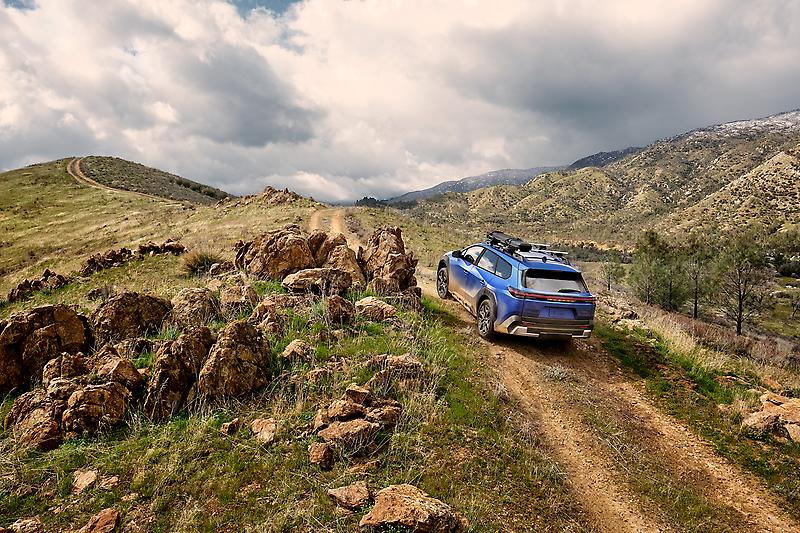
Toyota bZ Woodland vs Subaru Trailseeker: Which New Electric Adventure SUV Looks Smarter?
Toyota and Subaru now have two closely related electric adventure SUVs with 375 horsepower and 3,500-pound tow ratings, but the smarter buy in April 2026 depends on whether you value Toyota's clearer spec sheet or Subaru
Photo: Subaru
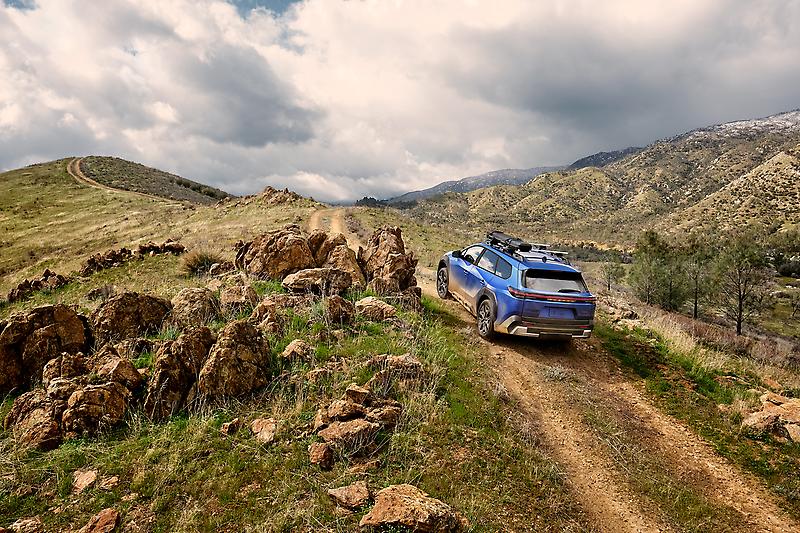
Cargo figures are measured differently by each brand, so compare them in person if space matters.
If you stripped the badges off these two new electric SUVs, you would not need long to spot the family resemblance.
The Toyota bZ Woodland and the Subaru Trailseeker both chase the same idea: take the shared Toyota-Subaru EV bones, add more power, add more ground clearance, make them look tougher, and finally give outdoorsy EV shoppers something less apologetic than the old bZ4X/Solterra pairing.
That is what makes this such a useful April 2026 comparison. These two are close enough in mission that the decision gets simpler fast. The Toyota gives you the tidier spec sheet. The Subaru gives you the much more aggressive price.
| Starting price | Range | DC charge | Capability hook | Main catch | |
|---|---|---|---|---|---|
| Subaru Trailseeker | $39,995 before destination | More than 280 miles | 10 to 80 percent in about 28 minutes | 375 hp, 8.5 inches of ground clearance, up to 3,500-lb tow rating, standard Subaru AWD identity | Subaru still has more to prove on packaging and real-world differentiation from its Toyota cousin |
| Toyota bZ Woodland | $45,300 before destination | 281 miles EPA-est., or 260 miles with optional all-terrain tires | 10 to 80 percent in around 30 minutes | 375 hp, 8.4 inches of ground clearance, up to 74.3 cubic feet of cargo space, 3,500-lb tow rating | Meaningfully pricier, and the optional all-terrain tire package cuts range hard |
The Big Story Is That Subaru Charges a Lot Less for Basically the Same Core Brief
This is the number that jumps off the page.
Toyota says the 2026 bZ Woodland starts at $45,300 before destination. Subaru lists the 2026 Trailseeker at $39,995. That puts the Subaru $5,305 lower before you even start talking about delivery fees or options.
And this is not a case where the cheaper vehicle is obviously the weaker one.
Both SUVs headline 375 horsepower, both offer all-wheel drive, and both can tow up to 3,500 pounds. Toyota quotes 8.4 inches of ground clearance for the bZ Woodland. Subaru edges that with 8.5 inches for the Trailseeker. Both also promise DC fast charging from 10 to 80 percent in roughly half an hour and both now speak NACS, which matters because buyers in this category are far more likely to use their EVs for road trips, trailheads, or cottage-country weekends than just the office commute.
That is why the Trailseeker currently lands as the cleaner value play. Subaru is asking family-crossover money for something that looks and sounds a lot closer to a halo version of its EV lineup.
Toyota Still Has the Better Published Utility Case
The reason this is not an automatic Subaru win is that Toyota has simply shown more of its homework.
Toyota publishes an EPA-estimated 281 miles of range for the bZ Woodland, or 260 miles if you add the optional all-terrain tires. It also says the Woodland offers 74.3 cubic feet of cargo space with the second row folded, plus that same 3,500-pound tow rating and a standard AWD setup with X-MODE.
Subaru’s Trailseeker page confirms more than 280 miles of available range, 375 horsepower, 8.5 inches of clearance and about 28 minutes for 10-to-80-percent charging under suitable conditions. Toyota’s more detailed cargo presentation is a brochure emphasis, not proof that the Toyota carries more than the Subaru.
If you are the kind of buyer who wants every number laid out before you commit, the bZ Woodland makes the easier first impression.
The Toyota Makes More Sense if You Really Need the Extra Cargo Story
Toyota did something smart with the bZ Woodland. It did not just make the existing bZ look more rugged. It made the case that this one is actually more useful.
The Woodland is longer than the regular bZ, carries pronounced black overfenders, and leans hard into the idea that this is the version for buyers who want camping gear, bikes, muddy trail shoes, and maybe even a small trailer in the picture. Toyota also gives it an optional all-terrain tire package, which helps the visual brief a lot even if it does hit range.
That matters, because this is probably the strongest reason to buy the Toyota over the Subaru. If your version of adventure-SUV shopping is really about cargo packaging and official utility numbers, Toyota tells that story more directly right now.
The Subaru Feels Like the Better Brand Match
The funny thing is that the Trailseeker may still be the more convincing vehicle emotionally.
Subaru has spent years building a brand around standard all-wheel drive, bad-weather confidence, camping-trip credibility, and just enough outdoors cosplay to make people feel better about buying roof crossbars. The Trailseeker finally sounds like an EV that fits that identity without a bunch of explaining.
It also helps that Subaru did not price it like a niche toy. At basically forty grand, the Trailseeker feels like the one that could actually pull buyers out of a Hyundai Ioniq 5, Ford Mustang Mach-E, or even a lower-trim Tesla Model Y shopping list by making a simple argument: you get the power, the clearance, the tow rating, and the Subaru vibe without paying an adventure-tax premium.
That is a much sharper story than the one Toyota currently tells with the bZ Woodland.
So Which One Looks Smarter Right Now?
| Smarter pick today | Why | |
|---|---|---|
| Chasing the more Subaru-flavored adventure vibe | Subaru Trailseeker | The Trailseeker feels like the cleaner brand fit, with standard Symmetrical All-Wheel Drive, 8.5 inches of clearance, and a price that makes the story easier to defend. |
| Getting the strongest value story | Subaru Trailseeker | It matches Toyota on horsepower and towing while undercutting the bZ Woodland by $5,305 before destination fees are even considered. |
| Wanting published specs without guessing | Toyota bZ Woodland | Toyota has already published EPA range, cargo figures, trim details, and MSRP, while Subaru is still leaning more on the headline pitch than the full spreadsheet. |
| Wanting the clearest utility and cargo pitch | Toyota bZ Woodland | Toyota publishes a more complete utility case, including 74.3 cubic feet of cargo room with the second row folded and a clear EPA range figure. |
If you want the cleaner utility spreadsheet and you genuinely expect to use the extra cargo-focused packaging, the Toyota bZ Woodland has a real case.
But if you are asking which one looks like the better buy on April 20, 2026, it is the Subaru Trailseeker.
The reason is not complicated. Subaru matched Toyota where it counts most, gave it a slightly tougher ground-clearance claim, and priced it thousands lower. Unless Toyota’s extra cargo emphasis is the deciding factor for your life, the Woodland currently looks like the more expensive way to buy almost the same idea.
The Motorlinks Take
I like that both of these exist, because they finally make this shared-platform EV story more interesting.
The Toyota bZ Woodland looks like the more fully explained product. The Subaru Trailseeker looks like the smarter purchase.
That is the split.
Toyota gives you the tidier spec sheet and the stronger cargo narrative. Subaru gives you the version that feels more honest about what buyers actually want: the same 375-hp adventure-EV pitch, just without the extra five-grand sting.