2026 Subaru Solterra vs Toyota bZ: Which Updated EV Twin Makes More Sense?
The 2026 Subaru Solterra and Toyota bZ still share a lot underneath, but their latest updates make the buying decision clearer: Subaru leans into standard AWD capability, while Toyota keeps the sharper value and range st
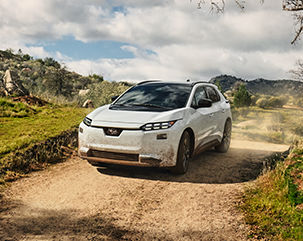
Photo: Subaru
This is specification-based guidance, not a road test.
The 2026 Subaru Solterra and 2026 Toyota bZ are still close relatives, but they no longer feel like the same electric SUV wearing different badges.
That is the interesting part of this comparison. Both models got meaningful updates for 2026, both now move to a North American Charging Standard (NACS) setup, and both promise better range, better charging performance, and more convincing real-world usability than before. But the split in personality is finally easier to see. Subaru is leaning harder into all-weather capability and outdoorsy usefulness. Toyota is making the cleaner case on range, trim flexibility, and price.
So if you are shopping this class right now, which one actually makes more sense?
Choose the Toyota bZ for Range and Value
Toyota’s strongest argument is straightforward: the 2026 bZ entry MSRP is $34,900 before delivery/processing/handling, taxes and fees, while the separate XLE FWD Plus has an EPA-estimated 314 miles. The entry price and maximum range are not one base configuration.
That matters because range still shapes the ownership experience more than almost anything else in this price bracket. The bZ also gives buyers more flexibility than the Subaru. You can spec it as a lower-cost front-wheel-drive model, step up to all-wheel drive if you need it, or go after the stronger 338-hp AWD versions if you want quicker performance. Toyota says DC fast charging from 10 to 80 percent can take about 30 minutes in ideal conditions, and the switch to NACS compatibility makes the charging story a lot cleaner than it used to be.
There is also a packaging advantage for buyers who do not automatically need Subaru’s off-pavement image. Toyota’s updated cabin now gets a standard 14-inch touchscreen, the design is cleaner than before, and the bZ still reads like the more mainstream everyday EV. If your life is mostly commuting, errands, school runs, and highway trips, Toyota’s formula is easy to understand.
In plain terms, the bZ looks like the better buy if your priorities are maximum range per dollar and the broadest trim spread.
Choose the Solterra for Standard AWD and Real Subaru Character
Subaru’s pitch is different, and honestly, more distinctive than it used to be.
The 2026 Solterra has an entry MSRP of $38,495 before destination/delivery, taxes and fees, offers up to 288 miles of range, and is advertised to charge from 10 to 80 percent in about 28 minutes under favorable DC charging conditions. Check the battery temperature, site and trim requirements; a matching connector does not promise access to every charger. That range number still trails Toyota’s best case, but Subaru answers with something Toyota does not match across the lineup: standard Symmetrical All-Wheel Drive.
That matters if you live somewhere with long winters, regular cottage-road duty, muddy trailhead parking lots, or just the kind of weather that makes traction feel like more than a spec-sheet footnote. Subaru also keeps its familiar capability angle with 8.3 inches of ground clearance, available 338-hp XT trims, and up to 63.5 cubic feet of cargo room. This is the one that feels more natural for buyers who want their EV to behave like a Subaru first and an appliance second.
The Solterra also gets some real convenience upgrades for 2026. Subaru says the battery preconditioning system is designed to help maintain charge speeds in cold weather, and the updated charging setup broadens access to Tesla-style connectors through NACS compatibility. Those changes address two of the biggest pain points that made the old Solterra harder to recommend.
In other words, the Subaru is finally easier to defend if you genuinely value standard AWD capability instead of just liking the badge.
The Real Separation Comes Down to Drivetrain Philosophy
This is where the two EV twins stop being twins.
Toyota gives buyers a front-wheel-drive entry point because it helps on both price and range. That makes the bZ easier to recommend as the rational choice for more people. Subaru goes the opposite direction and makes AWD non-negotiable. That likely costs it some range and pricing competitiveness, but it also gives the Solterra a much clearer identity.
That identity matters because too many EV crossovers are drifting toward the same answer: competent, quiet, anonymous transportation. The Solterra is still a compact electric SUV, but it is at least trying to preserve some Subaru-ness in the process.
If you just want the smartest spreadsheet result, Toyota probably wins. If you want an EV that fits a snowy, gear-heavy, outdoor-leaning lifestyle without giving up modern charging access, the Subaru makes a stronger case than before.
Which One Would I Pick?
For most buyers, the Toyota bZ is still the easier recommendation.
It is cheaper to get into, it delivers more headline range, and it gives shoppers more freedom to choose the version that fits their budget and climate. That is a pretty powerful mix in a market where affordability still decides a lot of EV purchases.
But the Subaru Solterra now feels less like a badge-engineered compromise and more like a deliberate alternative. If standard AWD, extra clearance, and a more adventure-ready personality actually matter in your daily life, the Subaru’s narrower focus starts to make sense.
The Motorlinks Take
This is probably the most interesting these two have been.
The 2026 Toyota bZ remains the better value-led EV for the broadest group of buyers. The 2026 Subaru Solterra still gives up range and price, but it finally has a stronger reason to exist beyond being the Subaru version of the same thing.
If you want the cleanest numbers, buy the Toyota. If you want an electric SUV that still feels like it was designed for snow, gravel, and weekend gear duty, the Subaru has a real argument now.
Related Articles
- Volkswagen’s Affordable EV Roadmap Finally Looks Like a Real Plan
- Kia EV3 vs Chevrolet Equinox EV: Wait for Kia or Buy Chevy Now?
- Toyota bZ Sales Surge 196% in Q1 2026 as Toyota’s EV Reset Starts to Show
Sources and scope
No first-hand comparison, current local quote or measured winter/charging performance.