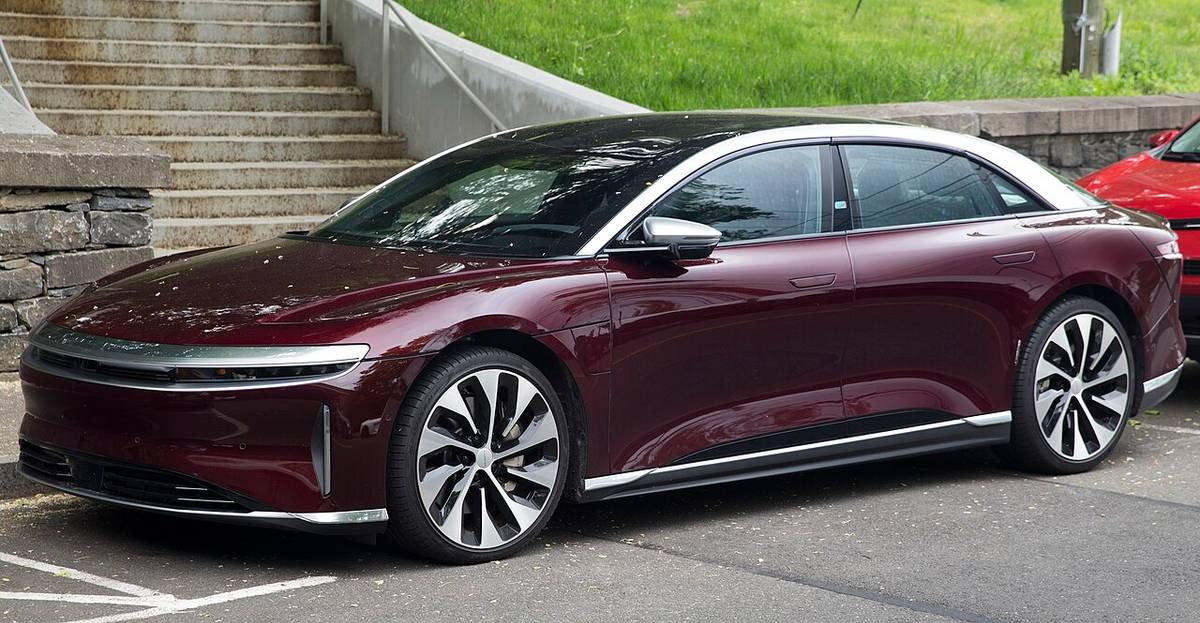
Lucid Air Sapphire Review: The 1,200-Horsepower Electric Weapon That Redefines Fast
Lucid's Air Sapphire isn't just the fastest production Air—it might be the fastest four-door sedan ever built. We drive the 1,234-hp super-saloon.
There are fast cars, and then there’s the Lucid Air Sapphire. When Lucid Motors unveiled the Air Sapphire as a 2024 model, the claim seemed almost absurd: a four-door electric sedan producing 1,234 horsepower, capable of 0-60 mph in under 2 seconds, with a top speed electronically limited to 205 mph. A year later, having driven it extensively on both public roads and a private test track, the absurdity has not worn off. The numbers are real, and they are astonishing.
The Air Sapphire uses a tri-motor powertrain—one motor on the front axle, two on the rear—fed by a 118 kWh battery pack that provides an EPA-estimated 427 miles of range. The motors are Lucid’s proprietary units, developed in-house and featuring an extraordinarily high specific power output that makes the packaging possible.
What 1,234 HP Feels Like
Words fail to adequately describe the sensation of 1,234 horsepower applied to a vehicle weighing just over 5,200 pounds. The launch control system—Lucid’s Eclipse mode—is activated via the central touchscreen, after which you simply floor the accelerator. The Air Sapphire accelerates with a violence that presses you against the seat hard enough to momentarily restrict breathing. At 60 mph, the digital speedometer reads it before your brain has fully processed the departure.
The tri-motor torque vectoring is audible in its precision. On a handling circuit, you can feel the individual motors adjusting power delivery millisecond by millisecond, keeping the car planted on the line you’ve chosen. The rear-wheel steering—the Sapphire gets a unique rear steering setup with a wider angle than the standard Air—makes the car feel shorter and more responsive than its 5.1-meter length would suggest.
The brakes are massive: 16.5-inch front rotors with six-piston calipers, supplemented by the strongest regenerative braking system Lucid has ever fitted. The regen alone can decelerate the car at up to 0.3g; the friction brakes only fully engage at higher deceleration demands. The transition between the two is imperceptible.
The Trade-offs
The Sapphire is not a comfortable car. The adaptive air suspension is firm, and the 22-inch wheels transmit sharp impacts from potholes and broken pavement. At low speeds in parking lots, the car feels ponderous and the turning circle is poor for a vehicle of this size.
The rear seat is less spacious than you might expect given the car’s footprint—the floor-mounted battery reduces cabin volume compared to what a conventional car of this size would offer, and the sloping roofline cuts into rear headroom.
And then there’s the price: $249,500. That’s Ferrari money, though the Sapphire’s four-door practicality is in a different category. At this price point, buyers have options including the Porsche Taycan Turbo GT and the Tesla Model S Plaid. Both are faster in a straight line in some configurations, but neither offers the Lucid’s combination of range, charging speed, and interior design sophistication.
Verdict
The Lucid Air Sapphire is an extraordinary achievement in automotive engineering—a car that rewrites what we believe is possible from an electric vehicle. It will appeal to a narrow audience, and at its price, it should. But for those who can afford it and can access one, the Sapphire delivers an ownership experience unlike anything else on the road.
Score: 9/10