Solid-State Battery Breakthrough: Toyota Claims 745-Mile Range, 10-Minute Charging
Toyota unveils a working solid-state battery cell achieving energy density more than double current lithium-ion, potentially reshaping the timeline for affordable long-range EVs.
Toyota sent shockwaves through the automotive and energy industries this week with the announcement of a working solid-state battery prototype achieving energy density of 1,200 Wh/L—more than double the energy density of the best current lithium-ion battery cells and sufficient to enable a passenger vehicle with 745 miles of EPA-estimated range and 10-minute DC charging capability.
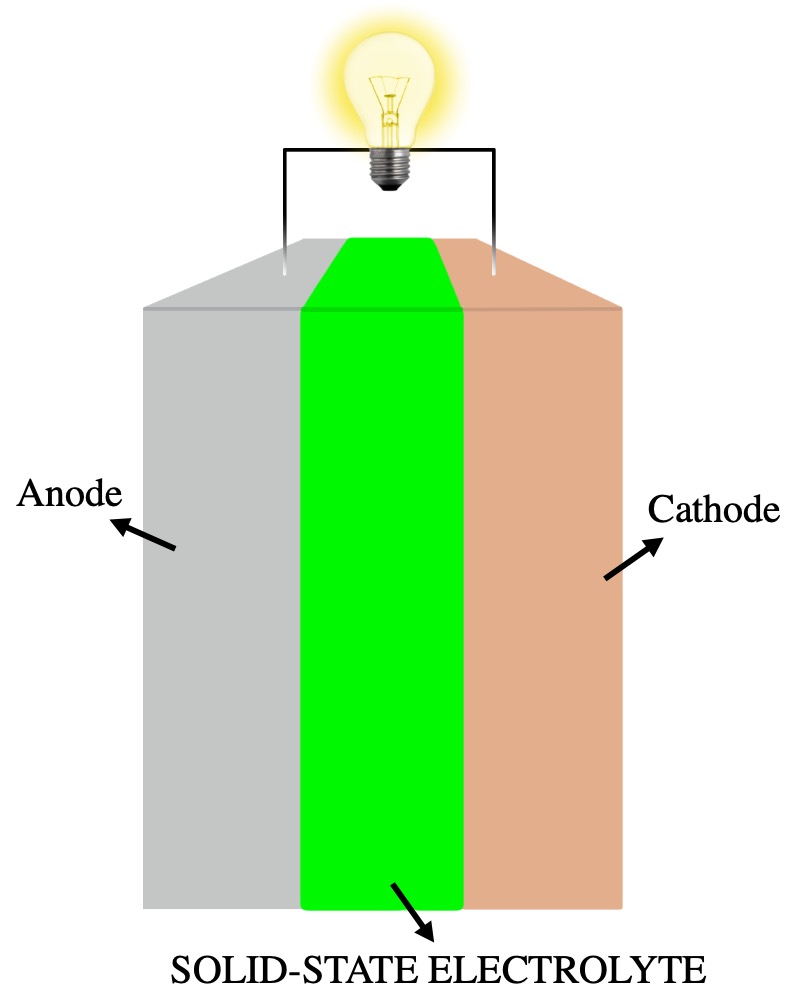
The announcement, made at a Toyota Technology Workshop in Toyota City, Japan, represents years of research into solid-state electrolytes—the use of a solid material (typically a ceramic or sulfide compound) instead of the liquid electrolyte found in conventional lithium-ion batteries. Solid-state batteries promise dramatically higher energy density, faster charging, improved safety (no flammable liquid electrolyte), and longer cycle life.
“We’ve spent decades on this problem, and today we can show the world that solid-state is real, that it’s achievable, and that it’s coming to market faster than many believed possible,” said Toyota CTO Hiroki Nakajima.
What the Numbers Mean
The prototype battery cell achieves 1,200 watt-hours per liter. For context, Tesla’s 4680 cylindrical cells achieve approximately 700 Wh/L at the cell level; the most energy-dense production battery cells today max out around 750 Wh/L. A solid-state cell at 1,200 Wh/L would, in theory, enable the same range from a battery pack half the physical size—or equivalent range from a dramatically smaller, lighter, cheaper battery pack.
Toyota’s claim of 745 miles of range assumes a vehicle efficiency consistent with the bZ4X, approximately 3.4 miles per kWh. At that efficiency, a 100 kWh battery would deliver 340 miles in a current EV; at solid-state energy density, the same 100 kWh would be a much smaller pack, or a 200 kWh pack could fit in the space of today’s 100 kWh pack, enabling 680 miles of range.
The 10-minute charging claim is equally significant. Current lithium-ion batteries, even with 800V charging architectures, require roughly 20-25 minutes to charge from 10% to 80%. Cutting that to 10 minutes—comparable to the time to refuel a conventional gasoline vehicle—would eliminate one of the primary remaining objections to EV ownership.
The Timeline Question
Toyota confirmed that the solid-state battery is targeted for introduction in hybrid vehicles by 2027 or 2028, with full EV applications following in the early 2030s. The timeline reflects the considerable manufacturing challenges of solid-state batteries: the solid electrolyte materials are brittle and can crack during the expansion and contraction that occurs as batteries charge and discharge. Toyota’s engineering team has developed a proprietary sulfide electrolyte that addresses this challenge, but scaling production to automotive volumes remains an open problem.
Other automakers and battery manufacturers are watching closely. QuantumScape, Solid Power, and Samsung SDI have all announced solid-state battery development programs, with commercialization targets in the 2028-2030 range. Toyota’s announcement puts pressure on competitors to accelerate their programs.
The implications extend beyond the auto industry. Solid-state batteries could transform grid energy storage, consumer electronics, and aviation—all sectors where the energy density, safety, and longevity advantages of solid-state technology would be transformative.
For EV buyers, the announcement is a reminder that the technology continues to evolve rapidly. Cars on the road today, while excellent, will look increasingly outdated as this next generation of battery technology approaches commercial reality.