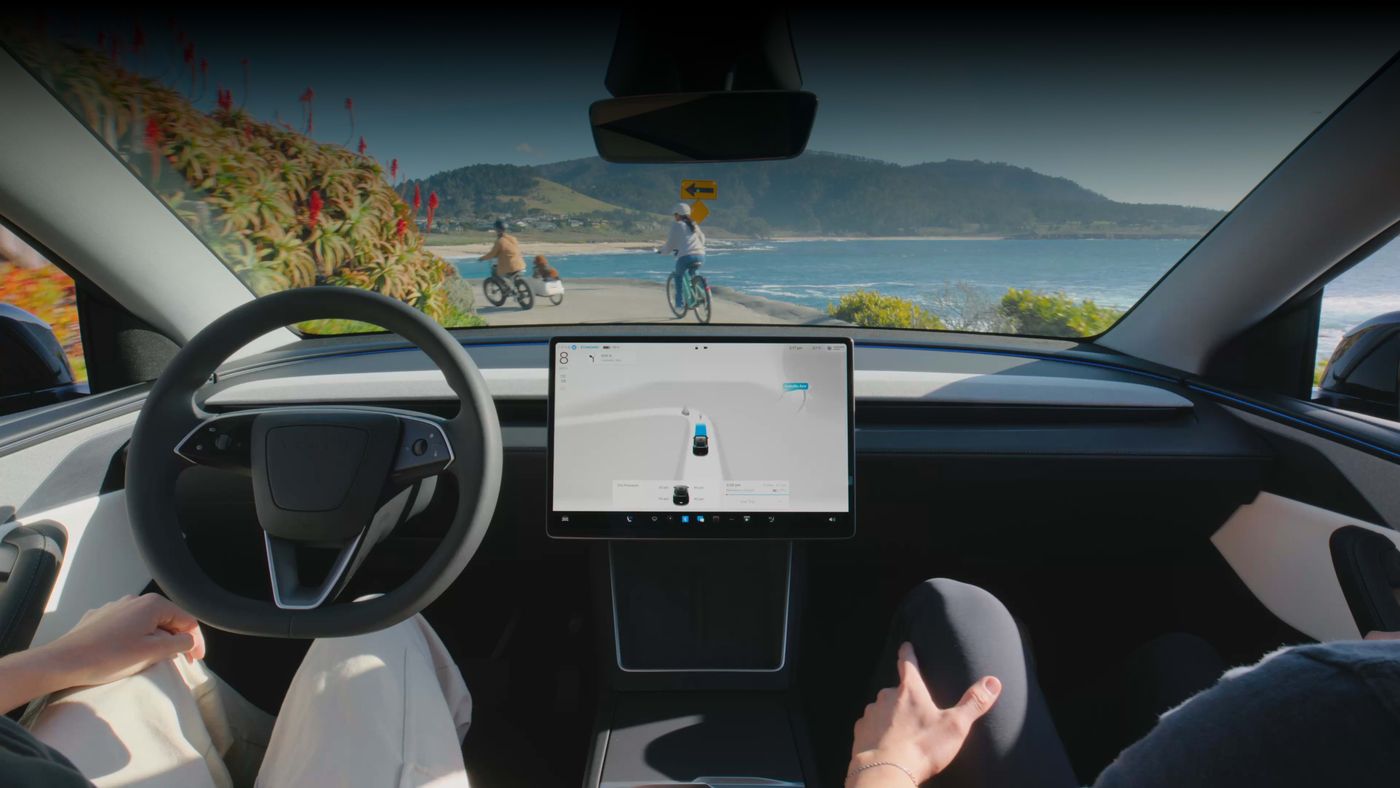
Tesla FSD 2025.44 Bridges the Gap Between Your Car and the Robotaxi
Tesla's November 2025 software update begins merging the robotaxi and consumer FSD codebases, bringing advanced autonomy features to everyday Tesla owners.
Tesla began rolling out its FSD 2025.44 software update on November 16–17, 2025, and it’s one of the most significant over-the-air updates in the company’s history. For the first time, Tesla is merging the codebases that power its limited robotaxi fleet in Austin with the FSD software running on hundreds of thousands of customer vehicles. The result: features previously only available to the few hundred robotaxi participants are now flowing out to the broader FSD user base.
The merge has been years in the making. Elon Musk has long promised that consumer FSD and the robotaxi program would eventually share the same neural network architecture, and 2025.44 is the first concrete step in that direction. Until now, Tesla maintained separate branches—the robotaxi fleet ran a more advanced, sensor-heavy version of FSD that wasn’t yet cleared for consumer deployment. That distinction is now blurring.
What Changed in 2025.44
The update introduces a revised occupancy prediction system that’s better at anticipating the behavior of pedestrians, cyclists, and other vehicles. It also includes a new sensor fusion layer that more effectively combines data from cameras and the ultrasonic sensors in vehicles equipped with them. Perhaps most notably, Tesla has updated the decision-making stack to be more assertive in certain edge cases—something drivers had been requesting for years.
Tesla’s release notes (posted to its online service portal) describe the update as improving “object detection confidence in low-visibility conditions” and “smoothed path planning in complex merge scenarios.” The company stopped short of calling it a Level 3 autonomous system—FSD is still classified as Level 2, requiring driver supervision at all times—but the behavioral improvements are measurable.
Why This Matters for the Robotaxi Program
Tesla’s Austin robotaxi fleet, which launched in limited form earlier in 2025, has been operating under a separate development branch. The 2025.44 merge means the consumer fleet is now effectively acting as a massive data-collection and validation network for the autonomy stack. Every mile driven by a customer with FSD engaged helps Tesla’s backend refine the models that power the robotaxi software.
Musk had promised that the robotaxi fleet would “double” by the end of 2025, a target that looked optimistic given the fleet had barely reached around 200 vehicles by mid-year. The 2025.44 update doesn’t directly add vehicles to the robotaxi fleet, but it brings the consumer and robotaxi software much closer together, making it easier to expand the program once regulatory approvals are in place.
The Regulatory Angle
The merger of the two codebases adds a layer of complexity to Tesla’s regulatory relationships. The robotaxi program operates under specific exemptions in Austin and a handful of other cities, while consumer FSD is available to any Tesla owner in the US who has purchased the $8,000 FSD package or subscribed at $99/month. Bringing robotaxi-class features to consumer vehicles means Tesla will need to navigate an evolving regulatory landscape where the lines between “advanced driver assist” and “autonomous vehicle” are increasingly blurry.
The National Highway Traffic Safety Administration (NHTSA) has been investigating Tesla’s FSD system following several incidents, and any update that makes the system more assertive is likely to attract scrutiny. Tesla has maintained that FSD requires active driver supervision and that the driver remains responsible for the vehicle’s operation at all times.
Real-World Impact
For existing Tesla owners, 2025.44 is rolling out over the course of several weeks via the standard over-the-air update process. Not every feature in the update is available on every Tesla model—the hardware generation matters, and vehicles on older hardware may see a subset of changes. Owners with Hardware 4 (HW4) equipped vehicles are getting the most comprehensive changes, including the updated sensor fusion and occupancy prediction systems.
The update is available for the following vehicles running FSD:
- Model S (2021+)
- Model X (2021+)
- Model 3 (2017+)
- Model Y (2020+)
- Cybertruck (all model years)
Bottom Line
FSD 2025.44 is the most tangible evidence yet that Tesla’s robotaxi ambitions and its consumer FSD product are on a convergence path. Whether that’s a good thing depends on your view of Tesla’s overall autonomous driving strategy. If you’re a current Tesla owner with FSD, expect your car to feel more confident in complex situations. If you’re watching from the outside, the update is another data point in a multi-year story about whether Tesla can deliver on its promise of truly autonomous vehicles.
The 2025.44 update doesn’t make your Tesla a robotaxi. But it’s the clearest signal yet that Tesla thinks the gap between the two is smaller than it used to be.