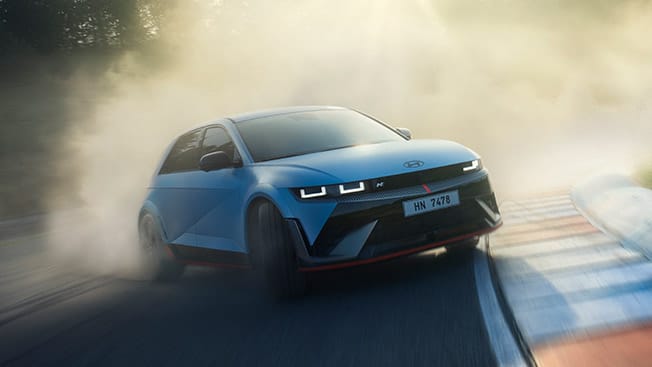
Hyundai IONIQ 5 Sales Climb 13% in March 2026 — And the Brand Has More Good News
The Hyundai IONIQ 5 posted a 13% sales gain in March 2026, with 4,425 units delivered in the US. The three-row IONIQ 9 is also ramping up nicely, giving Hyundai a rare bright spot in a challenging EV market.
Photo: Hyundai
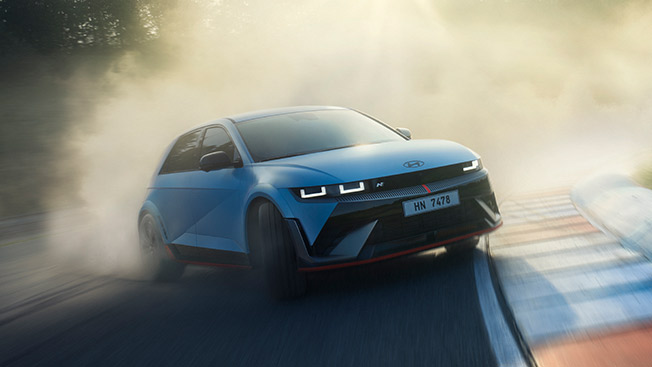
March 2026 brought a rare piece of good news from the US EV market: the Hyundai IONIQ 5 is selling better than it did a year ago.
In its April 1, 2026 U.S. release, Hyundai reported 4,425 IONIQ 5 deliveries in March, up 13% from 3,919 in March 2025. Across the full first quarter, the compact electric crossover moved 9,790 units — a 14% gain over Q1 2025’s 8,611. That’s not a huge number in absolute terms, but in a market where most EVs are fighting to hold their ground against cheaper gas-powered rivals and persistent consumer hesitation around charging infrastructure, any gain is worth noting.
Why the IONIQ 5 Is Holding On
The IONIQ 5 launched in the US for the 2022 model year and has aged well. It was one of the first EVs to offer 800V architecture at a non-luxury price point, which means DC fast charging is genuinely quick — you can go from 10% to 80% in about 18 minutes at a 350kW charger. That kind of capability was once the exclusive domain of Porsche and Audi; Hyundai democratized it.
The 2025 refresh brought a larger 84kWh battery (up from 77.4kWh), bumping the EPA-rated range to around 318 miles for the Long Range RWD model. There’s also the IONIQ 5 N — a 641-hp high-performance variant for buyers who want to pair the electric efficiency message with genuine driving excitement.
A mid-US$30,000s SEL example that subtracts a new US$7,500 federal credit is not a general 2026 offer: under the IRS’s 2025 law guidance, clean-vehicle credits ended for vehicles acquired after September 30, 2025, subject to acquisition and possession rules. Dealer discounts, leases, state programmes and warranty coverage require their own current terms.
The IONIQ 6 Story Is Less Rosy — and the IONIQ 9 Is the Plot Twist
Not everything in Hyundai’s EV lineup is clicking. The IONIQ 6 sedan — which has been discontinued in the US market — saw sales collapse, down 82% in March compared to a year prior. A declining or discontinued model can still have dealer inventory sales; discontinuation is not proof that no vehicles are being sold, but it underscores how quickly an EV can go from hot to gone when a brand decides to pivot.
The more interesting story is the IONIQ 9. Hyundai’s three-row electric SUV, the IONIQ 9, posted 905 sales in March and 1,990 across the quarter — its first meaningful volume numbers in the US market. Compare that to zero sales a year ago, and you can see Hyundai is finally getting some traction with its larger EV. The IONIQ 9 uses an 800V architecture, but it does not share the IONIQ 5’s stated 84-kWh pack, wrapped in a package that appeals to families who need more than five seats.
What It Means for the Market
Hyundai is increasingly looking like one of the more serious mainstream EV players in the US market — not just making compliance cars or aspirational concepts, but actual products people are buying. The IONIQ 5’s sales resilience in a tough market suggests the fundamentals are right: competitive range, fast charging, reasonable pricing, and a warranty that addresses one of the biggest consumer concerns about EVs.
The broader US EV market has had a rocky 2026 so far. Tariff uncertainty, the end of the federal clean-vehicle credits, and a wave of cheaper Chinese EVs knocking at the door have created a climate of caution among mainstream buyers. In that context, a 13% gain for the IONIQ 5 isn’t just a data point — it’s a signal that when the product is solid, buyers are still willing to make the switch.
If Hyundai can keep the momentum going with the IONIQ 5 and scale IONIQ 9 production, the brand could end 2026 in a stronger EV position than it started.