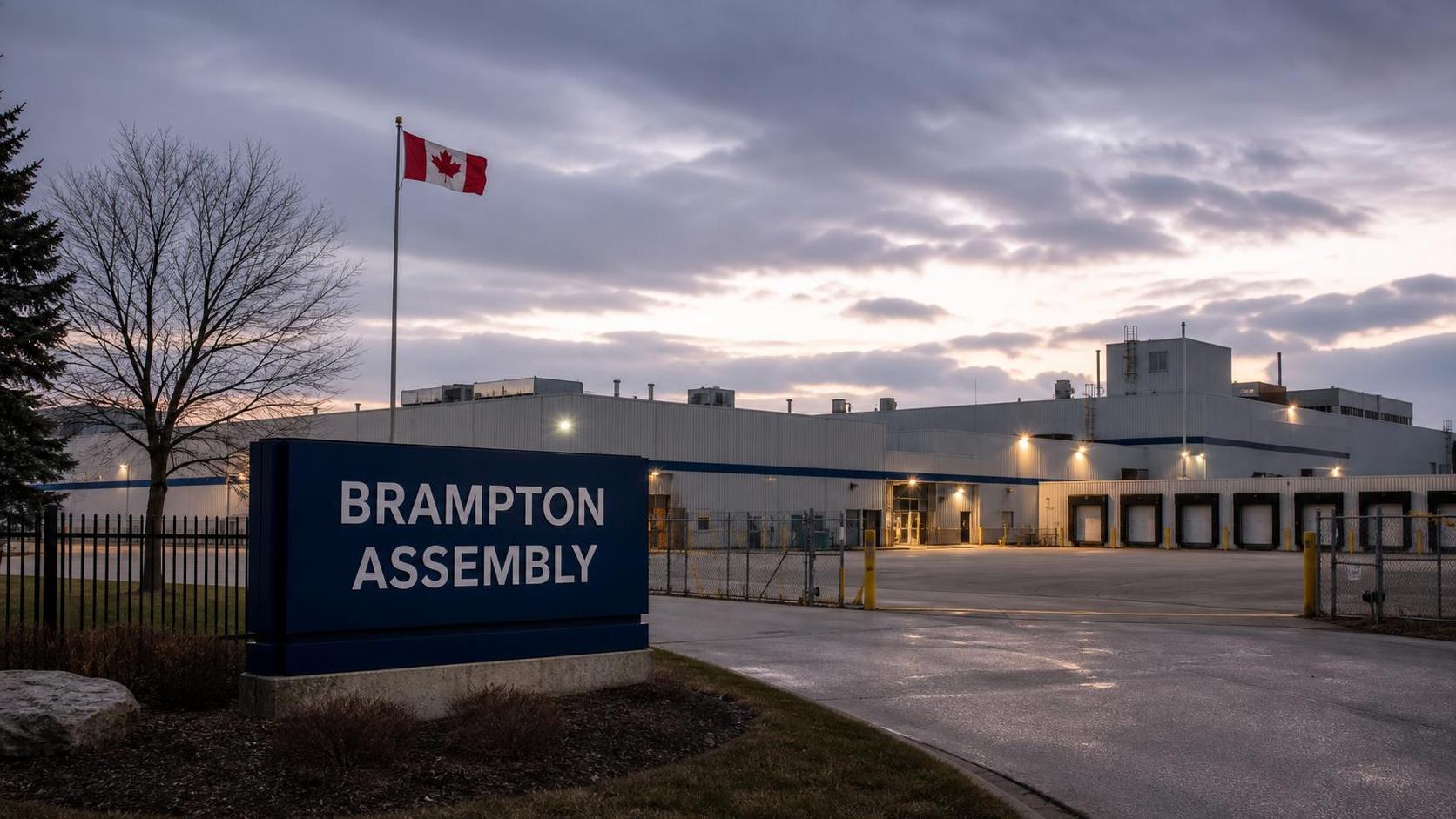
Stellantis Could Close or Sell Brampton Assembly, Unifor Says
Unifor says Stellantis is seriously considering closing and selling its idled Brampton Assembly Plant, while the automaker says it is still seeking a sustainable manufacturing solution.
The future of one of Canada’s most closely watched auto plants has become even less certain.
Unifor says Stellantis is seriously considering closing and selling its Brampton Assembly Plant, according to CBC News. The automaker has not announced a closure or sale. In a statement reported Friday, Stellantis said it is preparing for collective bargaining and remains focused on finding a “sustainable manufacturing solution” for the idled Ontario factory.
That distinction matters. A union warning is not a completed corporate decision, and there is no announced buyer, shutdown date or replacement product. But the possibility of a sale is a serious escalation for a plant that once employed about 3,000 people and was supposed to play a major role in Stellantis’ Canadian electrification plans.
What Is Confirmed Right Now
The Brampton plant has not assembled vehicles since the end of 2023. It originally shut down for retooling that was meant to prepare the site for a new generation of vehicles, including electrified products.
The plan began to unravel in stages:
- In February 2025, Stellantis paused the retooling work and delayed the planned Jeep Compass program.
- In October 2025, the company shifted future Compass production to Belvidere, Illinois, as part of a broader U.S. manufacturing investment.
- Stellantis and Canadian stakeholders continued discussing alternative uses for Brampton, but no replacement vehicle entered production.
- In April 2026, reports linked the plant to possible assembly of Leapmotor electric vehicles, an idea that drew opposition when it appeared the operation could rely heavily on Chinese-made kits rather than a full Canadian supply chain.
The latest development does not confirm that Stellantis has abandoned every alternative. It does show that the range of possible outcomes now reportedly includes selling the facility rather than restarting it under the current owner.
How Brampton Went From EV Investment to an Idle Plant
In 2022, Stellantis announced a C$3.6-billion investment to modernize its Brampton and Windsor operations for electrified vehicle production. Federal briefing material says Ottawa offered up to C$529 million, while Ontario committed up to C$513 million toward the broader project.
At the time, Brampton looked like a bridge between Canada’s long combustion-vehicle manufacturing history and its electric future. The factory had built Chrysler and Dodge sedans and muscle cars, and the retooling plan was supposed to give the site a new multi-energy role.
Instead, the factory stayed quiet. Stellantis moved the planned Compass work to the United States last fall, leaving Brampton without an assigned production vehicle. Federal officials subsequently said the company had committed to maintaining its Canadian footprint, while Stellantis continued to describe the shutdown as a pause rather than a closure.
That language is now under pressure. A plant can remain technically available for future production for only so long before workers, suppliers and governments need a concrete program and timeline.
Why the Leapmotor Option Did Not Settle the Question
Earlier this year, Stellantis explored bringing its Chinese EV partner Leapmotor to Brampton. On paper, the idea offered an obvious match: Stellantis needed a product for an idle Canadian plant, while Leapmotor wanted to expand beyond China.
The manufacturing details were the problem. Unifor warned that importing largely complete vehicle kits for limited local assembly would not recreate the employment, stamping, parts sourcing and skilled production originally expected at Brampton. Industry Minister Melanie Joly also said Canada would not support a simple “cars in a kit” arrangement.
CityNews reported in April that the union wanted any Leapmotor plan to use Canadian workers and suppliers in a meaningful way. No approved Leapmotor production program has since been announced for the site.
The episode showed why finding any vehicle is not enough. The key question is how much real manufacturing value stays in Canada.
Brampton Has Tried to Protect the Site for Automaking
The City of Brampton has already moved to make a non-automotive redevelopment more difficult. In February, city council approved planning protections intended to preserve the property for vehicle assembly and related manufacturing.
That does not force Stellantis to restart production. It does mean a potential sale would not automatically turn the factory land into a conventional residential or commercial redevelopment play. A buyer would still have to contend with the site’s designated industrial purpose, labour questions, equipment needs and Canada’s evolving trade relationship with the United States.
For an auto plant built around cross-border supply chains, trade certainty is not an abstract policy issue. Canadian factories generally need access to the much larger U.S. market to support full-scale production economics.
Why This Matters Beyond Stellantis
Brampton is a test of whether Canada’s EV-transition investments can preserve complete manufacturing ecosystems rather than only isolated projects.
An assembly plant supports far more than the people inside its gates. Tooling firms, parts suppliers, logistics companies and skilled trades all plan around an assigned vehicle and a production schedule. Years of delay weaken that network even before a formal closure occurs.
The plant also illustrates how quickly an electrification promise can collide with tariffs, shifting product plans and softer-than-expected North American EV demand. Stellantis initially pitched Brampton as a flexible, electrified factory. The company then moved its assigned vehicle south and considered a lower-content Chinese EV assembly plan. Now the union says a sale or closure is under serious consideration.
What Happens Next
The immediate pressure point is bargaining. Unifor is negotiating new agreements with the Detroit Three, and its current Stellantis contract covering Brampton, Windsor and Etobicoke is due to expire in September.
Watch for four things: whether Stellantis formally confirms a sale process, whether a credible vehicle program is assigned to Brampton, whether federal or provincial funding agreements give governments leverage, and whether any proposed buyer commits to full-scale Canadian manufacturing rather than minimal final assembly.
Until one of those moves happens, Brampton Assembly is not officially closed. It is also no longer credible to treat a future reopening as assured. Workers have now been waiting nearly three years for production to return, and the latest warning makes the need for a firm answer impossible to ignore.