Kia's EV Lineup Turns Record Sales Into an Affordable-EV Warning Shot
Kia posted a record first half globally, and the EV3, EV9, EV6 and PV5 show why its next electric push is about covering more price points instead of chasing one halo model.
Kia’s electric strategy is starting to look less like a few good EVs and more like a full product ladder.
In its June 2026 global sales release, Kia said first-half global sales reached 1,630,988 vehicles, its best first-half result since the company began selling cars. The headline number is not all electric, of course. But Kia credited part of its momentum to region-specific electrified-vehicle strategies, and a fresh Electrek readout framed the bigger point clearly: Kia is now trying to cover everything from small affordable EVs to three-row family SUVs and electric vans.
That matters because the EV market no longer rewards one clever model by itself. Buyers want range, price, charging access, space, dealer support and a body style that actually fits their life. Kia’s answer is not one answer. It is EV3, EV4, EV5, EV6, EV9 and PV5, with different regions getting different priorities.
For North America, the most important piece is still the 2027 Kia EV3.
Kia EV lineup context gallery
13
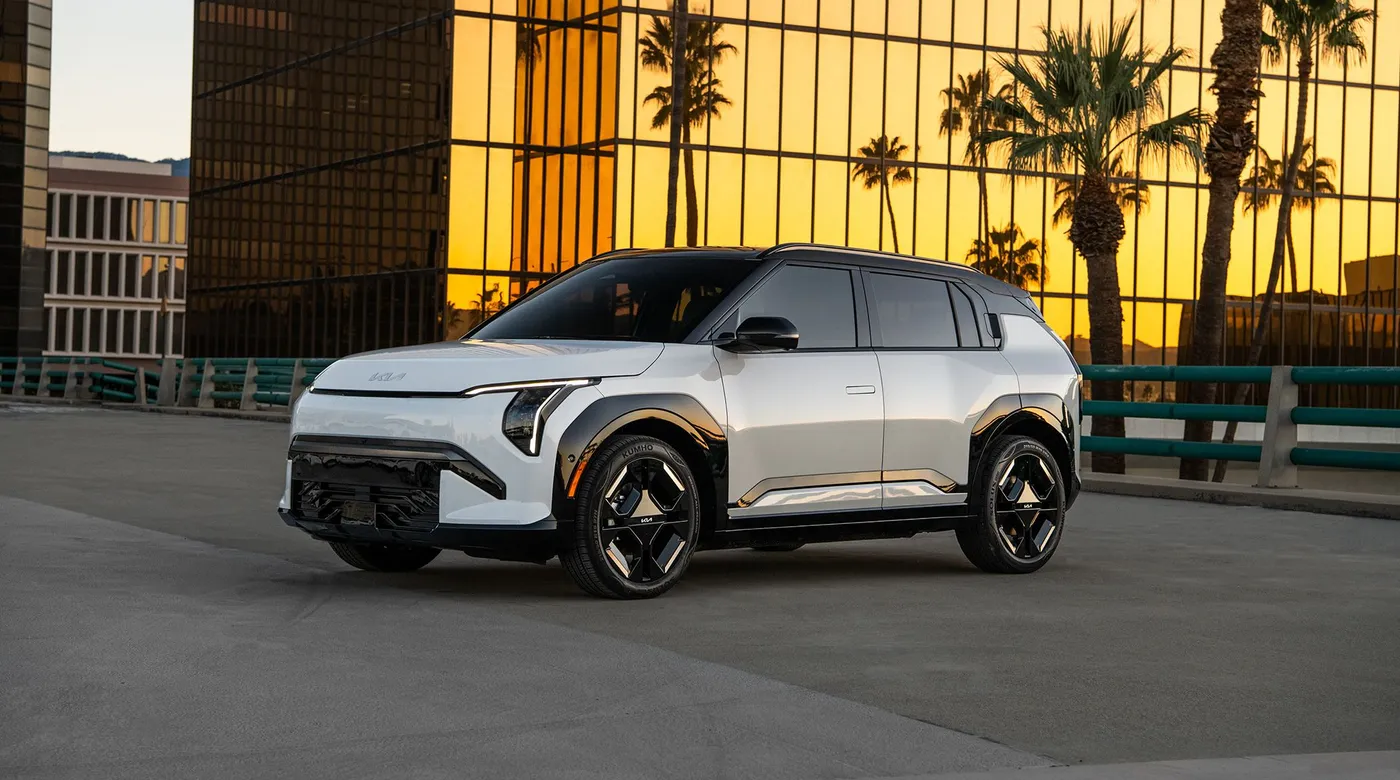
The 2027 EV3 is Kia's upcoming U.S.-bound compact electric SUV, with a late-2026 launch target and up to a Kia-estimated 320 miles of range.
The EV3 Is the Missing Rung
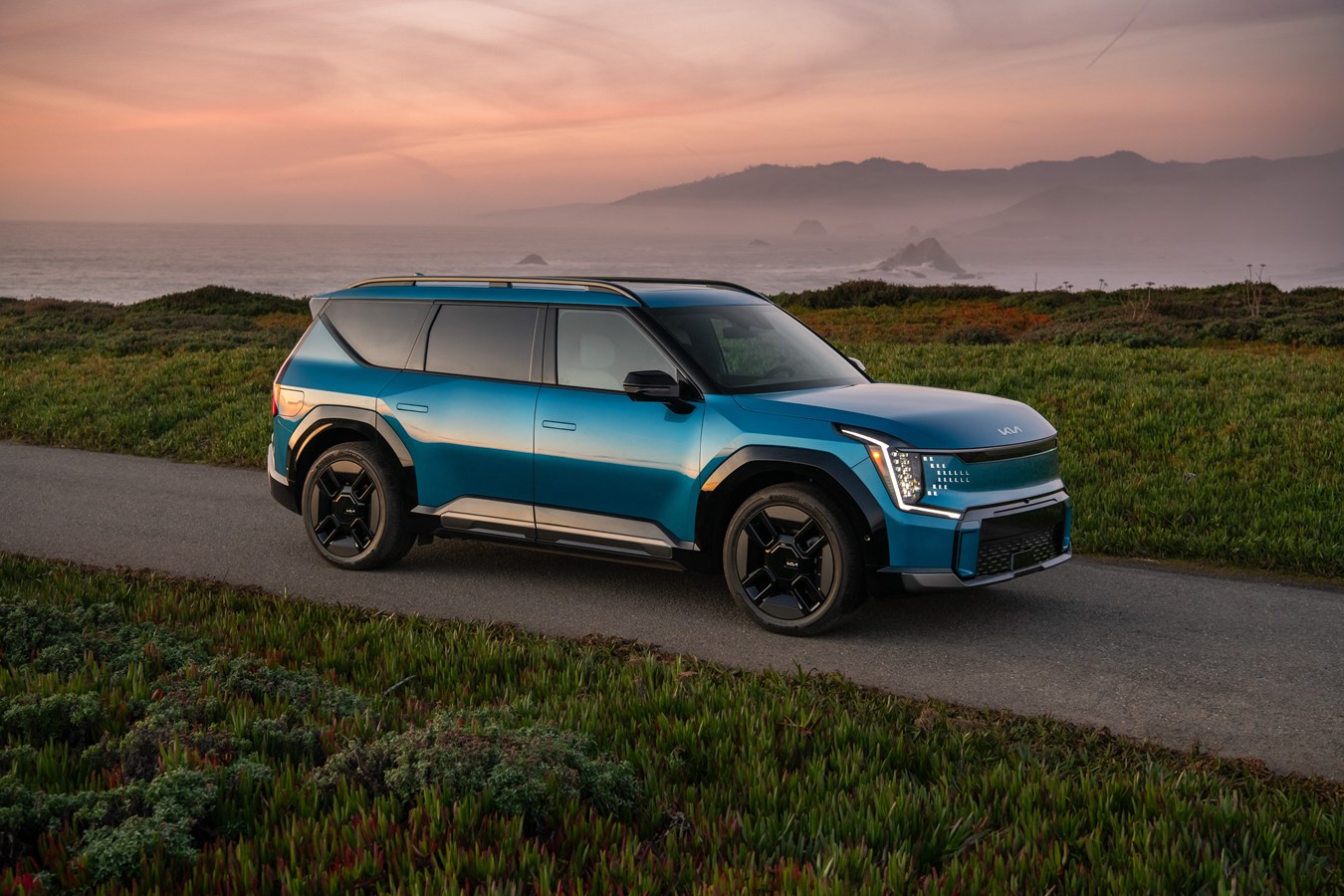
Kia already has credibility at the expensive end of the EV aisle. The EV9 is a real three-row electric SUV, not a science project with emergency-use rear seats. The EV6 still has strong charging and performance credentials. The problem has been the lower end of the market, where shoppers want a smaller electric crossover without paying luxury-SUV money.
That is the EV3’s job.
Kia’s U.S. EV3 overview says the 2027 model will launch in late 2026 with five trims: Light, Wind, Land, GT-Line and GT. The Light uses a 58.3-kWh battery with up to a Kia-estimated 220 miles of range. Longer-range trims use an 81.4-kWh battery, with Kia estimating up to 320 miles on front-drive versions.
The EV3 also gets a native NACS charge port, standard Plug and Charge capability, available Vehicle-to-Load, and estimated 10-to-80-percent DC fast-charging times of 29 minutes for the smaller battery and 31 minutes for the larger one.
Those are manufacturer estimates, not final EPA ratings or independent test results. Pricing is also still missing. But the shape of the product is exactly where the market needs more pressure: compact electric SUV, useful range, normal Kia dealer footprint, and a price target that has to stay close to mainstream crossover shoppers if the EV3 is going to matter.
The EV9 Is Doing the Heavy Lifting for Now
Until the EV3 arrives, Kia’s U.S. electric story leans heavily on the EV9.
Electrek’s July 7 sales readout said Kia sold 7,035 EV9s in the U.S. through June, up 42 percent from the same period in 2025, while EV6 sales were down 31 percent to 4,043 units. That split is telling. The larger, family-focused EV is carrying momentum, while the older EV6 is facing a tougher mid-size crossover fight.
That does not make the EV6 irrelevant. It still gives Kia a sporty, fast-charging EV in the middle of the lineup. But the market is moving fast. Chevrolet has the Equinox EV, Nissan has the new Leaf, Hyundai has the IONIQ 5, Tesla keeps pushing Model Y price and availability, and used EV prices have made shoppers more ruthless about value.
Kia needs the EV3 because the EV6 cannot be both the tech showcase and the affordable on-ramp forever.
The PV5 Makes the Strategy More Interesting
The sleeper in Kia’s EV push is the PV5.
Kia’s electric van is less glamorous than a three-row SUV, but it may be just as important. Commercial and shuttle buyers care about uptime, packaging, cargo access and operating cost more than they care about 0-to-60 times. A modular electric van gives Kia a way into fleet and mobility use cases where EVs can make practical sense without asking private buyers to change their habits overnight.
That is why the lineup story matters. Kia is not just adding more crossovers with different numbers on the tailgate. It is trying to build an EV family that covers private buyers, families, fleets and city use cases. Some models will be regional. Some will not come to the U.S. or Canada in the same form. But the overall direction is clear.
Kia wants to make electrification feel normal across more jobs.
What Buyers Should Watch Next
The next big number is EV3 pricing.
Kia can talk about accessibility, but the sticker will decide whether the EV3 becomes a genuine affordable-EV contender or just another promising small crossover that drifts too close to larger options once options and destination charges are added. The EV3 also needs final EPA range numbers, charging-curve reality, dealer availability and lease support before shoppers can fully judge it.
For Canadian buyers, the broader lesson is similar: watch what Kia brings here, not just what it sells globally. EV affordability still depends on local pricing, incentives, charging access and whether the right trims actually arrive. MotorLinks’ Canadian EV incentive guide is still the place to sanity-check the real purchase math.
The EV9’s first-half growth shows Kia can move a premium electric family SUV when the product makes sense. The EV3 will test whether Kia can bring that same confidence down to a more attainable part of the market.
The MotorLinks Take
Kia’s record first half is not an “EVs solved everything” story. It is more interesting than that.
The company is growing while building an electric lineup that finally looks broad enough to meet different buyers where they are. The EV9 handles the family-hauler role. The EV6 keeps the performance-crossover slot alive. The PV5 opens a commercial-vehicle lane. The EV3 is the one that could turn all of that into a mainstream affordable-EV argument.
That last part is the key. North American EV shoppers do not need another distant promise. They need a compact electric SUV with honest range, sane charging, dealer support and a price that does not collapse under real-world trim choices.
If Kia gets the EV3 price right, its record first half may look less like a sales milestone and more like a warning shot.
FAQ
Why does Kia’s first-half 2026 sales record matter for EV buyers?
It shows Kia is gaining volume while building a wider EV lineup, not relying on one halo vehicle. That matters because affordable EV adoption needs more than a single good model.
When does the Kia EV3 arrive in the U.S.?
Kia says the 2027 EV3 is expected to go on sale in late 2026. Final pricing is due closer to launch.
What are the Kia EV3 range estimates?
Kia estimates up to 220 miles from the 58.3-kWh battery and up to 320 miles from the 81.4-kWh front-drive long-range version. Those are Kia estimates, not final EPA ratings.