GM Wants Its EVs and Batteries to Help Run the Grid
GM's Empower 2026 announcements combine sodium-ion grid storage, bidirectional EVs, second-life battery projects, and Energy Pass charging into a bigger energy strategy.
General Motors is trying to turn its EV battery work into something bigger than cars.
At GM Empower 2026, the company laid out a broad energy strategy built around three connected pieces: sodium-ion batteries for grid-scale storage, bidirectional EVs that can eventually support local grids, and a new Energy Pass charging interface meant to make public charging less fragmented for GM drivers.
That sounds like corporate energy-summit language, but the practical point is simple. GM believes the EV era will not be won only by selling battery-powered Chevrolets, GMCs, and Cadillacs. It also wants the batteries, chargers, apps, home equipment, and grid relationships around those vehicles to become a business of their own.
This is not a review, and it is not a new vehicle launch. It is still important EV news because it shows how a legacy automaker is trying to make the expensive parts of electrification work across multiple markets instead of leaving them trapped inside individual cars.
Official GM Energy announcement gallery
14
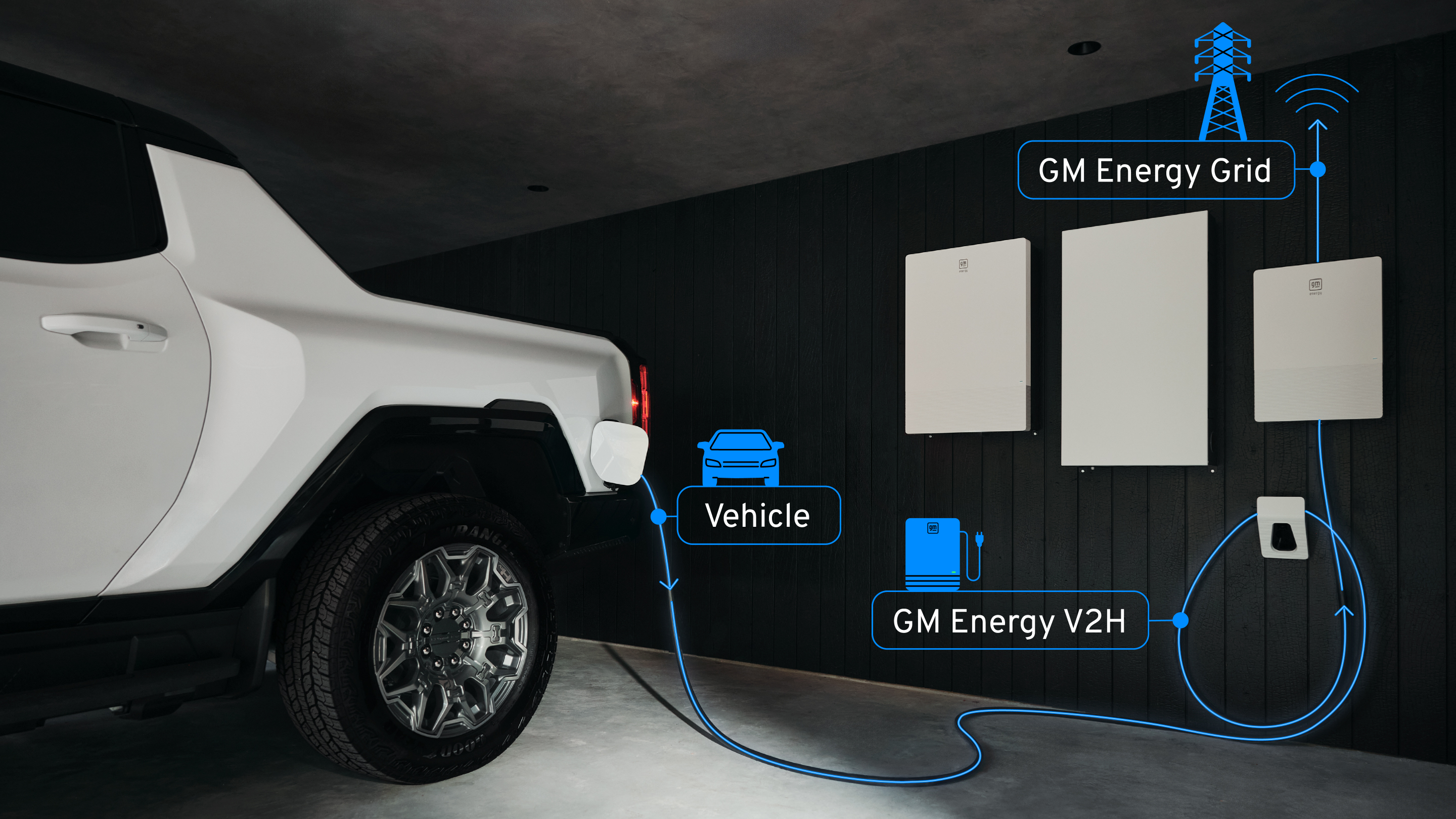
GM used Empower 2026 to connect EV batteries, charging software, bidirectional hardware, and grid-scale storage into one energy strategy.
Sodium-Ion Is for the Grid, Not Your Next Equinox EV
The most technically interesting piece is GM’s new work with Peak Energy.
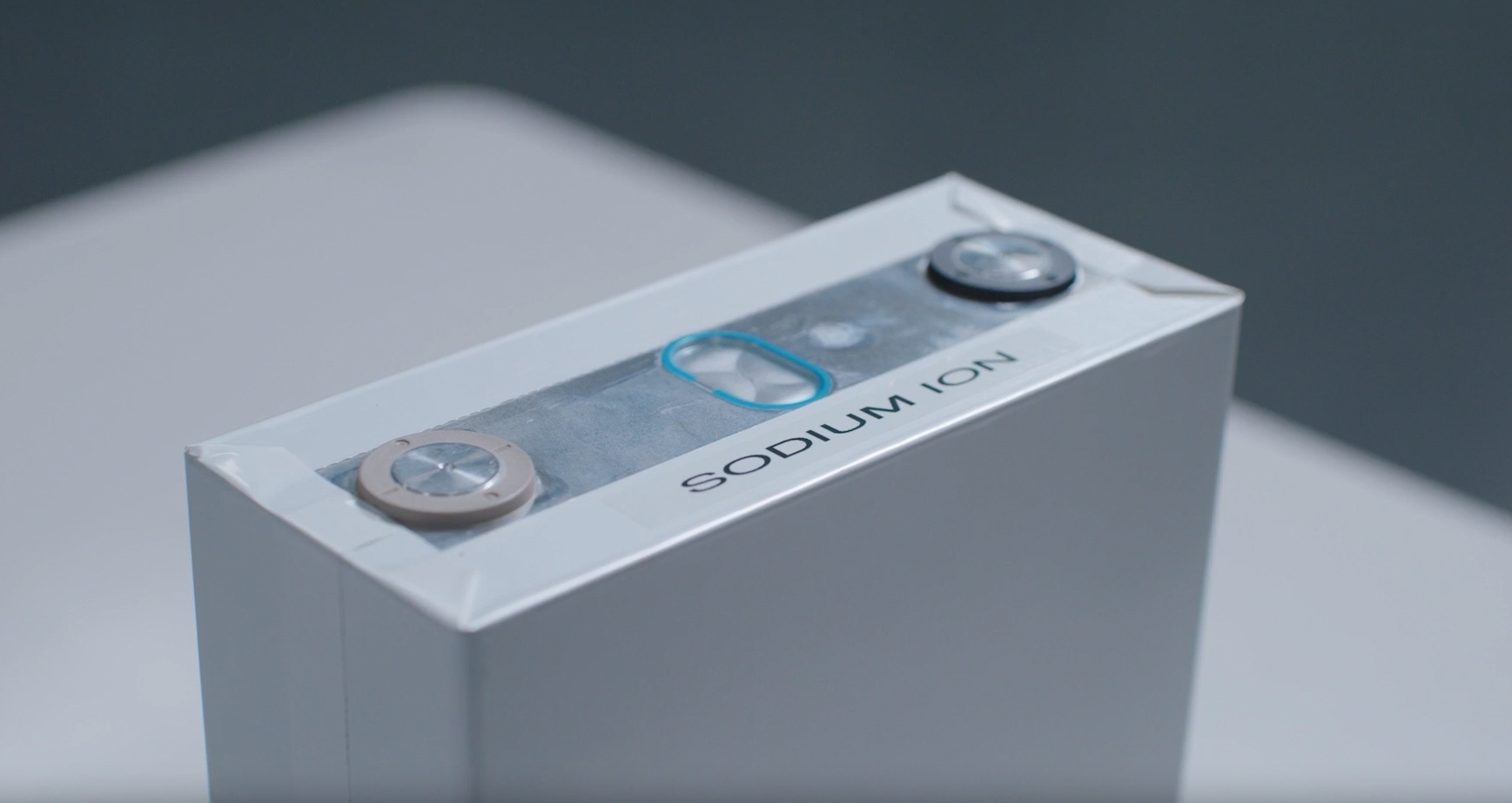
In a June 9 announcement, Peak Energy said it is partnering with GM to develop and deploy next-generation sodium-ion battery cells for grid storage. GM will develop the cell in its Michigan battery labs and retain exclusive manufacturing rights, while Peak plans to use the cells in its stationary energy storage systems.
The key phrase is “stationary.” Sodium-ion is not being pitched here as the chemistry that suddenly gives a future Chevrolet EV 600 miles of range. GM’s argument is almost the opposite: different jobs need different batteries.
For a vehicle, energy density matters because every extra pound hurts range, performance, cost, and packaging. For a grid storage container sitting beside a utility site, the priorities change. Cost, cycle life, calendar life, temperature tolerance, safety, serviceability, and reduced cooling complexity can matter more than squeezing every last watt-hour into the smallest possible package.
GM says sodium-ion has the potential to operate across a wider temperature range and with less active cooling than incumbent large storage systems. Peak says its passively cooled sodium-ion system can reduce energy storage costs by 20 percent compared with conventional systems and deliver more than 99 percent uptime.
Those are company claims, so they deserve the usual caution until projects scale in the field. But the direction makes sense. If demand from data centers, factories, homes, and EV charging keeps rising, the grid needs cheaper storage that can soak up energy and release it when demand spikes.
GM Also Wants Parked EVs to Become Grid Assets
The other half of the strategy is already sitting in driveways.
GM says it has more than 250,000 bidirectional-capable EVs on U.S. roads today. In its open letter to utilities and regulators, the company says those vehicles have enough theoretical energy capacity to help power 120,000 homes for up to one week, assuming compatible home equipment and other required conditions.
That number is eye-catching, but the hard part is not proving that a battery can discharge. The hard part is making vehicle-to-grid participation boring enough for normal owners.
Utilities need rules for interconnection, rate design, customer enrollment, safety, compensation, and grid dispatch. Owners need clear incentives and confidence that using a vehicle battery for backup power or grid support will not make ownership more complicated. Automakers need software that can protect the customer’s mobility needs while still offering useful energy flexibility.
GM says it is already working with PG&E in Northern California and DTE Energy in Michigan. Those pilots matter more than the big theoretical battery-capacity number because they test the messy parts: homes, utility programs, real drivers, local rules, and real-time grid needs.
For buyers, this also adds another layer to the value of a future EV. Range and charging speed still matter most day to day, but home backup and grid participation could become meaningful differentiators if utilities pay owners fairly and hardware costs come down.
Energy Pass Is the Owner-Facing Piece
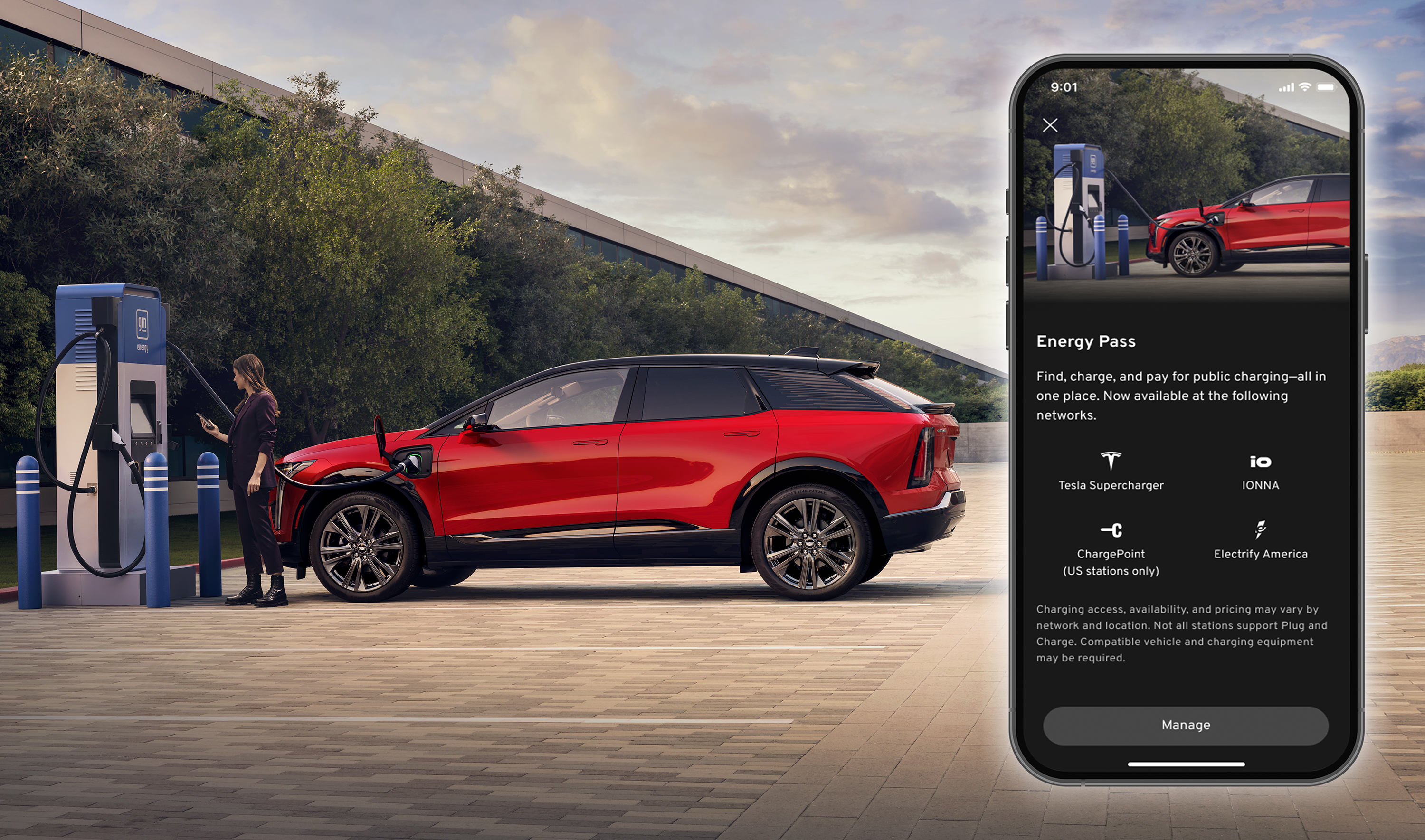
The most immediate customer feature is Energy Pass, GM’s new public charging interface built into apps such as MyChevrolet, MyCadillac, and MyGMC.
At launch, GM says Energy Pass gives drivers access to Tesla Supercharger, IONNA, Electrify America, and soon ChargePoint and EVgo networks through one account and payment setup. GM says that combination covers nearly 70 percent of U.S. DC fast chargers, plus many Level 2 chargers.
The company also says Plug & Charge is already live with IONNA and EVgo, with ChargePoint and Tesla Supercharger Plug & Charge support planned for compatible vehicles. GM expects all new 2027 model year Chevrolet, GMC, and Cadillac EVs to launch with native NACS charge ports between now and December, while an over-the-air update is planned later this year for Plug & Charge on Tesla Superchargers for NACS-native GM EVs already on the road.
This is less glamorous than a new battery chemistry, but it may matter more to owners in the short term. Public charging still has too much app juggling, account setup, payment friction, and uncertainty. A single interface will not fix broken chargers by itself, but it can make a multi-network charging world feel less like a workaround.
That is especially important as GM moves deeper into native NACS. Access to Tesla Superchargers is a big step, but the full owner experience depends on whether route planning, payment, charger authentication, billing history, and status updates work smoothly inside the ecosystem drivers already use.
Why This Matters for EV Buyers
GM’s energy push is partly defensive. EV sales growth has become less predictable, capital costs are high, and battery factories need volume. Energy storage gives GM another place to use battery expertise, manufacturing capacity, software, and recycling partnerships if the passenger-vehicle market moves unevenly.
It is also a sign that the EV business is becoming less car-shaped.
The companies that do this well will not only sell vehicles. They will control more of the charging experience, help owners use their cars as home energy assets, reuse or recycle batteries when vehicle life ends, and sell stationary storage into a grid that is under pressure from electrification and AI-driven electricity demand.
GM is not alone in chasing that future, and announcements are easier than execution. Sodium-ion storage has to move from lab and pilot projects to reliable commercial deployments. Vehicle-to-grid needs utility cooperation. Energy Pass has to work better than the charger-app mess it is trying to replace.
Still, the pieces fit together. GM is trying to make battery expertise portable: into the car, into the home, into the charging app, into second-life storage, and eventually into utility-scale systems.
For EV buyers, the takeaway is not that a sodium-ion Chevrolet is around the corner. It is that the next phase of EV ownership may be judged by more than range and horsepower. The better question will be how well the vehicle fits into the rest of your energy life - at home, on the road, and maybe one day on the grid.