Hyundai and Kia Set Q1 Sales Records — But It's Hybrids Doing the Heavy Lifting
Both brands posted their strongest-ever first quarters in the U.S. market. The story behind the numbers isn't EVs — it's a massive surge in hybrid demand that's offsetting softer battery-electric sales.
Hyundai Motor America and Kia America both closed the first quarter of 2026 with records — but the brands would be quick to tell you the headline numbers don’t tell the whole story.
Hyundai reported its strongest Q1 on record, with total sales climbing 1% versus the same period last year. Kia went further, posting a 4% gain to 207,015 units sold across the quarter. By most measures, these would be unambiguous wins. Look closer, and the composition of those numbers tells a more complicated story — one that’s being shaped by a dramatic shift in consumer preference toward hybrids and away from fully electric vehicles.
The Hybrid Surge
Together, Hyundai and Kia sold 97,627 hybrid vehicles in Q1 2026, a 53.2% increase over the same quarter a year ago. Let that sink in: more than half the combined EV and hybrid volume for both brands — combined — now comes from hybrids.
Hyundai’s hybrid-electric lineup jumped 61% for the quarter, with the Sonata Hybrid and Elantra Hybrid leading the charge. The Santa Fe Hybrid posted particularly strong numbers, appealing to buyers who want the efficiency of a hybrid in a three-row package without the range anxiety or charging infrastructure demands of a full EV. In March alone, Hyundai’s hybrid sales were up 50%.
Kia’s hybrid numbers are even more dramatic. The brand’s hybrid sales surged 73% year-over-year, making it one of the fastest-growing segments in the entire U.S. market. Several individual models — the Sportage Hybrid, Sorento Hybrid, and the recently launched Carnival Hybrid — all posted quarterly records.
The EV Slide
The other side of the ledger is less rosy. Combined EV sales for Hyundai and Kia fell 21.6% in Q1 versus the same period last year, dropping to 18,086 units. That’s a meaningful decline in a quarter where the overall market — and both brands’ total sales — was growing.
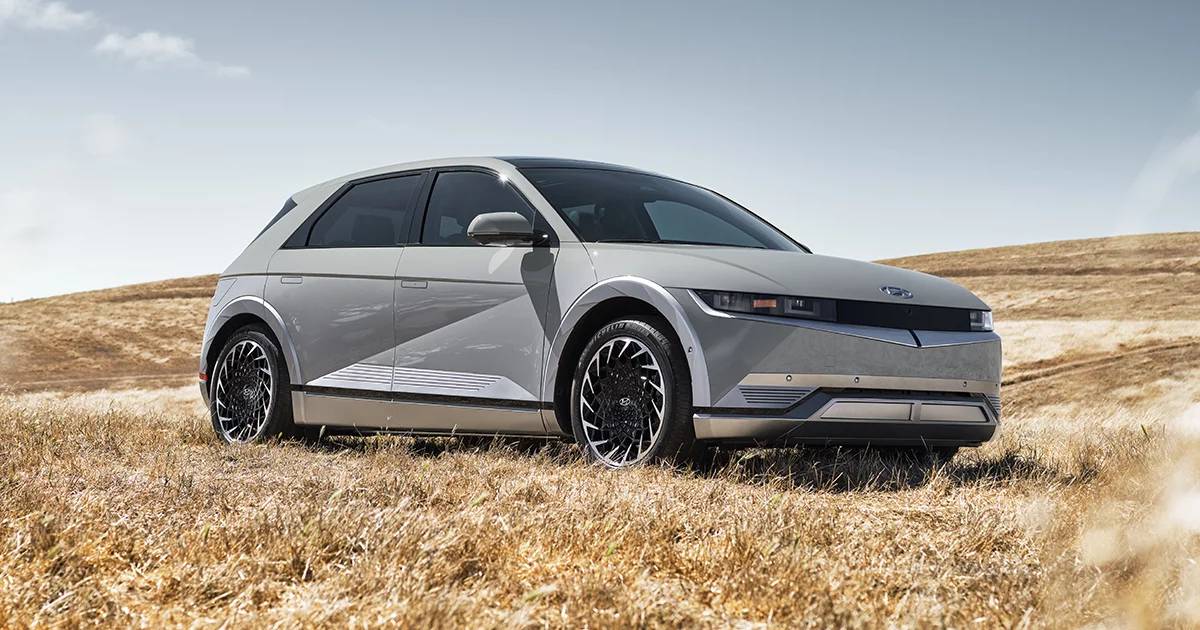
The IONIQ 5 remains Hyundai’s strongest EV performer, but even it has felt the broader pullback in EV demand. The updated 2026 IONIQ 5, which arrived with more range and an improved charging interface, has maintained its position in the market, but the ceiling appears lower than Hyundai hoped when it ramped production a year ago.
Kia’s EV portfolio — including the EV6 and the larger EV9 — has been more sharply affected. The EV6 in particular has lost ground as the compact electric SUV segment has become more crowded and more price-competitive.
Reading the Signals
What’s driving buyers toward hybrids right now? A few factors are converging. Gas prices, while still elevated compared to the 2019-2020 period, have stabilized enough that the financial case for a full EV — which still carries a meaningful premium over comparable hybrids — has softened. Charging infrastructure remains inconsistent outside of major metro areas. And a growing body of owner feedback about EV ownership complexity has seeped into mainstream consumer awareness in a way it hadn’t a few years ago.
Hybrids sidestep most of those friction points. You fill up at any gas station. You never think about charging infrastructure. The purchase price premium over a comparable combustion vehicle is smaller than with an EV. And fuel economy figures in the 45-50 mpg range are genuinely compelling in a $28,000-$40,000 sedan or SUV.
For Hyundai and Kia, the hybrid surge is also a function of product depth. Both brands now have hybrid options across most of their core model lineup in a way that simply wasn’t true two years ago. The Sonata Hybrid didn’t exist in meaningful volume until recently. The Sportage Hybrid is a relatively new addition. As the hybrid portfolio has deepened, more buyers are finding a hybrid option that fits their needs.
What This Means for the EV Transition
It’s tempting to read the hybrid surge as a setback for the EV movement, and for Hyundai and Kia specifically — both of which have invested heavily in battery-electric platforms. But the brands are approaching this with notable pragmatism.
“Hybrids are part of our electrification story, not a departure from it,” one Hyundai executive noted in the Q1 sales release. The company has been consistent that its EV investment plans remain intact, even as it acknowledges that the timeline for EV-dominant sales has shifted.
For now, the hybrid momentum is a genuine bright spot. Records are records, and Q1 2026 is a record for both brands. The fact that it’s being driven by the product mix that it is doesn’t diminish the achievement — it just clarifies where the market is right now, and which brands are reading it correctly.
Power up your Hyundai or Kia EV:
Related reading:
- Toyota and Kia Drive Hybrid Sales — the hybrid surge that set the stage for this record quarter
- Edmunds’ Most Exciting EVs of 2026 — see where the IONIQ 5 and EV6 stack up against the 2026 competition