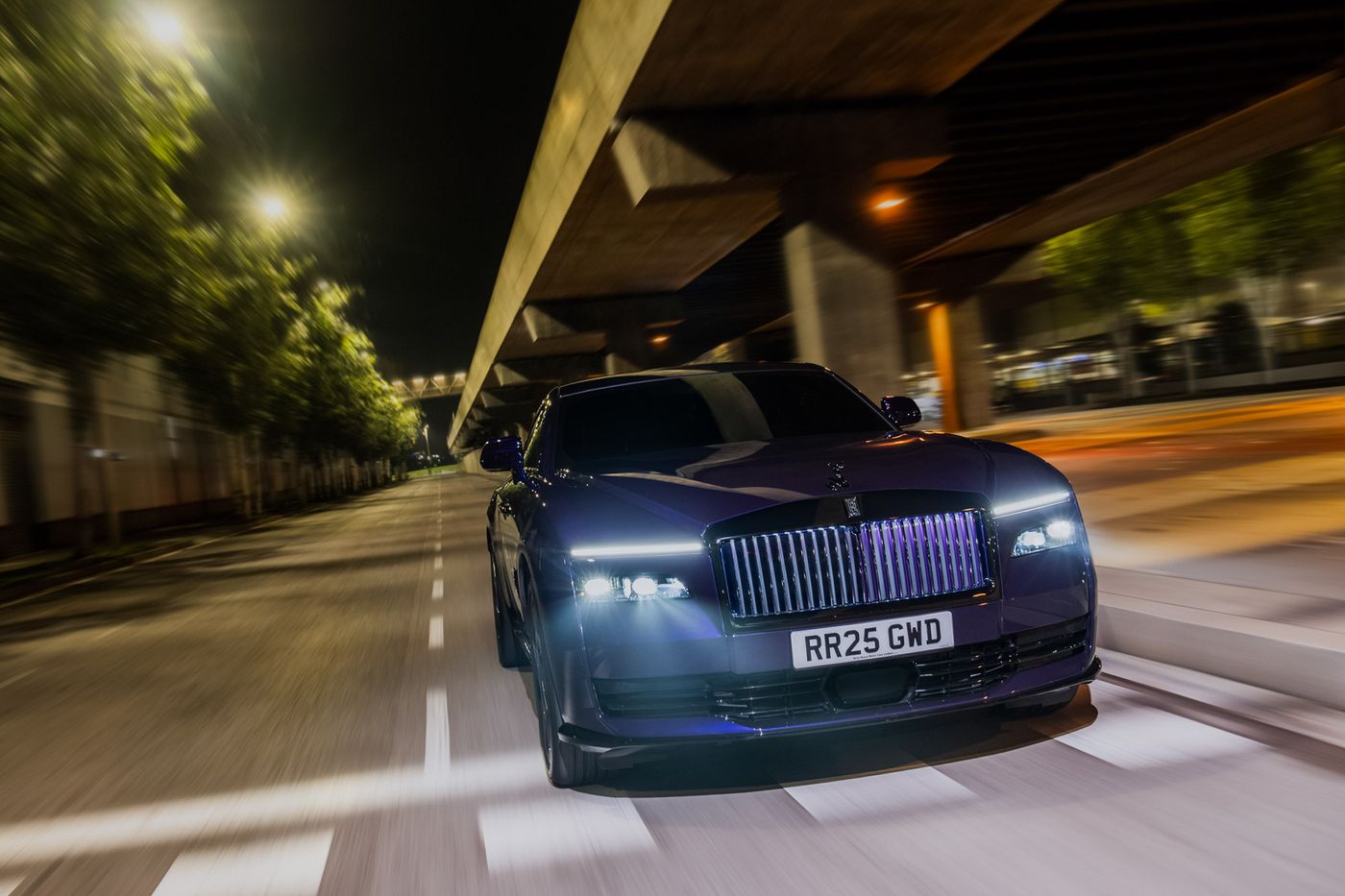
Rolls-Royce Scraps 2030 All-Electric Target, Will Keep Building V12s
In a stark reversal, Rolls-Royce has abandoned its goal to sell only electric vehicles by 2030, citing continued customer demand for its twin-turbo V12 engines. The Spectre's hard-charging electrified future is on hold.
Rolls-Royce has officially walked back its plan to become an all-electric brand by 2030, the company confirmed this week. In a notable reversal for a marque that positioned itself as a leader in luxury electrification, Rolls-Royce CEO Chris Brownridge told The Guardian that the V12 internal combustion engine is “sticking around past the company’s initial 2030 retirement target.”
The announcement is a significant retreat. When Rolls-Royce launched the Spectre — its first fully electric vehicle — in 2022, the company positioned it as the beginning of an orderly transition. The Spectre was supposed to account for 20% of annual sales within its first full year, with a goal of reaching 70% electric sales by 2030. Those targets have clearly been revised.
Why the Reversal?
The short answer: customer behavior. Rolls-Royce buyers, it turns out, are not particularly price-sensitive — the average transaction price for a Rolls-Royce well exceeds $350,000 — and they are not particularly eager to give up the V12 experience. The burble of a twin-turbocharged 6.75-liter engine, the waftability that only twelve cylinders can deliver, and the sonic character that has defined Rolls-Royce motoring for decades apparently matter more to the brand’s clientele than the environmental credentials of going electric.
This is a data point the broader industry should not dismiss. Even in the luxury segment — where buyers have no budget constraints and where environmental motivations can genuinely coexist with conspicuous consumption — the EV transition is encountering resistance at the customer preference level.
The Spectre’s Uncertain Future
The Spectre itself remains in production, but its future as the cornerstone of a Rolls-Royce electric lineup is now in question. The coupe has sold in modest numbers — Rolls-Royce never disclosed exact figures, but estimates put annual Spectre volumes in the low thousands. That’s meaningful for a brand that sells around 6,000 vehicles globally in a good year, but not enough to justify the engineering investment in a full electric lineup without the regulatory tailwind the company was originally counting on.
Without a clear electrification pathway, Rolls-Royce’s model range over the next decade will likely look more like the status quo: a mix of heavily updated combustion platforms with mild hybridization, rather than a ground-up shift to purpose-built electric architecture.
What This Signals for the Industry
Rolls-Royce is an extreme data point — its customer base is the most financially insulated in the automotive world. But the brand’s reversal carries a signal that extends beyond ultra-luxury. If the world’s most affluent EV buyer cohort isn’t voluntarily abandoning combustion, the broader industry faces an even steeper climb.
Regulatory pressure, not customer demand, may be what ultimately drives EV penetration at the luxury end of the market. And with emissions regulations in Europe and elsewhere potentially softening in response to industry lobbying, even that pressure may be less forceful than originally anticipated.
For now, the V12 lives on at Goodwood. Rolls-Royce’s electric chapter, it seems, is being rewritten.
Protecting your investment:
Related reading:
- The EV Industry Reset — broader context for the retreat from electrification targets
- Honda Cancels Three U.S. EV Programs — another major cancellation in the EV space