GM Books $7.1 Billion Charge as EV Pivot Hits a Rough Patch
General Motors disclosed massive fourth-quarter charges tied to its scaled-back EV ambitions, sending a clear signal that the transition to electric vehicles is proving far more costly — and far slower — than the industry once projected.
General Motors’ EV bet is getting more expensive before it pays off — if it pays off at all.
The automaker disclosed in a January 8 regulatory filing that it would record $7.1 billion in special charges during the fourth quarter of 2025, with the bulk of that — roughly $6 billion — tied directly to realigning its North American EV production footprint. The announcement, which GM confirmed ahead of its January 27 earnings report, marks one of the largest single-quarter write-downs by any automaker on its electric vehicle transition.
What the Numbers Mean
To put $7.1 billion in context: that’s more than the entire market cap of some automotive suppliers. The charge follows an earlier $2.9 billion write-down in Q4 2024, bringing GM’s total EV-related special charges to approximately $10 billion over the past two years.
The primary culprit is demand. U.S. EV sales — already a fraction of the total market — have weakened considerably since the $7,500 federal tax credit for EVs under the previous administration expired at the end of 2025. GM reported a 42–43 percent drop in EV sales for Q4 2025 compared to the same period a year earlier. That’s not a market correction; that’s a market retreat.
Production Gets Trimmed
The financial wound reflects a physical one. GM has slowed or paused production at multiple North American EV assembly lines. The Chevrolet Silverado EV and GMC Sierra EV — both built on the expensive Ultium battery platform — have seen output curtailed. The Cadillac LYRIQ has been a modest success relative to other GM EVs, but volume remains far below what the company planned when it committed to the Ultium architecture.
The company confirmed it expects “significantly lower” EV volumes in 2026 compared to its original projections, though it did not provide specific targets. Negotiations with suppliers over existing battery-component contracts are ongoing, with additional — though smaller — charges expected in 2026 as those agreements are unwound.
A Cautious Long-Term View
For all the financial pain, GM’s public messaging hasn’t changed. Executives continue to insist that the EV transition is inevitable and that GM will emerge as a stronger competitor once the market settles. The company is also pushing hard on hybrid expansion as a bridge — a notable shift from CEO Mary Barra’s previous all-in EV stance just three years ago.
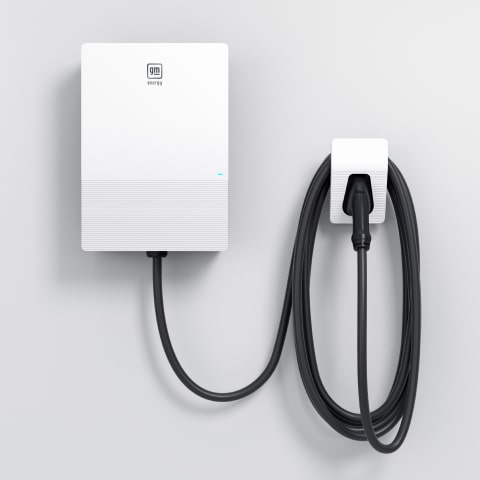
The GM Energy division, which offers home chargers and bidirectional charging products, continues to expand. The company has also signaled it will lean on its commercial EV fleet business — delivery vans, medium-duty trucks — as a steadier revenue source while consumer EV demand finds a floor.
The Bigger Picture
GM isn’t alone in taking massive EV charges. Ford took a $5.1 billion hit on its EV operations in 2025, and Stellantis is expected to report similar write-downs when it releases full-year results. The U.S. EV market’s retreat from double-digit market share has caught nearly every legacy automaker overextended.
The wild card is policy. The current administration’s stance on fuel economy standards, emissions regulations, and EV incentives has created enough uncertainty that several automakers have pulled or delayed future EV nameplates. GM’s $7.1 billion charge is partly a balance-sheet acknowledgment of that uncertainty — and partly an admission that the company’s internal demand projections were too optimistic.
Whether GM’s long-term EV bet still makes sense at current volumes is a question the company will have to answer in 2026. For now, the balance sheet says the transition is expensive, the market says it’s uncertain, and GM is paying for both.