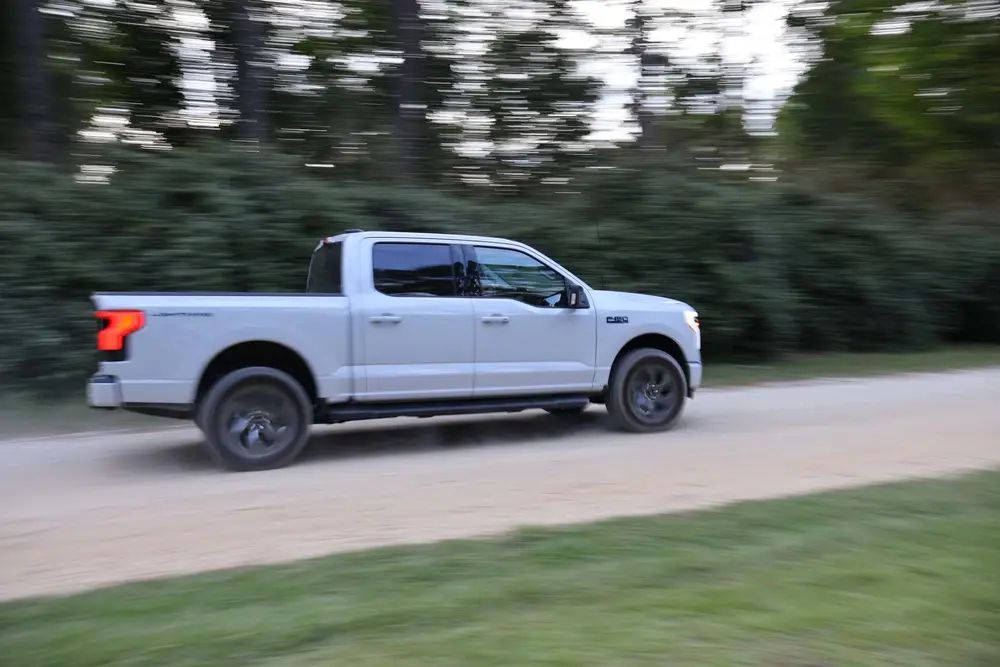
Ford Takes $19.5 Billion Charge and Pulls Back on EV Plans
Ford Motor Company will record approximately $19.5 billion in special charges in Q4 2025, signaling a major strategic retreat from its all-electric vehicle ambitions and pivoting toward hybrids and extended-range EVs.
Ford Motor Company announced on December 15, 2025 that it would record approximately $19.5 billion in special charges — almost entirely related to its electric vehicle and battery investment programs — and that it would significantly scale back its EV ambitions in favor of hybrids, extended-range EVs, and its core truck business. The announcement was the most dramatic EV pullback by any major automaker and effectively ended the era of bold, simultaneous commitments to full electrification by the traditional auto industry.
What Ford Said
The charges, to be taken primarily in Q4 2025, include approximately $7 billion in impairment charges related to the EV business unit, $4 billion in battery supply contract obligations that are now excess, and $8.5 billion in restructuring and retooling costs associated with converting EV-capable production lines back to ICE and hybrid production.
CEO Jim Farley, speaking at a press conference following the announcement, framed the decision as “right-sizing our investments to match where the market actually is, not where we projected it would be three years ago.”
“We have great EVs — the F-150 Lightning and Mustang Mach-E are genuinely excellent vehicles,” Farley said. “But the market isn’t moving as fast as our business plan assumed, and we have a responsibility to manage this company for long-term profitability, not to chase headlines.”
The Numbers Behind the Decision
Ford has been losing an estimated $35,000 to $40,000 on every F-150 Lightning sold, according to people familiar with the matter. The vehicle, while technically impressive, competes in a segment where gas-powered F-150s outsell it by roughly 50:1. The economics require either massive volume (which the current market won’t support at viable prices) or sustained high prices (which the market has rejected).
The Mustang Mach-E has been a more commercially defensible product, with volumes of 40,000-50,000 units per year and margins that are approaching breakeven. But even Mach-E profitability depends on regulatory credits and manufacturing subsidies that won’t last forever.
Ford’s EV division, called “Ford Model e,” lost approximately $5.2 billion in the first nine months of 2025. The full-year loss is expected to exceed $7 billion — roughly the annual profit of the company’s core truck division.
The New Strategy: EREVs and Hybrids
Ford’s revised plan centers on three pillars:
Hybrids across the lineup: Every new Ford model in North America will offer a hybrid option by 2027. The F-150 now includes the PowerBoost hybrid as standard on higher trims. The Maverick Hybrid is expanding production. The Explorer and Escape hybrids are selling well above initial projections.
Extended-range EVs (EREVs): Ford is developing a new “EREV” architecture that pairs a small battery pack (approximately 50-70 miles of pure EV range) with a gas-powered generator for long-distance trips. Think of it as a sophisticated plug-in hybrid, but with the battery management software calibrated for mostly-electric driving. The first EREV F-150 is targeted for 2029, built at the Tennessee Electric Vehicle Plant.
Software and services: Ford’s one genuine competitive advantage in the EV space is BlueCruise hands-free driving, which has been gaining subscribers faster than expected. Ford is prioritizing monetization of BlueCruise and connected vehicle services as a recurring revenue stream.
What This Means for EV Enthusiasts
The Ford announcement is bad news for EV purists. The F-150 Lightning’s successor — the EREV — will be a different product proposition. The promised affordable Ford EV in the $25,000-$30,000 range, which Ford had teased in concept form, has been indefinitely delayed.
However, for buyers who want a practical, efficient vehicle and don’t require pure BEV ownership, Ford’s hybrid lineup is genuinely compelling. The F-150 PowerBoost delivers 25 miles of electric-only range and 700 miles of total range — more practical for heavy use cases than any pure EV truck on the market.
Ford also confirmed it will continue to invest in the Lightning as a fleet and specialty product. The decision not to develop a next-generation Lightning (the current truck was never officially confirmed for a redesign) means the model will effectively go on life support after 2028.
Industry Implications
Ford’s move puts pressure on GM and Stellantis to reconsider their own EV timelines. With the federal EV tax credit gone and battery costs not falling fast enough to make affordable EVs profitable, the industry-wide assumption of a rapid EV transition is being revised downward.
Analysts now project EV market share in the U.S. to plateau around 7-8 percent of total new-vehicle sales through 2030 — down from the 15-20 percent projections that were mainstream just two years ago. Toyota’s hybrid-first strategy is looking prescient.
For more on Ford’s EV plans, see our coverage of the F-150 Lightning and our analysis of the EV market reset.