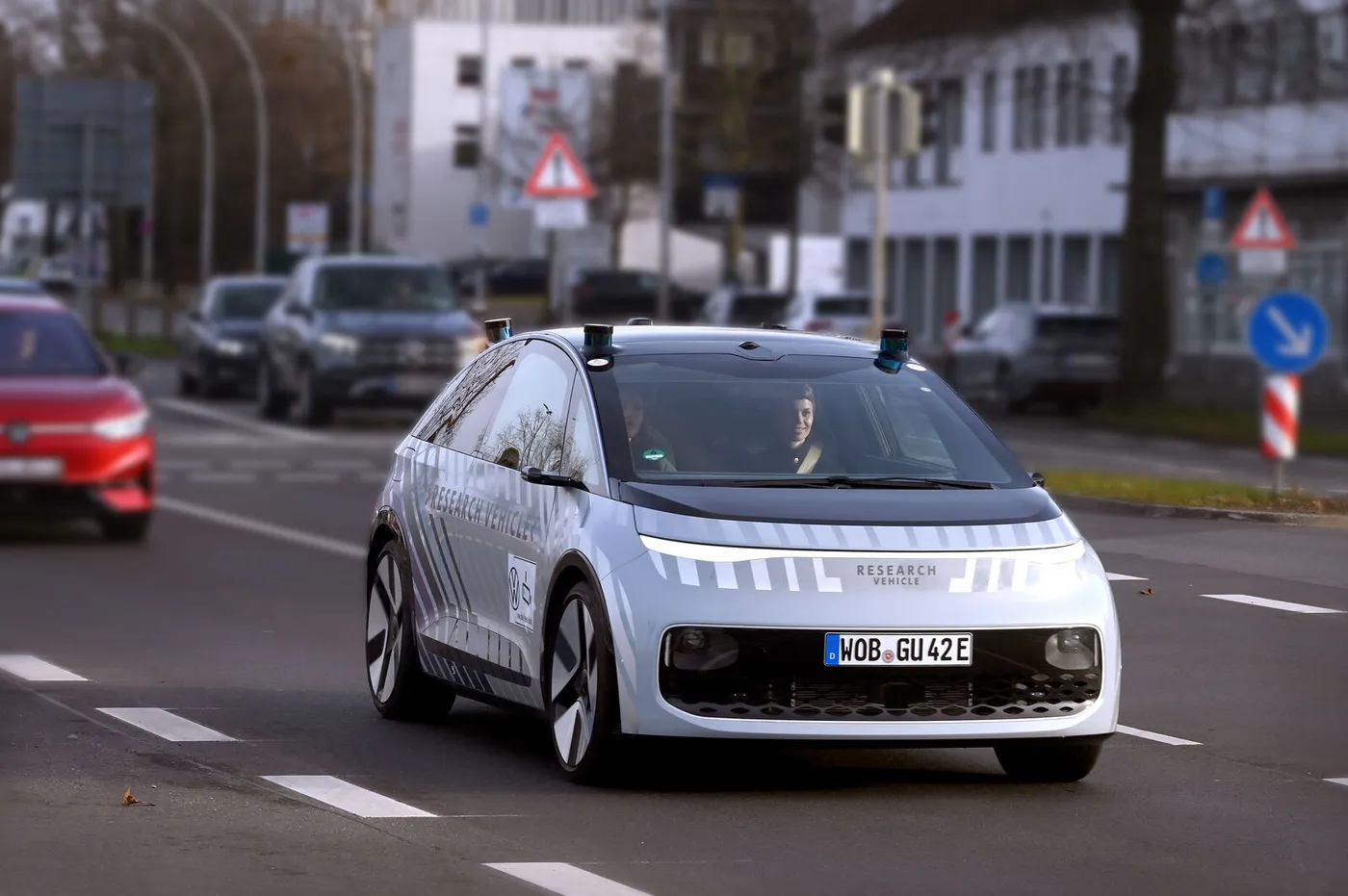
Volkswagen's Gen.Urban Robotaxi Hits the Streets of Wolfsburg
Volkswagen Group begins testing its steering-wheel-free Gen.Urban autonomous research vehicle on public roads in Wolfsburg, Germany, a milestone that puts VW's robotaxi ambitions squarely in the spotlight.
Volkswagen Group quietly dropped a significant announcement on December 12, 2025: its Gen.Urban autonomous research vehicle had entered real-world testing on public streets in Wolfsburg, Germany. This wasn’t a simulation or a closed-course demo — this was a steering-wheel-free, pedal-free vehicle navigating actual urban traffic.
The Wolfsburg route spans roughly 10 kilometers and is deliberately calibrated to replicate the complexity of everyday city driving: traffic lights, pedestrian crossings, intersections, and the usual mix of cars, cyclists, and delivery vans. VW chose the location with purpose — Wolfsburg is VW Group’s hometown, making it a natural showcase for the project’s ambitions.
What Gen.Urban Actually Is
Gen.Urban is not a production vehicle and it’s not headed to showrooms anytime soon. Think of it as a rolling research platform designed to answer one critical question: how do passengers feel about traveling in a vehicle with no driver controls?
The vehicle lacks a steering wheel and pedals entirely — a bold statement in a world where most “autonomous” prototypes still carry dormant conventional controls. That design choice reflects Volkswagen’s goal of studying human-computer interaction in genuinely driverless conditions, not halfway measures.
The project draws on Volkswagen’s broader autonomous driving roadmap, which includes partnerships across the Group’s technology stack. The Wolfsburg pilot is specifically focused on passenger trust and behavior — how people board, how they react to unexpected stops, how they interact with the vehicle’s interior interface.
Why Wolfsburg, Why Now
Wolfsburg is VW’s home base, so deploying there signals organizational confidence in the technology. It also gives VW access to a controlled but representative environment without the regulatory complexity of testing in Munich, Berlin, or other major cities.
The timing matters too. Tesla’s Robotaxi (Cybercabs) has been generating headlines and media attention for months. Volkswagen is signaling that it isn’t sitting idle while Elon Musk captures the autonomous narrative — the Gen.Urban project suggests VW wants a seat at whatever table robotaxis eventually become.
The Bigger Picture for European Autonomy
Europe has been relatively cautious about deploying fully driverless vehicles compared to the U.S. and China. The EU’s regulatory framework has been evolving, but the Gen.Urban public road test marks a meaningful step forward for European autonomous EV development.
Volkswagen Group CEO Oliver Blume has previously acknowledged that the autonomous vehicle market could be worth hundreds of billions of euros by the end of the decade. Gen.Urban is the company’s most concrete evidence yet that VW intends to be a player — not a bystander — in that future.
Tracking the autonomous vehicle race between legacy automakers and new entrants? Motorlinks has you covered.