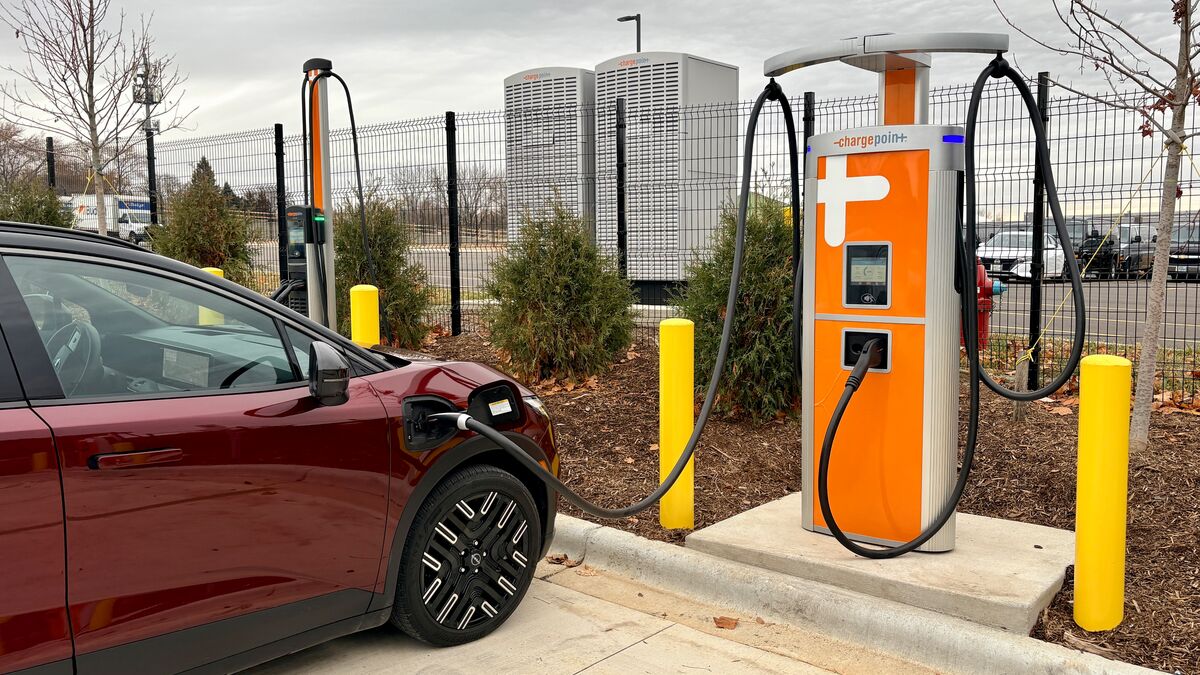
America's EV Charging Network Just Had Its Best Year Ever — Even as EV Sales Slumped
The U.S. added a record 780 public DC fast charging stations in Q3 2025, and over 18,000 new fast charging ports for the full year. Infrastructure is growing while vehicle sales contract — a disconnect with major implications.
Here’s a stat that should make EV advocates feel cautiously optimistic: the United States added 780 public high-speed EV charging stations in the third quarter of 2025 alone — the largest single-quarter jump on record. For the full year, the network grew by more than 18,000 new DC fast charging ports, a roughly 30% expansion.
The source of that growth is telling: it wasn’t driven by federal programs. The NEVI (National Electric Vehicle Infrastructure) program, funded through the Infrastructure Investment and Jobs Act, has been beset by administrative delays, funding freezes, and political opposition. The real expansion came from private companies — retailers, charging networks, and automakers — that concluded the economics of fast charging justify the investment regardless of federal support.
Who’s Building What
The list of private charging investors in 2025 reads like a cross-section of American commerce:
Walmart and Pilot Flying J continued their partnership to add charging at truck stops and travel centers along major highway corridors. Target, Wawa, and Cracker Barrel added high-speed chargers at their store locations, betting that the 20-30 minutes it takes to fast-charge an EV translates to more in-store purchases. GM’s Ultium Charging 360 network continued its multi-year rollout. Tesla — which opened its Supercharger network to non-Tesla vehicles in 2024 — deployed more ports than any other single network, though its growth rate is now being exceeded by faster-moving competitors.
The cumulative result: by the end of 2025, the U.S. had approximately 64,500 public DC fast charging ports nationwide, up from roughly 50,000 at the start of the year. More importantly, reliability — long the Achilles heel of public charging — showed measurable improvement, with networks like Electrify America and EVgo posting higher uptime rates than in prior years.
The Infrastructure-Sales Disconnect
What’s unusual about 2025 is that the infrastructure story is positive while the vehicle sales story is negative. U.S. EV sales dropped roughly 30-40% in October after the federal tax credit expired. A year that was supposed to be the inflection point for mainstream EV adoption instead saw the market contract.
Infrastructure advocates argue this is exactly backwards — that building charging first is what unlocks consumer confidence, and that the sales slump is a temporary policy artifact, not a structural problem. “The network is ready,” one charging executive told industry publication EV Infrastructure News. “When the policy environment improves, the infrastructure is there.”
That’s a reasonable argument, but it has limits. Range anxiety is real, and a robust fast charging network only solves one part of the anxiety problem. The other parts — upfront vehicle cost, charging speed, battery longevity in extreme weather, and the used EV market — remain unresolved for many buyers.
What’s Ahead
Looking into 2026, the key question is whether the private investment momentum can continue as EV sales remain compressed. Charging networks are making long-term infrastructure bets, and most are still unprofitable. If vehicle sales stay depressed for two or three more years, some planned charging investments could be deferred — which would be a setback for the network density that EV owners say is the biggest barrier to going electric.
The alternative view: 2025 is a preview of the market that EV charging companies will operate in once incentives return. The infrastructure being built today is designed to serve a much larger vehicle fleet in 2028 and beyond.
Amazon links for EV charging accessories: