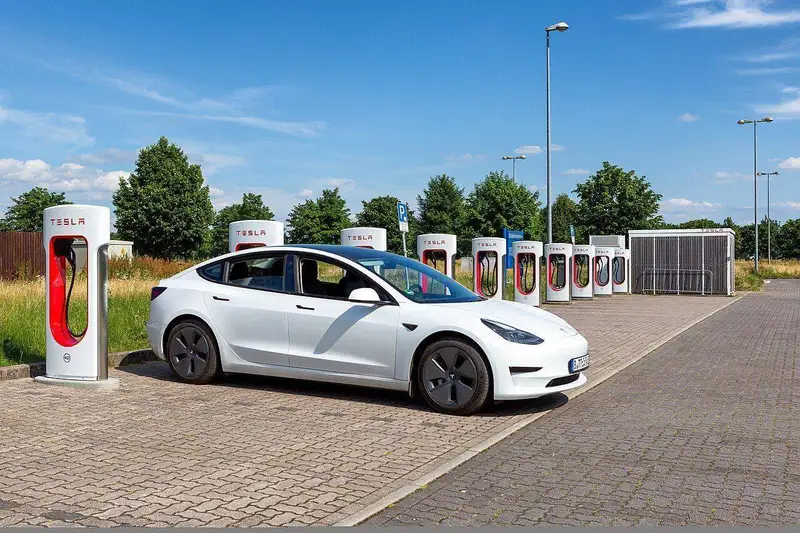
NACS Wins: Why Every Automaker Adopted Tesla's Charging Plug
The North American Charging Standard has achieved near-universal adoption in 2025. We examine how Tesla's plug design outcompeted CCS and what it means for EV owners.
In early 2023, if you drove a non-Tesla EV in North America, you faced a practical problem that had no elegant solution: the charging network was fragmented, often unreliable, and used a plug design that Tesla had deliberately ignored. Fast-forward to October 2025, and that problem has been effectively solved—not by government mandate or industry consortium, but by the quiet, relentless pressure of one company that built a better mouse trap.
The North American Charging Standard (NACS), the proprietary plug and inlet design Tesla developed for the Model 3 in 2017, has now been adopted by essentially every automaker selling EVs in North America. Ford was first, in May 2023, announcing that its future EVs would use the NACS inlet. GM followed weeks later. By 2024, the list included Stellantis, Hyundai, Kia, Genesis, Toyota, Honda, Nissan, BMW, Mercedes, Volkswagen, Audi, Porsche, Rivian, Lucid, and every other major manufacturer.
The result is a charging landscape transformed. The combined Supercharger network—which Tesla spent a decade building at a cost of billions of dollars—now supports vehicles from every major brand. Where Tesla once offered a CCS adapter for its Superchargers, most Supercharger locations now provide native NACS handles alongside CCS adapters for legacy vehicles.
Why NACS Won
The engineering case for NACS was always strong. The connector is more compact and lighter than the CCS Combo 1 plug, which uses the same J1772 AC connector plus two large DC pins in a single clunky assembly. NACS handles both AC charging (via the same J1772 protocol) and DC fast charging through the same compact inlet. The design allows for higher current ratings—NACS supports up to 1,000 amps and 1,000 volts in its latest specification, far exceeding what’s needed today.
Tesla’s Supercharger network also simply worked at a rate that other networks struggled to match. AAA’s annual EV charging experience study found that roughly 21% of attempts to charge at non-Tesla public charging stations failed due to broken equipment, payment issues, or other problems. Tesla Superchargers, by contrast, achieved uptime rates above 98%.
Automotive analyst Sam Fiorani at AutoForecast Solutions estimates that NACS adoption has added the equivalent of 30,000 high-quality DC fast charging connectors to the US market in under two years. “Tesla built infrastructure that other automakers couldn’t replicate fast enough,” Fiorani notes. “The moment GM and Ford committed to NACS, their customers gained access to the best charging network in North America.”
The Regulatory Push
While market forces drove most of the adoption, government played a supporting role. The Biden administration’s NEVI (National Electric Vehicle Infrastructure) program, which allocates $7.5 billion to build a national DC fast charging network, initially required stations to include CCS connectors. But the requirement was later revised to allow NACS, and the SAE standard body officially standardized NACS as SAE J3400 in 2023, giving it formal technical standing.
The practical result for EV owners is a network that is finally, genuinely unified. A driver of a Chevrolet Equinox EV, a Hyundai IONIQ 5, a Ford F-150 Lightning, and a Tesla Model S can all now charge at the same stations using the same plug—adapters included in most cases. The era of the charging desert, at least for long-distance travel on major corridors, is fading.
For automakers, the adoption has also simplified manufacturing. A single charge inlet design across a brand’s entire EV lineup reduces tooling complexity, part inventory, and dealer service complexity. It’s a small but meaningful victory for standardization, and one that Tesla’s early investment made possible.