Which provinces still have EV rebates in 2026, and what changes on Jan. 1?
Only Quebec and Manitoba still add to Ottawa's $5,000 EV rebate, and the federal and Quebec amounts drop on Jan. 1. What's left by province, and who got it.
Last updated
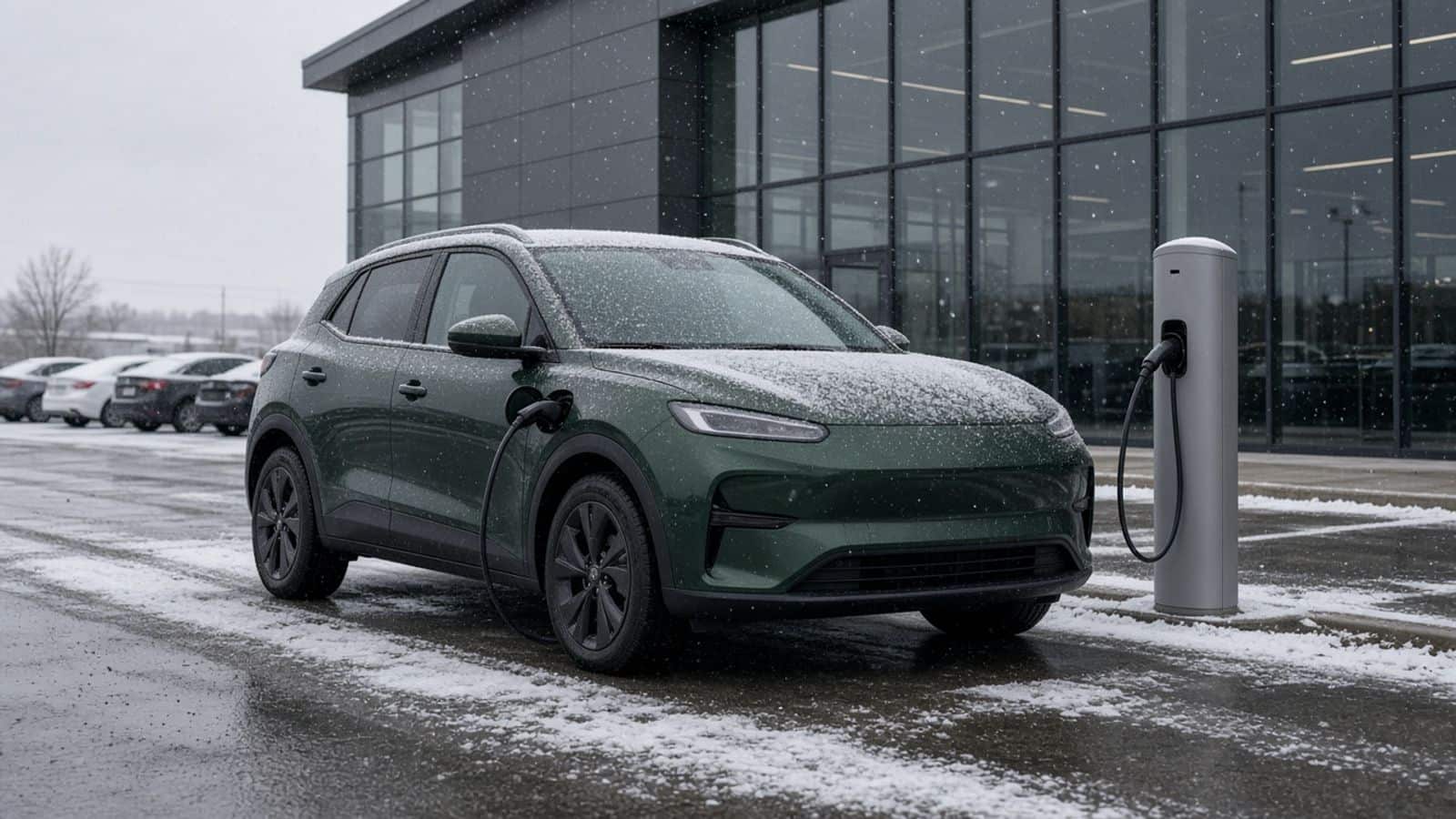
AI-generated illustration
On November 2, 2026, only two provinces added their own rebate to the federal one on a new electric car: Quebec, with up to $2,000, and Manitoba, with up to $4,000. Everywhere else, the federal Electric Vehicle Affordability Program (EVAP) is the whole deal, at up to $5,000 off at a participating dealer.
Two of those amounts shrink on Jan. 1, 2027. EVAP falls to $4,000, and Quebec’s Roulez vert falls to $0. This explainer lays out what’s left in each province, what waiting costs, and where the first $336 million of federal rebates actually went, based on Transport Canada’s own open data.
Quick answer
- Federal (everywhere): up to $5,000 for a battery-electric or fuel cell car and $2,500 for a plug-in hybrid in 2026, dropping to $4,000 and $2,000 in 2027. Only enrolled dealers can apply.
- Quebec: up to $2,000 for a new battery-electric car in 2026, but only if it’s registered by Dec. 31, 2026. The program ends then.
- Manitoba: $4,000 for a new EV and $2,500 for a used one, with no end date published.
- Everywhere else: no provincial purchase rebate. B.C. paused its program in May 2025, P.E.I. paused in April 2026, and New Brunswick, Nova Scotia, Newfoundland and Labrador and Yukon have ended theirs.
- Where the money went: Quebec residents received 51% of federal EVAP incentives from March to September 2026, with 22% of Canada’s population, by our count of Transport Canada’s data.
Which provinces still have EV rebates in 2026?
The table lists the purchase rebate on a new car in each province and territory, taken from government pages on Nov. 2, 2026. Leases receive a smaller share in every program, and every program sets a price cap.
| Province or territory | Provincial rebate on a new EV | Status | Key condition |
|---|---|---|---|
| Quebec | Up to $2,000 (BEV); $1,000 or $500 (PHEV) | Ends Dec. 31, 2026 | MSRP under $65,000; registration date counts |
| Manitoba | Up to $4,000; $2,500 used | Open, no end date published | MSRP under $70,000; Manitoba dealer |
| British Columbia | None | Paused since May 15, 2025 | Home and workplace charger rebates still open |
| Prince Edward Island | None | Paused April 2026 | Reported by CBC News |
| New Brunswick | None | Ended June 30, 2025 | Purchases had to be made by June 30, 2025 |
| Nova Scotia | None | Ended in 2025 | Light-duty rebates ended; final payments by May 22, 2025 |
| Newfoundland and Labrador | None | Ended | Application deadline was March 15, 2026 |
| Yukon | None | Ended 2026 | Scrapped in March 2026, reported by CBC News |
| Ontario, Alberta, Saskatchewan, N.W.T., Nunavut | None | No program found | Federal EVAP only |
Sources for each row are in the source list below. “No program found” means no provincial or territorial purchase rebate for new passenger EVs was posted on government sites as of Nov. 2.
What changes on jan. 1, 2027?
Transport Canada’s EVAP schedule steps down every two years after 2027. The maximum is $5,000 in 2026, $4,000 in 2027, $3,000 in 2028 and 2029, and $2,000 in 2030 and 2031. Plug-in hybrids sit at half those amounts. The program runs to March 31, 2031, or until the money is gone, whichever arrives first.
Quebec’s Roulez vert amounts fall to $0 in every category once the vehicle is registered in 2027. For a 2026 registration the amounts are $2,000 for a new battery-electric or fuel cell car, $1,000 for a plug-in hybrid with a battery of 15 kWh or more, $500 for a smaller-battery plug-in hybrid and $1,000 for a used battery-electric car.
Manitoba’s rebate has no published end date. The province’s rebate page says the program was extended in Budget 2026 and leaves the closing date off the page.
How much does waiting until 2027 cost?
Here’s the stacked maximum for an eligible new car bought outright or leased for 48 months or more. We assume the federal pre-approval and, in Quebec, the registration fall in the same year.
| Buyer and vehicle | In 2026 | In 2027 | Cost of waiting |
|---|---|---|---|
| Quebec, battery-electric | $7,000 | $4,000 | $3,000 |
| Quebec, plug-in hybrid (15 kWh+) | $3,500 | $2,000 | $1,500 |
| Manitoba, battery-electric | $9,000 | $8,000* | $1,000 |
| Rest of Canada, battery-electric | $5,000 | $4,000 | $1,000 |
| Rest of Canada, plug-in hybrid | $2,500 | $2,000 | $500 |
*Assumes Manitoba’s $4,000 rebate is still open in 2027, which the province hasn’t confirmed or ruled out.
Watch the two different clocks: EVAP goes by the date your dealer submits the eligibility assessment, and Transport Canada’s Q&A says a pre-approval holds for 90 days. Its own example keeps the 2026 amount for a car pre-approved on Dec. 2, 2026 and delivered on Feb. 21, 2027. Roulez vert ignores the order date and goes only by registration, so that same car in Quebec would lose the $2,000.
The same clock can run the other way. Transport Canada’s example of a car delivered on Nov. 26, 2026, with the dealer submitting the assessment on Jan. 7, 2027, receives the lower 2027 amount.
Which cars qualify for the federal rebate?
The EVAP overview sets the rules for the car itself. It has to be new, or a demonstrator with under 10,000 km, and light-duty. It has to be built in Canada or in a country that has a free trade agreement with Canada.
The final transaction value has to be $50,000 or less. A car made in Canada has no cap. Manufacturer and dealer discounts count in that test. Transport Canada’s example starts at $50,500 and lands at $46,500 after a $4,000 discount. The EVAP incentive is applied after taxes and fees.
A lease of 12 months or more receives a prorated share, and the full amount arrives at 48 months. Each person can receive one incentive, and each business up to 10. Residency is the requirement, citizenship is not, and a financed purchase counts.
Where did the federal EV rebate money go?
Transport Canada publishes EVAP incentive data on the Open Government Portal. The September 2026 file lists 77,279 incentives worth $335.8 million, requested between March 30 and Sept. 30, 2026. We grouped them by the recipient’s province and divided by Statistics Canada’s July 1, 2026 population estimates.
| Province or territory | Incentives | Per 10,000 people | Share of incentives |
|---|---|---|---|
| Quebec | 39,425 | 43.5 | 51.0% |
| British Columbia | 14,304 | 25.0 | 18.5% |
| Prince Edward Island | 318 | 17.4 | 0.4% |
| Ontario | 16,326 | 10.0 | 21.1% |
| Manitoba | 1,477 | 9.7 | 1.9% |
| New Brunswick | 839 | 9.5 | 1.1% |
| Nova Scotia | 970 | 8.8 | 1.3% |
| Yukon | 40 | 7.9 | 0.1% |
| Newfoundland and Labrador | 401 | 7.3 | 0.5% |
| Alberta | 2,720 | 5.3 | 3.5% |
| Saskatchewan | 452 | 3.5 | 0.6% |
| Northwest Territories | 7 | 1.5 | <0.1% |
| Canada | 77,279 | 18.5 | 100% |
Nunavut had no incentives in the file. Shares may not add to 100% because of rounding.
Three patterns sit in that table. Quebec took 51% of incentives and 52% of the dollars, about $175 million, with 21.7% of the population. That is 2.4 times the national rate.
A provincial top-up and a high take-up rate are different facts. Manitoba pays the biggest provincial top-up in the country, yet its rate was 9.7 per 10,000 people, about half the national figure. B.C., with no provincial rebate since May 2025, came second at 25.0.
Ontario is the outlier on size. It has 38.9% of Canada’s population but received 21.1% of the incentives, a rate of 10.0 per 10,000 people.
Our read: Quebec buyers have had a $7,000 stack this year, and they’ve used the federal program more than anyone. They also lose the most on Jan. 1, so whether Quebec sees a December rush is the thing to watch in Transport Canada’s next data files.
Which EVs got the most federal rebates?
The Toyota bZ led nationally with 8,376 incentives, or 10.8% of the total. The Chevrolet Bolt followed with 8,146, the Chevrolet Equinox EV with 7,543 and the Toyota Prius Plug-in with 6,310. The Ford Mustang Mach-E, Hyundai Kona Electric, Kia Niro EV, Tesla Model Y, Nissan Leaf and Toyota RAV4 plug-in hybrid filled out the top 10.
Quebec’s ranking ran in a different order. The Bolt led there with 5,348 incentives, ahead of the Equinox EV at 4,874 and the bZ at 3,269.
The data shows how Canadians are using the program, too:
- Battery-electric cars took 78% of incentives (60,497), against 16,782 for plug-in hybrids.
- Leases made up 37% (28,482), rising to 49% in Quebec.
- Individuals received 95% (73,577), and organizations 3,702.
- September was the busiest month since April, with 14,243 incentives worth $62.8 million.
Will the federal money run out before 2031?
At the recent pace, the fund lasts past this year. It has run out before. Transport Canada’s EVAP page says the program has $2.275 billion over five years, with $1.92 billion left as of Oct. 1, 2026.
From May to September, incentives averaged about $47 million a month in the open data. At that pace, $1.92 billion would last about 40 months, into early 2030, and the lower amounts from 2027 would stretch it further. A surge in sales could use the balance sooner. The previous federal rebate program ended in January 2025, as the B.C. government noted when it paused its own program.
The open data adds up to $335.8 million. Transport Canada’s own figures imply about $355 million spent or committed. The gap can be claims that have not reached the files yet, so the open-data total is a floor.
Checklist before you buy
- Confirm the exact trim is on Transport Canada’s eligible-vehicle list, and check where it was built.
- Ask the dealer whether it’s enrolled in EVAP. You can’t apply yourself.
- If you’re buying late in the year, ask the dealer to submit the EVAP eligibility assessment in 2026 and to note the 90-day expiry.
- In Quebec, make sure the car will be registered by Dec. 31, 2026, not just ordered. Check that the MSRP is under $65,000.
- In Manitoba, buy from a Manitoba dealer, keep the car registered in the province for 12 months and apply through MPI after registration. Teslas and China-built EVs bought after March 19, 2025 don’t qualify.
- If you lease, ask for the prorated amount in writing. The full amount needs a term of 48 months or more.
- Get the final transaction value on paper if the car is close to the $50,000 cap.
Bottom line
If you live in Quebec and want an EV, 2026 is the year: $7,000 combined now against $4,000 after Jan. 1, as long as the car is registered in time. Manitobans have the biggest stack, at $9,000, and no published deadline. Everyone else loses $1,000 on a battery-electric car and $500 on a plug-in hybrid by waiting.
The federal program isn’t close to running out on current numbers. But its amounts fall every two years from here, so the timing of your dealer’s paperwork matters more than the delivery date.
FAQ
Which provinces still have EV rebates in 2026?
On November 2, 2026, only Quebec and Manitoba offered a provincial rebate on a new electric car. Quebec’s Roulez vert pays up to $2,000 until Dec. 31, 2026, and Manitoba pays up to $4,000 on a new EV and $2,500 on a used one. Everyone else can still get the federal EVAP discount of up to $5,000 at a participating dealer.
How much is the federal EV rebate in 2027?
Transport Canada’s EVAP schedule drops the maximum to $4,000 for battery-electric and fuel cell vehicles and $2,000 for plug-in hybrids in 2027, from $5,000 and $2,500 in 2026. The amount depends on the year the dealer submits the eligibility assessment, not the delivery date.
Can you combine the federal EV rebate with a provincial rebate?
Yes. Transport Canada says EVAP applies on top of provincial and territorial incentives. In 2026, an eligible new battery-electric car can get up to $7,000 combined in Quebec and up to $9,000 in Manitoba.
Do you have to take delivery in 2026 to get the 2026 federal amount?
No. Transport Canada says a dealer’s pre-approval is valid for 90 days, and its own example keeps the 2026 amount for a car pre-approved on Dec. 2, 2026 and delivered on Feb. 21, 2027. Quebec is different: Roulez vert goes by the registration date, so a car registered in 2027 gets $0.
Last updated
How we got these numbers
We grouped all 77,279 incentives in Transport Canada's EVAP open-data file (September 2026 release, incentive requests dated March 30 to Sept. 30, 2026) by recipient province and divided by Statistics Canada's July 1, 2026 population estimates (table 17-10-0009-01).
Sources used for these figures
- Open Government Portal: Statistics on the Electric Vehicle Affordability Program (September 2026 file)
- Statistics Canada: Table 17-10-0009-01, Population estimates, quarterly
How to cite
Which provinces still have EV rebates in 2026, and what changes on Jan. 1? MotorLinks. Updated November 2, 2026. https://motorlinks.net/articles/features/2026-11-02-ev-rebates-by-province-canada
Key findings
- Quebec took 51% of incentives and 52% of the dollars, about $175 million, with 21.7% of the population.
- Ontario is the outlier on size. It has 38.9% of Canada's population but received 21.1% of the incentives, a rate of 10.0 per 10,000 people.
- Manitoba pays the biggest provincial top-up in the country, yet its rate was 9.7 per 10,000 people, about half the national figure.
- The Toyota bZ led nationally with 8,376 incentives, or 10.8% of the total.
The MotorLinks take
In Quebec, register the car by December 31 if you want Roulez vert, and ask the dealer to submit the federal assessment in 2026 so the 90-day hold can cover a delivery after New Year’s. Manitoba still offers the largest provincial top-up, with no end date on the page, so confirm a Manitoba dealer and whether that VIN clears the origin rules. Everywhere else, the federal amount follows the year of the assessment, so get the submission date in writing if you are buying near the turn of the year. Most of the federal fund is still unspent, which makes the January step-down the date to plan around.
Sources
- Transport Canada: Electric Vehicle Affordability Program, overview
- Transport Canada: Electric Vehicle Affordability Program (funding as of Oct. 1, 2026)
- Transport Canada: EVAP questions and answers
- Open Government Portal: Statistics on the Electric Vehicle Affordability Program (September 2026 file)
- Statistics Canada: Table 17-10-0009-01, Population estimates, quarterly
- Gouvernement du Québec: About the Roulez vert program
- Gouvernement du Québec: Amount of the financial assistance for a new vehicle
- Gouvernement du Québec: Roulez vert program framework, March 2026 (PDF, French)
- Government of Manitoba: Electric vehicle rebate
- B.C. Government News: Go Electric passenger vehicle rebate pause (April 2025)
- Government of B.C.: CleanBC Go Electric programs
- CBC News: P.E.I. pauses a number of green incentives (April 16, 2026)
- Government of New Brunswick: Electric vehicle incentive will end July 1 (March 27, 2025)
- EVAssist Nova Scotia: Electric vehicle rebate application update
- Newfoundland and Labrador Hydro: Electric vehicle rebates
- CBC News: Yukon government repeals Clean Energy Act, scraps EV rebates (March 31, 2026)
Related Articles
- Canada’s EVAP rebate is backed by real money, but the fine print matters
- Tesla Manitoba EV rebate hearing ends without a ruling
- Ottawa freezes new-car emissions rules until 2029: what it means for EV buyers
Why we use AI
Car news moves fast and the useful details are buried in recall filings, rate bulletins and spec sheets from around the world. AI lets a small team read all of it, so you get the numbers, the sources and the Canadian angle in one place. Every article is checked against its cited sources and reviewed by our editor before it goes up. Spot a mistake? Tell us and we'll fix it.