Car theft in Canada fell 10%, but fewer stolen cars come back
Équité counted 10.1% fewer car thefts in early 2026, but recovery rates slipped too. We map theft risk by province and which defences stop which attack.
Last updated
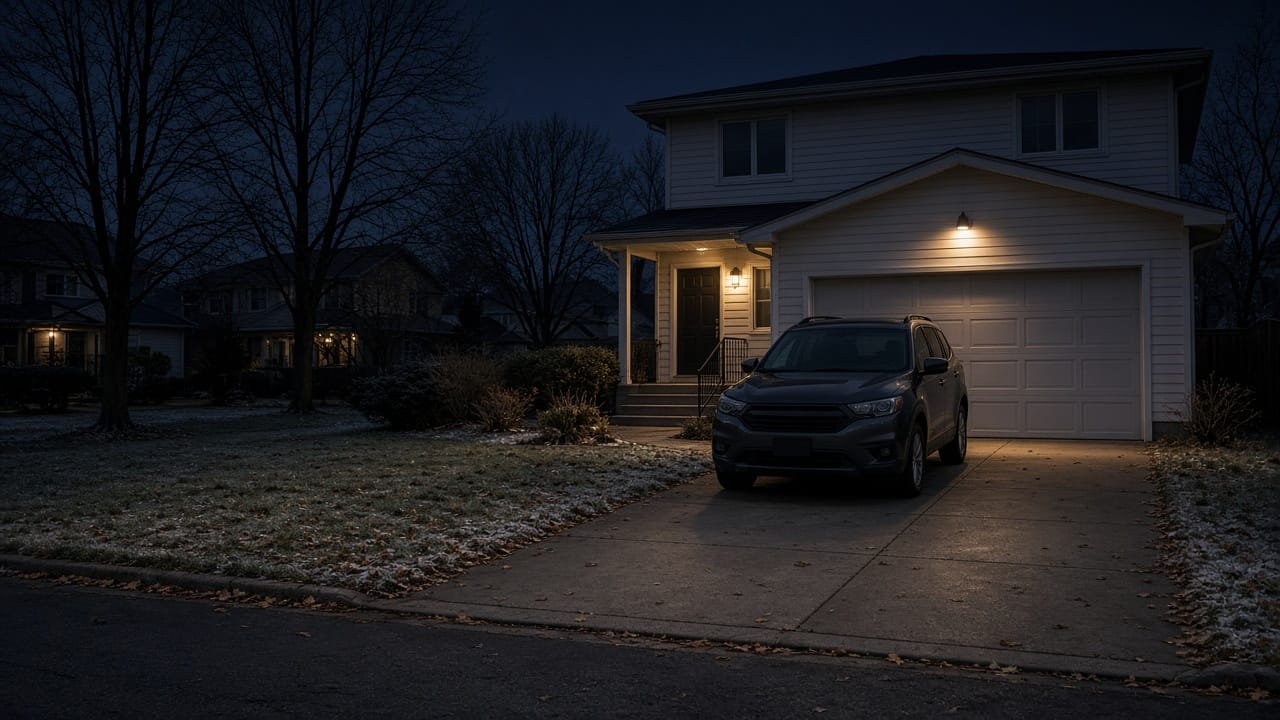
AI-generated illustration
Car theft in Canada is still falling. Équité Association’s first-half 2026 report counted 20,759 private passenger vehicles stolen from January to June, down 10.1% from 23,093 a year earlier. That’s the lowest first-half count since 2021, when 20,313 were stolen, before the theft wave peaked.
But the vehicles that are stolen are less likely to come back. The national recovery rate fell from 56.5% to 53.9% over the same period. This explainer works out what that means for the number of cars that simply vanish, which provinces carry the most risk per vehicle, and which defences stop which kind of theft.
Quick answer
- Thefts are down 10.1% in the first half of 2026, according to Équité, and police-reported motor vehicle thefts fell 16% in both 2024 and 2025, according to Public Safety Canada.
- Cars that are never recovered fell only about 4.7% by our calculation, and about 1.6% in Ontario, because recovery rates dropped.
- Per registered vehicle, the Prairies carry the highest risk. Manitoba, Alberta and Saskatchewan all had higher 2025 theft rates than Ontario in our calculation.
- No single gadget covers every method. A Faraday pouch stops relay attacks only. Police list port locks, steering wheel locks, aftermarket immobilizers and trackers for the rest.
- The federal government’s stricter immobilizer rule is still a proposal, with two years for automakers to comply after it’s final.
Why the 10% headline misleads
A car found a few streets away is a bad afternoon. A car that leaves in a shipping container or through a chop shop is gone. Équité said in its 2025 full-year release that nearly half the vehicles stolen in Ontario and Quebec are not recovered and are “likely exported or dismantled in chop shops.”
The table below multiplies each region’s thefts by the share not recovered, using the figures in Équité’s first-half 2026 report (PDF). The report counts a vehicle as recovered only when it was stolen and found inside the same six-month period, so the not-recovered column is an estimate.
| Region | Thefts H1 2026 | Recovery rate | Not recovered (est.) | Change, not recovered |
|---|---|---|---|---|
| Canada | 20,759 (−10.1%) | 53.9% (56.5%) | ≈9,570 | −4.7% |
| Ontario | 8,796 (−8.4%) | 44.8% (48.6%) | ≈4,855 | −1.6% |
| Quebec | 3,641 (−6.4%) | 43.9% (45.1%) | ≈2,043 | −4.3% |
| Western Canada | 7,449 (−14.3%) | 69.0% (69.9%) | ≈2,309 | −11.8% |
| Alberta | 3,744 (−15.1%) | 67.0% (67.6%) | ≈1,236 | −13.5% |
| Atlantic Canada | 873 (−4.1%) | 58.8% (59.2%) | ≈360 | −3.1% |
Nationally, about 475 fewer cars went unrecovered in the first half of 2026 than a year earlier. Thefts fell by more than 2,300. Ontario is the sharpest case in the table: thefts dropped 8.4%, and the number of stolen vehicles not found in the period fell just 1.6%, to about 4,855. More than half of Ontario’s stolen vehicles stayed missing through the period.
Western Canada improved on both measures. Thefts fell fastest there, and roughly seven in 10 stolen vehicles are recovered. Alberta’s risk per parked vehicle is a separate count, and the next section puts it beside the other provinces.
Where the risk is highest
Raw totals put Ontario alone at the top of the map. It had 19,319 of the 46,999 vehicles stolen in Canada in 2025, according to Équité’s 2025 trend report (PDF). Ontario also has far more vehicles on the road. The rates below divide each province’s 2025 thefts by the light vehicles registered there in 2025, from Statistics Canada table 23-10-0308-01.
| Province or region | Thefts, 2025 | Per 1,000 vehicles | About 1 in |
|---|---|---|---|
| Manitoba | 2,584 | 2.9 | 344 |
| Alberta | 8,980 | 2.7 | 365 |
| Saskatchewan | 2,174 | 2.5 | 397 |
| Ontario | 19,319 | 2.1 | 484 |
| Canada | 46,999 | 1.9 | 539 |
| Quebec | 7,742 | 1.4 | 736 |
| British Columbia | 4,168 | 1.2 | 830 |
| Atlantic Canada | 2,032 | 1.2 | 844 |
On this measure, the three Prairie provinces sit above Ontario. B.C. and Atlantic Canada sit well below the national rate. The figures are annual odds averaged across every light vehicle in the province, so a new SUV in a GTA driveway and a 15-year-old car in a rural garage are different bets inside the same provincial average.
What gets stolen also differs by region. Équité’s 2025 report says SUVs were the most stolen type in Ontario (46%) and Quebec (50%), trucks led in Western Canada (38%) and Alberta (40%), and cars led in Atlantic Canada (42%). Its November 2025 release named the Toyota RAV4 the most stolen vehicle of 2024, at more than 2,000 thefts, and said newer SUVs with keyless vulnerabilities were targeted, especially in Quebec and Ontario.
Alberta’s lower recovery trend: Alberta recovered 71% of stolen vehicles in 2025, down from 78% in 2022, according to Équité. Équité links the drop to more exports and re-VINing, where thieves give a stolen vehicle a new identity, and calls Alberta “a feeder province to register stolen and re-VINed vehicles.”
How cars are being stolen now
Transport Canada’s December 2025 regulatory proposal gives the clearest plain-language list of the tools. It names diagnostic-port key programmers, which plug into the on-board diagnostics port to program a new key, key emulators that mimic a car’s key, and relay equipment that captures a key’s signal and passes it to a second thief at the car.
The method that shows up most often depends on the city. Ottawa Police say the most common method in Ottawa is still a break-in through the driver’s door and a new key programmed through the engine control module port. The force says relay attacks are uncommon in Ottawa.
The place is as specific as the tool. Équité says its 2026 survey found 82% of thefts happened at or next to the victim’s home, which puts the driveway at the centre of the problem.
A newer route never reaches the driveway. Équité reported a 72% increase in vehicle finance fraud detected at the ports of Montreal and Halifax in 2025, with stolen or synthetic identities used to obtain the vehicles. An owner has little leverage over a port inspection. A credit report is the check that still sits with the household.
Match the defence to the attack
Most theft advice is a list of products. The more useful question is which method each one stops. This table sorts the measures recommended by Ottawa Police, Waterloo Regional Police and the RCMP in B.C. by the attack they address.
| Theft method | What police recommend | What it won’t stop |
|---|---|---|
| Break-in and key reprogramming through the diagnostic port | Port lock on the diagnostic (OBD) or ECM port, aftermarket immobilizer and alarm, steering wheel lock | A Faraday pouch (Ottawa Police say it doesn’t deter this method) |
| Relay attack on a keyless fob | Faraday pouch or metal container for the fob | Break-in and reprogramming |
| Any method, at home | Garage, blocking the car in with a second vehicle, motion lights and cameras | A determined thief with time and tools |
| After the theft | Hidden AirTag, GPS or other third-party tracker, manufacturer tracking turned on | The theft itself. Trackers help recovery, not prevention |
The police pages add two limits of their own. Ottawa Police note that thieves can cut through a steering wheel to remove a lock, so the lock works best beside a second device that is harder to see. They also warn that an iPhone can alert a thief to a hidden AirTag. Waterloo police add that organized groups know how to disable manufacturer tracking, which is why they suggest a third-party tracker as the backup.
Insurance is the other reason to care. The Financial Services Regulatory Authority of Ontario says plainly that buying a vehicle with a high theft rate raises your premium. If you’re shopping, ask for an insurance quote on the exact model before you sign.
What the federal rule changes, and what it won’t fix soon
Canada has required immobilizers since 2007, under rules first added in 2005. Transport Canada’s December 2025 proposal would update the theft standard, CMVSS 114, to newer versions of the ULC 338 and UN Regulation 162 standards. The 2023 and later ULC 338 versions add a category of “electronic attack tools” that manufacturers may use to test immobilizers.
The proposal states its own limits. Transport Canada wrote that the updated standards “do not prescribe new tests,” and that manufacturers may voluntarily add theft tools to their own self-certification testing. Industry respondents told the department that the current standards “would not significantly reduce auto theft linked to organized crime.”
The calendar is the other limit. The rule takes effect when it is published in the Canada Gazette, Part II, and the proposal gives automakers two years after publication to comply. A pass through the 2026 Part II issues through October 21 turned up no final theft protection amendment. Public Safety Canada’s September update still describes the change as a proposal.
Enforcement is where the recent gains came from. Public Safety Canada says the Canada Border Services Agency intercepted 1,590 stolen vehicles at railyards and ports in 2025, and 830 more since the start of 2026. A mobile X-ray scanner in the Greater Toronto Area has scanned more than 2,800 containers this year.
Our read: Even after the rule is final, a vehicle built to the new standard won’t be required for two more years. The car in your driveway today is the one you need to protect, so treat added security as your job for now.
Checklist
- Look up your vehicle type against your region. In Ontario and Quebec, that’s SUVs. In the West, trucks.
- Find out how your car could be started without the key. If it has a keyless fob, store the fob in a Faraday pouch or metal container at home.
- Ask a dealer or installer about a lock for the diagnostic port. Ottawa Police recommend one, and reprogramming through that port is the most common method in that city.
- Add a visible deterrent, such as a steering wheel lock, and pair it with a less visible one, such as an aftermarket immobilizer or kill switch.
- Park in a garage if you have one, or block the target vehicle in with a less sought-after one.
- Hide a tracker in the car and turn on any manufacturer tracking, knowing that neither prevents theft.
- Check your credit report for vehicle loans you didn’t take out.
- Before buying your next vehicle, get an insurance quote on the exact model and trim.
Bottom line
The decline is real. Équité’s first-half count is the lowest since 2021, and police data show two straight years of 16% drops. But falling recovery rates mean the cars that disappear for good are dropping much more slowly, especially in Ontario.
Measured per registered vehicle, theft risk is highest in Manitoba, Alberta and Saskatchewan, not just Ontario. The federal immobilizer update is still at least two years from showing up in new cars. Until then, the useful step is to match your defences to the methods thieves actually use where you live.
FAQ
Is car theft going down in Canada?
Yes. Équité Association counted 20,759 private passenger vehicles stolen in the first half of 2026, down 10.1% from 23,093 a year earlier. That’s the lowest first-half count since 2021, when 20,313 were stolen. The share of stolen vehicles recovered in the same period fell, though, from 56.5% to 53.9%.
Which province has the highest car theft rate?
Ontario has the most thefts by far, with 19,319 in 2025. Measured against registered light vehicles, Manitoba had the highest rate in our calculation, about 2.9 thefts per 1,000 vehicles, followed by Alberta at 2.7, Saskatchewan at 2.5 and Ontario at 2.1.
Does a faraday pouch stop car thieves?
Only against relay attacks, where thieves boost the signal from a key fob inside the house. Ottawa Police say the most common method in Ottawa is breaking in and reprogramming a new key through the vehicle’s diagnostic port, which a pouch does not stop. A port lock, a steering wheel lock or an aftermarket immobilizer address that method.
Will new federal rules make cars harder to steal?
Eventually, and only partly. Transport Canada proposed in December 2025 to update the immobilizer standard to versions that cover electronic attack tools, with mandatory compliance two years after the final rule. The final rule had not appeared in the Canada Gazette, Part II, as of the October 21, 2026 issue, and Transport Canada says the updated standards do not prescribe new tests.
Last updated
How we got these numbers
Thefts and recovery rates are from Équité Association's first-half 2026 report. Not-recovered figures multiply those thefts by the share not recovered. Équité counts a vehicle as recovered only if it was stolen and found in the same six-month period, so those figures are estimates. Rates per 1,000 divide each province's 2025 thefts, from Équité's 2025 report, by light-vehicle registrations in Statistics Canada table 23-10-0308-01. That table also includes light commercial vehicles, so the rates are approximate.
Sources used for these figures
- Équité Association: First half of 2026 auto theft trend report (Aug. 11, 2026)
- Équité Association: First half of 2026 auto theft trend report (PDF)
- Équité Association: 2025 auto theft trend report (PDF)
- Statistics Canada: Table 23-10-0308-01, Vehicle registrations by type of vehicle and fuel type
How to cite
Car theft in Canada fell 10%, but fewer stolen cars come back. MotorLinks. Updated October 30, 2026. https://motorlinks.net/articles/features/2026-10-30-car-theft-recovery-rate-canada
Key findings
- Équité Association counted 20,759 private passenger vehicles stolen in the first half of 2026, down 10.1% from 23,093 a year earlier.
- The national recovery rate fell from 56.5% to 53.9% over the same period.
- Cars that are never recovered fell only about 4.7% by our calculation, and about 1.6% in Ontario, because recovery rates dropped.
- Measured against registered light vehicles, Manitoba had the highest rate in our calculation, about 2.9 thefts per 1,000 vehicles, followed by Alberta at 2.7, Saskatchewan at 2.5 and Ontario at 2.1.
The MotorLinks take
Match the hardware to the method where you park: a Faraday pouch when the risk is a relay on the fob, a diagnostic-port lock where police describe a break-in and a new key, and a hidden tracker as the way back to the car after it leaves. Before you buy an SUV in Ontario or Quebec, get an insurance quote on that exact model, because a high-theft name shows up in the premium. On the Prairies, use the per-vehicle rate when you choose what to park outside, since Manitoba, Alberta, and Saskatchewan sit above Ontario on that measure. The federal immobilizer update is still a proposal with two years to comply after it is final, so secure the car you have.
Sources
- Équité Association: First half of 2026 auto theft trend report (Aug. 11, 2026)
- Équité Association: First half of 2026 auto theft trend report (PDF)
- Équité Association: 2025 auto theft trend report release (Feb. 11, 2026)
- Équité Association: 2025 auto theft trend report (PDF)
- Équité Association: Toyota RAV4 tops annual most stolen vehicles list (Nov. 18, 2025)
- Statistics Canada: Table 23-10-0308-01, Vehicle registrations by type of vehicle and fuel type
- Canada Gazette, Part I: Regulations Amending the Motor Vehicle Safety Regulations (Theft Protection) (Dec. 27, 2025)
- Canada Gazette, Part II: 2026 issues
- Public Safety Canada: Government of Canada reports on continued progress in fight against auto theft (Sept. 21, 2026)
- Ottawa Police Service: Vehicle theft
- Waterloo Regional Police Service: Vehicle theft prevention tips
- RCMP in B.C.: April is Auto Crime Enforcement Month (April 2025)
- FSRA: How to save on auto insurance
Related Articles
- Why Canadian car insurance keeps rising: a province-by-province look
- Alberta’s Care-First car insurance: what to do if your policy renews before Jan. 1
- 2026 Toyota RAV4 buyer’s guide: hybrid, plug-in hybrid, Woodland, or GR Sport?
Why we use AI
Car news moves fast and the useful details are buried in recall filings, rate bulletins and spec sheets from around the world. AI lets a small team read all of it, so you get the numbers, the sources and the Canadian angle in one place. Every article is checked against its cited sources and reviewed by our editor before it goes up. Spot a mistake? Tell us and we'll fix it.