BYD Flash Charging in Canada: Can the Grid Handle 1.5 MW?
BYD's 1,500-kW Flash Charger could make EV stops feel like fuel stops, but Canadian sites will need storage, strong grid connections and compatible cars.
A 1,500-kW EV charger sounds less like automotive equipment and more like something destined for a rail yard. BYD wants to put that power behind a single passenger-car connector.
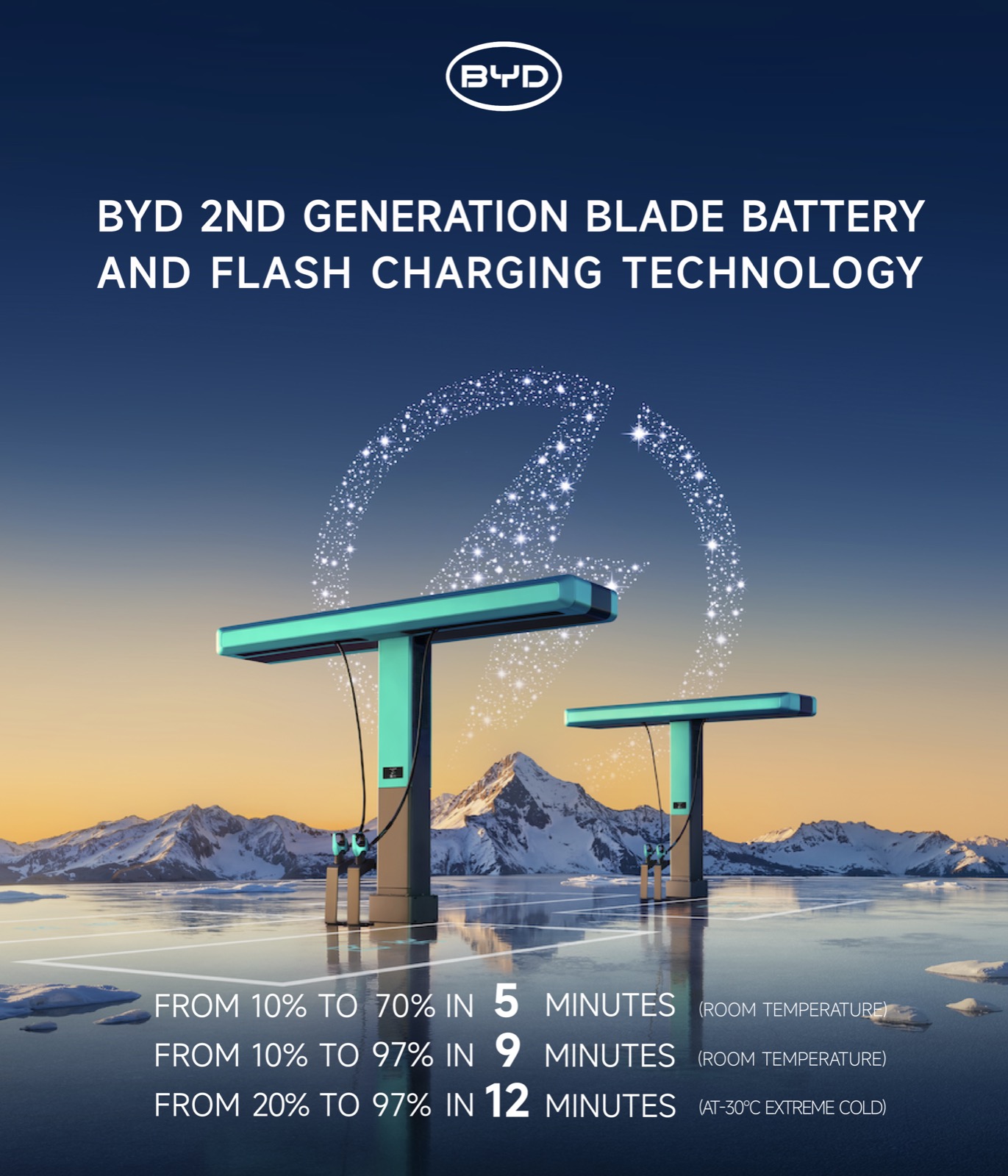
Its second-generation Flash Charging system is designed to take a compatible Blade Battery 2.0 from 10 to 70 percent in five minutes and to 97 percent in nine minutes under BYD’s stated room-temperature conditions. The company even claims a 20-to-97-percent session takes 12 minutes at -30°C, a number with obvious appeal in Canada.
BYD’s Canadian website now puts Flash Charging under a “coming soon” heading, while the company says it plans to expand the system globally. A Toronto-based charging-infrastructure job posting adds to the evidence that Canada is under active consideration. Still, BYD has not announced Canadian locations, station counts, opening dates, connector standards or which vehicles would arrive first.
The interesting question is therefore not whether a charger can briefly produce 1.5 megawatts—BYD says its Chinese-market hardware can. It is whether Canadian sites can deliver that experience repeatedly without demanding an impractical grid connection.
Quick Verdict
Canada can support BYD Flash Charging, but the sensible version will not simply connect every 1.5-MW dispenser directly to the local grid at full power. The practical design pairs a strong utility connection with on-site battery storage, dynamic power sharing and careful site selection.
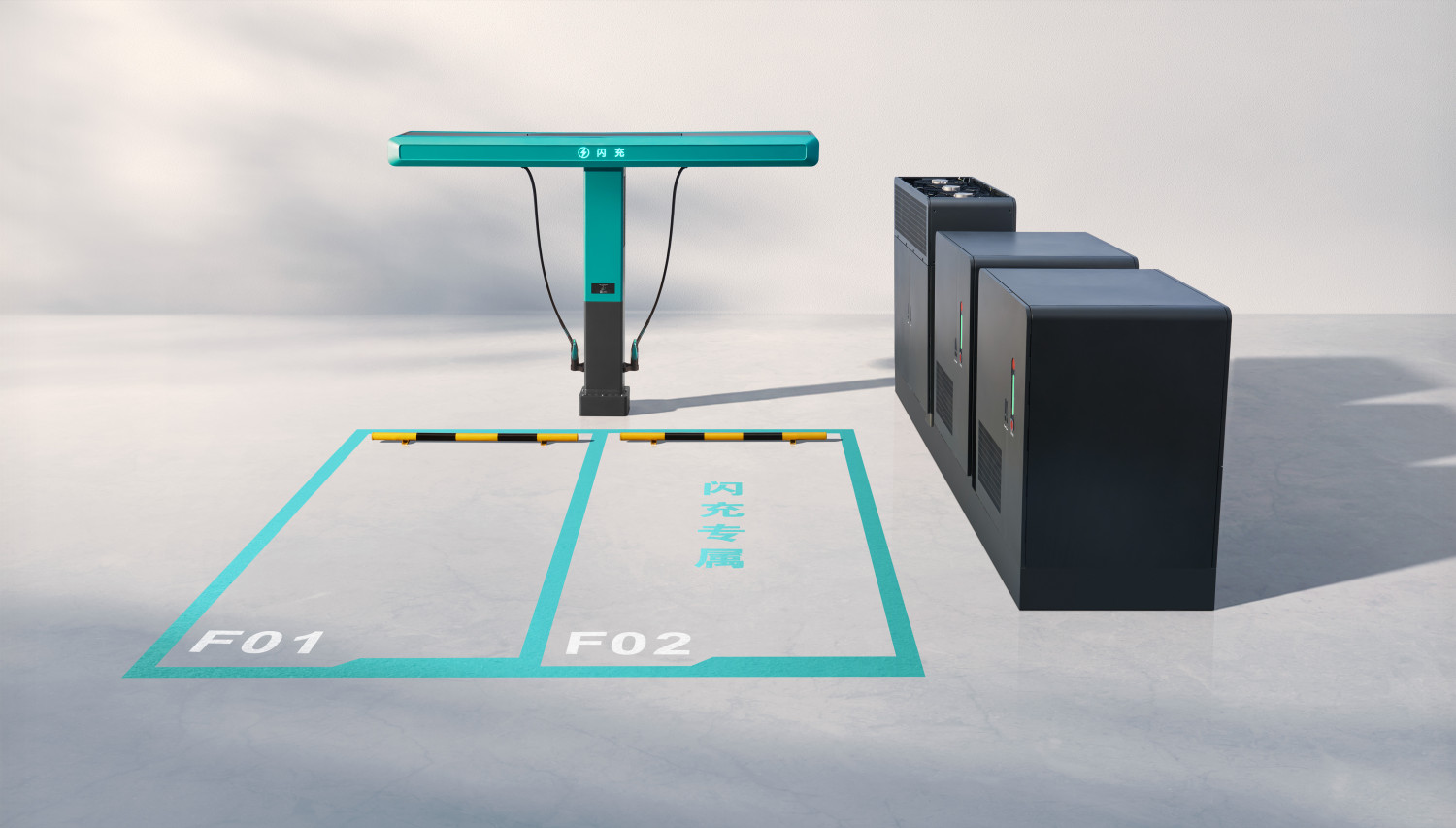
That storage is central to BYD’s own plan. The company says its system recharges a stationary battery more slowly, then uses it as both an energy reservoir and a “power amplifier” during short charging bursts. This can reduce the grid connection needed to deliver a very high peak to one car.
It does not make the energy free or eliminate grid upgrades. A busy site must eventually replenish every kilowatt-hour dispensed. Storage can smooth a short peak; it cannot support continuous high-volume charging forever from a weak electrical service.
For Canadian drivers, the bigger near-term caveat is vehicle compatibility. A 1,500-kW label on the station does not make a current EV charge at 1,500 kW. The battery chemistry, pack voltage, thermal management, charging curve, connector and software handshake all set the real limit.
| Scenario | Peak power | Theoretical energy in five minutes | Why it matters |
|---|---|---|---|
| One BYD Flash connector | 1.5 MW | 125 kWh | Enough peak power to refill a large compatible battery very quickly |
| Two connectors at full peak | 3 MW | 250 kWh | A multi-stall site can create a large short-duration load |
| Four connectors at full peak | 6 MW | 500 kWh | Power sharing or substantial site infrastructure becomes essential |
| Tesla Canada published maximum | Up to 325 kW | About 27 kWh | Shows how far 1.5 MW sits above a familiar passenger-EV benchmark |
| ChargePoint Express Plus single port | Up to 500 kW | About 42 kWh | Current Canadian-market hardware is already moving beyond 350 kW |
BYD Flash Charging official images
12
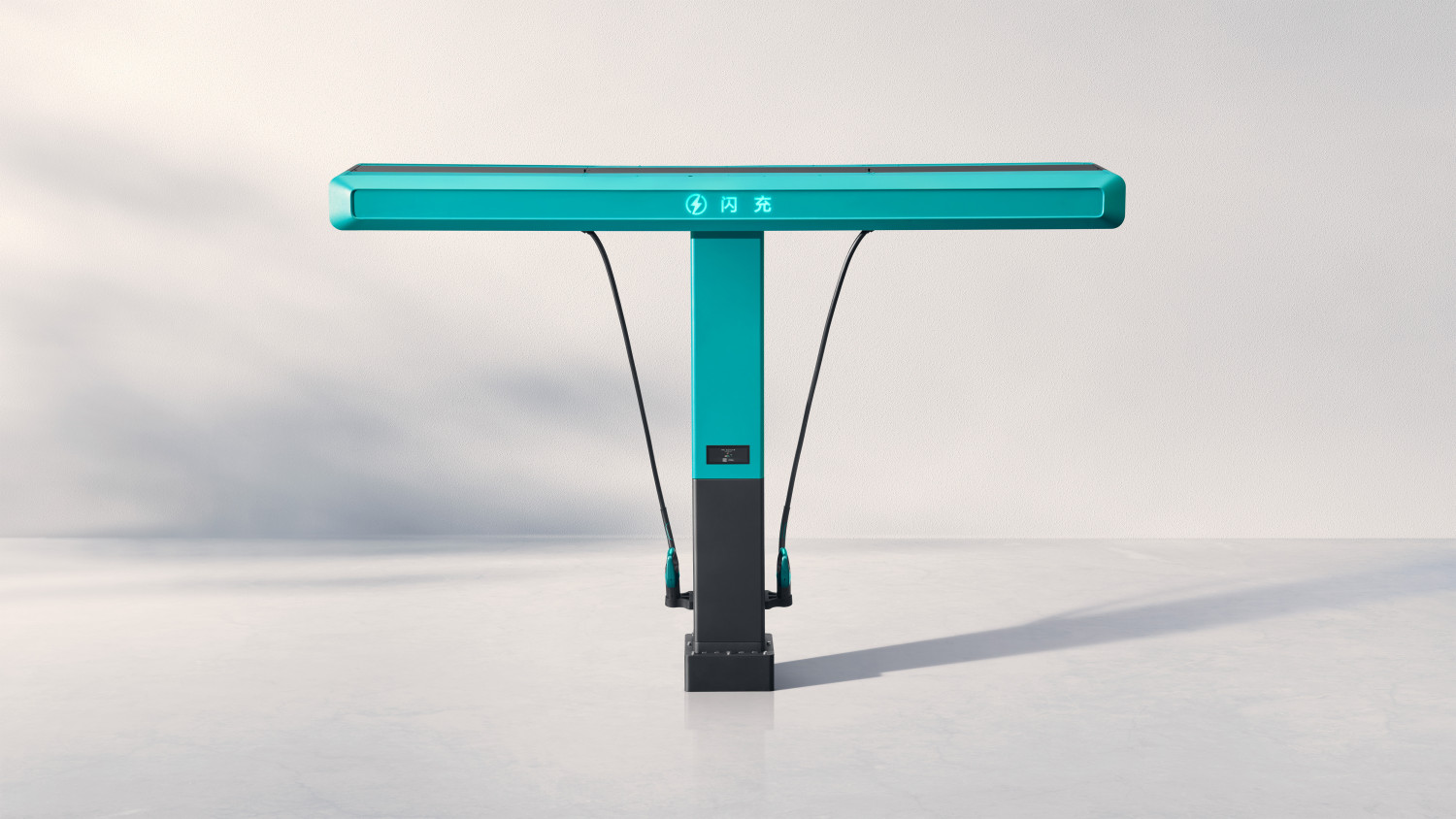
BYD uses an overhead T-shaped structure and pulley-supported cables to make the high-current connector easier to handle and keep it off the ground.
Power Is Not the Same as Energy
The grid discussion becomes easier once power and energy are separated.
Power, measured in kilowatts or megawatts, is the instantaneous rate. BYD’s 1.5-MW number describes the charger’s maximum delivery rate. Energy, measured in kilowatt-hours, is the quantity transferred over time.
If a charger held 1.5 MW for exactly five minutes, it would deliver 125 kWh before losses. Four simultaneous connectors would create a 6-MW peak and transfer 500 kWh in five minutes. Real sessions will not remain at their peak from start to finish, but the electrical equipment still has to be engineered for the maximum planned load.
This is why a single spectacular demonstration is easier than a busy highway site. One vehicle can draw from a charged stationary battery. A station serving car after car through a holiday rush must keep replenishing that battery while managing several dispensers, site lighting, cooling equipment and other commercial loads.
The site’s long-run energy demand ultimately follows traffic. If cars continuously remove energy faster than the grid connection and on-site generation can replace it, the storage battery empties and charging power has to fall.
How On-Site Batteries Change the Equation
BYD says Flash Charging stations can use an ultra-fast-discharge energy storage system. This is the same basic strategy already used in other demanding charging applications: draw power from the grid at a steadier rate, store it locally, then discharge the stationary battery when a vehicle requests a short high-power session.
That approach can provide several advantages:
- reduce the site’s momentary draw from the distribution network
- avoid or defer some utility upgrades
- recharge storage during quieter or lower-cost periods
- share available power among multiple charging stalls
- support a high peak even when the grid connection is smaller than the dispenser rating
- combine more naturally with solar generation where the site and economics suit it
The trade-off is additional equipment. The operator must pay for the battery, power electronics, cooling, controls, fire protection, maintenance and eventual cell replacement. Every conversion also loses some energy as heat.
Storage sizing depends on traffic rather than the charger’s headline alone. A lightly used site may have hours to recover after a fast session. A station on Highway 401 during a long weekend may see vehicles queue continuously. The second site needs a stronger grid connection, more storage, more sophisticated power sharing—or all three.
The Local Distribution Grid Is the Real Constraint
It is tempting to ask whether “Canada’s grid” can handle 1.5-MW charging. That framing is too broad.
A country’s annual generation can be adequate while a particular retail site lacks the transformer, feeder capacity or substation headroom for several megawatts of new load. The decisive engineering work happens locally: utility studies, interconnection design, switchgear, transformers, cable runs and demand management.
TD Economics illustrated the scale using BYD’s earlier 1-MW platform. It estimated that 500 vehicles charging simultaneously at 1 MW would equal roughly 10 percent of Toronto’s peak demand. That does not mean a handful of Flash Chargers threatens the provincial system. It shows why unmanaged mass deployment would be a very different problem from installing several strategically designed sites.
Ontario is also adding large amounts of battery storage to its electricity system. The Independent Electricity System Operator says contracted projects are expected to bring the province above 3,500 MW of storage by 2030. Grid-scale batteries and behind-the-meter charging-station batteries solve different problems, but both reflect the same principle: flexible storage can shift when power is drawn and reduce stress during peaks.
For Flash Charging, the best early Canadian locations would likely be sites that already have strong commercial electrical service, room for battery cabinets and predictable high utilization. Fleet depots, major highway plazas and large urban charging hubs make more sense than trying to place 1.5-MW hardware at every convenience store.
Five-Minute Charging Requires a Five-Minute Car
The charger is only half of the system.
BYD’s claims depend on its compatible second-generation Blade Battery, high-voltage architecture, thermal management and charging controls. An older EV plugged into a future Flash Charging station would request only the power it was engineered to accept—assuming the connector and communications were compatible at all.
This matters because Canadian charging is moving through a connector transition. NACS/J3400 is becoming common, CCS vehicles remain on the road, and charging networks use different authorization and payment systems. BYD has not explained what connector a Canadian Flash Charger would use, whether non-BYD vehicles could access it or how much power they would receive.
Even a technically compatible future EV will not sit at maximum power for an entire session. Charging normally slows as the battery fills, and the car may reduce power because of battery temperature, state of charge, cell balance or protection limits. BYD’s five-minute claim is specifically 10 to 70 percent, not empty to full.
The correct buyer question will not be “Is there a 1,500-kW charger nearby?” It will be “What charging curve does this exact vehicle achieve on that station in summer and winter?”
The Cold-Weather Claim Could Matter More Than the Peak
Canadian drivers may care more about BYD’s -30°C result than the 1.5-MW headline.
Cold batteries usually accept power more slowly until their cells reach a suitable temperature. Modern EVs use route-aware preconditioning and liquid thermal management to improve winter fast charging, but a cold-soaked vehicle can still spend part of the stop warming itself instead of accepting peak power.
BYD says Blade Battery 2.0 can charge from 20 to 97 percent in 12 minutes at -30°C—only three minutes longer than its stated room-temperature 10-to-97-percent result. That is a manufacturer test and should be treated as a claim until independent testing reproduces it across repeated sessions, wind, snow, different starting temperatures and real Canadian road use.
If it holds up, the winter consistency may be the genuine breakthrough. A dependable 12-minute cold-weather stop is more valuable than an eye-catching five-minute result that appears only with a warm battery under ideal conditions.
What Canada Still Needs to Know
Before Flash Charging can be evaluated as a real Canadian network, BYD needs to publish several details:
- Locations and schedule: Which provinces and corridors come first, and when will public operation begin?
- Vehicle lineup: Which Canadian-market models will support Blade Battery 2.0 and the full charging rate?
- Connector and access: Will stations use NACS/J3400, CCS or another connector, and will other brands be welcome?
- Power sharing: How does output change when two or more cars charge at once?
- Storage capacity: How much stationary energy sits at a typical site, and how quickly can it recover?
- Utility requirements: What grid connection is needed for urban, highway and dealership installations?
- Pricing: Will drivers pay per kilowatt-hour, per minute, by membership or through vehicle-linked Plug & Charge?
- Winter validation: Can the published cold result be repeated after highway driving and overnight cold soaking?
- Battery durability: How does frequent Flash Charging affect usable capacity over years of normal ownership?
BYD says Blade Battery 2.0 completed safety testing after 500 Flash Charging cycles and claims lower degradation than the original Blade Battery. That is encouraging manufacturer evidence, not a substitute for multi-year field data, warranty terms and independent battery-health testing.
Bottom Line
BYD’s 1.5-MW Flash Charger does not make Canada’s electricity grid obsolete, and it does not require every site to draw 1.5 MW continuously from the utility.
The workable model is a charging hub with a substantial grid connection, on-site storage and intelligent power sharing. The stationary battery absorbs energy at a manageable rate, then releases it quickly when a compatible car arrives. Stronger sites can replenish faster and serve more vehicles before performance drops.
The technology could materially improve Canadian EV travel if BYD delivers three things together: vehicles that hold a very fast charging curve, stations that remain reliable in winter and enough well-placed capacity to prevent queues. Without that full system, 1,500 kW is only a laboratory-grade peak number.
For now, Flash Charging is best viewed as a credible technical direction with an incomplete Canadian rollout plan. The grid can handle it—but only if BYD and its utility partners design the station around local reality rather than the number printed on the dispenser.
FAQ
Is BYD Flash Charging confirmed for Canada?
BYD’s Canadian website highlights Flash Charging as “coming soon,” and the company says it intends to expand the network globally. Reports also point to Canadian infrastructure hiring. BYD has not announced Canadian station locations, counts, opening dates or connector details.
Can Canada’s electricity grid support a 1,500-kW EV charger?
Yes, at a properly engineered site. A high-capacity utility connection, transformer and switchgear may be required, while on-site battery storage and load management can reduce short peaks. The limiting factor is usually local distribution capacity and site economics, not total national electricity production.
Can today’s Canadian EVs charge at 1,500 kW?
No vehicle receives the station’s maximum automatically. The car’s battery, voltage, thermal system, charging curve and communications determine the accepted power. BYD has not published Canadian interoperability details for other brands.
Does five-minute charging mean a constant 1.5-MW grid load?
Not necessarily. The 1.5-MW figure is the charger’s peak output, and vehicle power changes during the session. BYD also plans to use stationary batteries that recharge more slowly and supply short high-power bursts.
Sources
- BYD Canada: Flash Charging and Blade Battery 2.0 overview
- BYD: Blade Battery 2.0 and 1,500-kW Flash Charging technical announcement
- Drive Tesla Canada: BYD Canadian charging-infrastructure hiring
- Natural Resources Canada: EV charging levels and connector basics
- TD Economics: Canada’s EV strategy and ultrafast-charging grid context
- IESO: 2026 battery-storage procurement results
- Tesla Canada: Supercharger maximum charging rate
- ChargePoint Canada: Express Plus DC fast-charging system