Chevrolet Bolt vs Kia EV4 in Canada: Hatchback Value or 552-km Sedan?
The 2027 Chevrolet Bolt and 2026 Kia EV4 start barely $1,000 apart in Canada. Here is how range, charging, body style, tech, and winter use change the answer.
Canada’s affordable-EV fight now has two very different shapes.
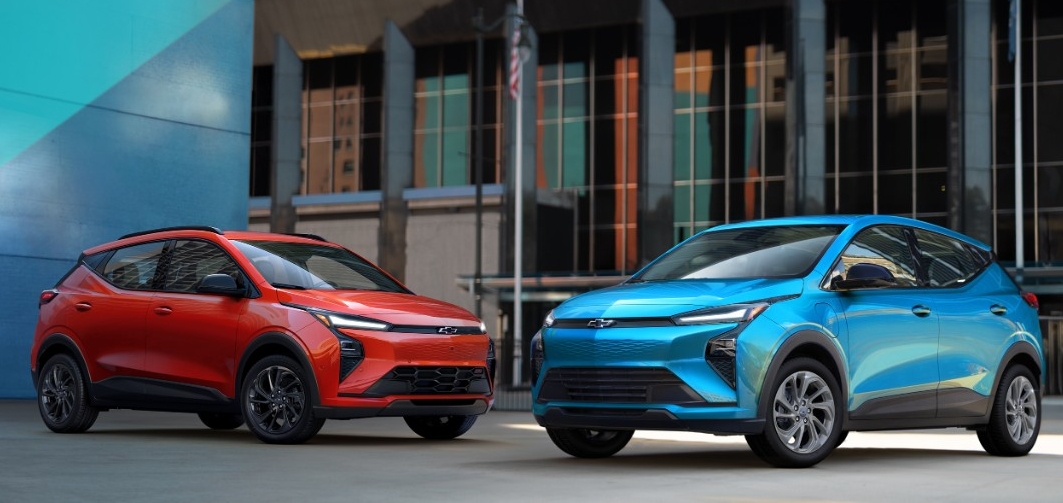
The 2027 Chevrolet Bolt returns as a compact, upright hatchback with an official $39,999 MSRP, up to 422 km of estimated range, a native NACS charge port, and a GM-estimated 25-minute charge from 10 to 80 percent. The 2026 Kia EV4 is a low-slung sedan that starts at $38,995 MSRP with 391 km of range, while the $42,995 EV4 Wind Long Range stretches to an estimated 552 km.
That makes the base-price gap almost irrelevant. The real decision is whether you want the Bolt’s flexible hatchback packaging and shorter published charging stop, or the EV4’s sedan efficiency, phone-friendly cabin tech, and available 130-km range advantage.
Quick Verdict
Choose the Chevrolet Bolt LT if you want the easiest all-round city and suburban EV. Its hatchback body should be friendlier to bulky cargo, its published 10-to-80-percent time is quicker, and Chevrolet offers available Super Cruise hands-free driver assistance. It is the more practical default for a small family, a one-car urban household, or anyone replacing a compact crossover.
Choose the Kia EV4 Light if the lowest MSRP matters and 391 km covers your normal week. It also explicitly includes wireless Apple CarPlay and Android Auto, which may be a deciding feature for buyers who want their phone to remain central to the dashboard experience.
Choose the Kia EV4 Wind Long Range if this will be your main car and you regularly face winter highway driving, long commutes, or gaps between reliable chargers. Its 552-km estimate is the standout number in this comparison, and the $4,000 MSRP step from EV4 Light to Wind is easier to defend when the extra range solves a real problem.
Bolt vs EV4: The Canadian Numbers
| Item | 2027 Chevrolet Bolt LT | 2026 Kia EV4 Light | 2026 Kia EV4 Wind |
|---|---|---|---|
| Body style | Compact upright hatchback | Compact sedan | Compact sedan |
| Published MSRP | $39,999 | $38,995 | $42,995 |
| Estimated range | Up to 422 km | 391 km | 552 km |
| Power | 210 hp | 201 hp / 209 lb-ft | 201 hp / 209 lb-ft |
| Drive | Front-wheel drive | Front-wheel drive | Front-wheel drive |
| Battery | Chevrolet does not highlight usable capacity on its Canadian consumer page | 58.3 kWh | 81.4 kWh |
| DC fast charge, 10–80% | As little as 25 minutes | About 29 minutes | About 31 minutes |
| Charge port | Native NACS | Native NACS | Native NACS |
| Cabin-tech emphasis | Google built-in; available Super Cruise capability | Wireless Apple CarPlay and Android Auto; Kia Connect | Wireless Apple CarPlay and Android Auto; Kia Connect |
| Best fit | Practical compact-EV buyer | Price-focused commuter | Long-range main-car buyer |
Chevrolet Canada’s updated Bolt page now lists up to 422 km rather than the earlier 410-km estimate, plus a 10-to-80-percent charge in as little as 25 minutes. Kia Canada’s EV4 release provides the current battery, range, charging, and MSRP walk for each Canadian trim.
Those are manufacturer estimates, not a MotorLinks road test. Temperature, speed, tires, battery state, charger output, and preconditioning can all change the real result.
The Bolt Wins The Packaging Argument
The Bolt is the easier shape to understand for most Canadian households. It is short enough for tight parking but tall enough to give the cabin and cargo area a more crossover-like feel. Chevrolet also provides 113 litres of underfloor storage, adding a useful hidden space for charging equipment or smaller valuables.
That upright layout matters when the car has to swallow a stroller, hockey bags, a dog crate, flat-pack furniture, or a weekend’s worth of irregular cargo. A hatch opening is simply more forgiving than a sedan trunk opening, even when the sedan has respectable volume on paper.
The trade-off is highway efficiency. A taller body has to push more air, while the EV4’s low roof and 0.23 drag coefficient are built around slipping through it. Drivers who carry people more often than bulky objects may prefer the EV4’s traditional sedan proportions and its calmer range story.
Chevrolet Bolt and Kia EV4: body style and charging
13
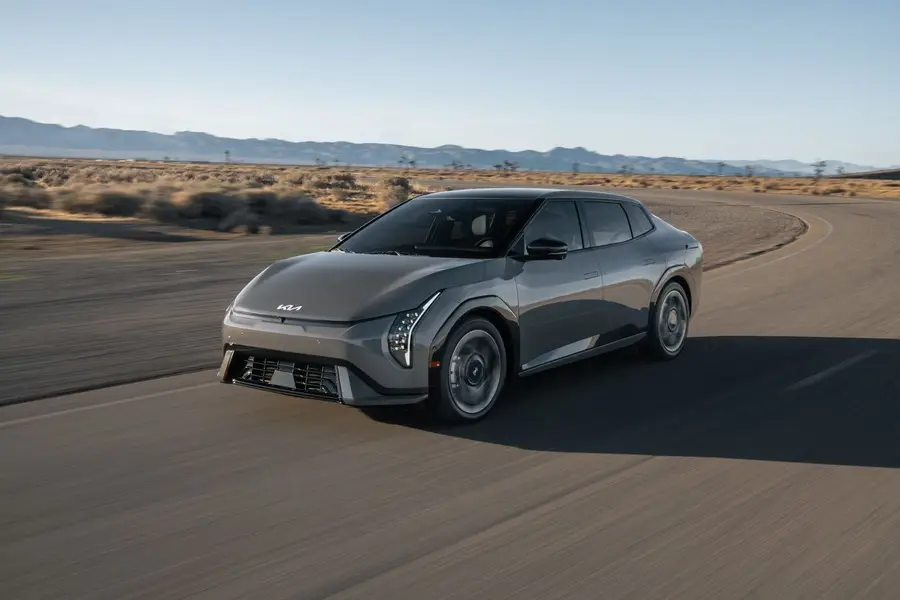
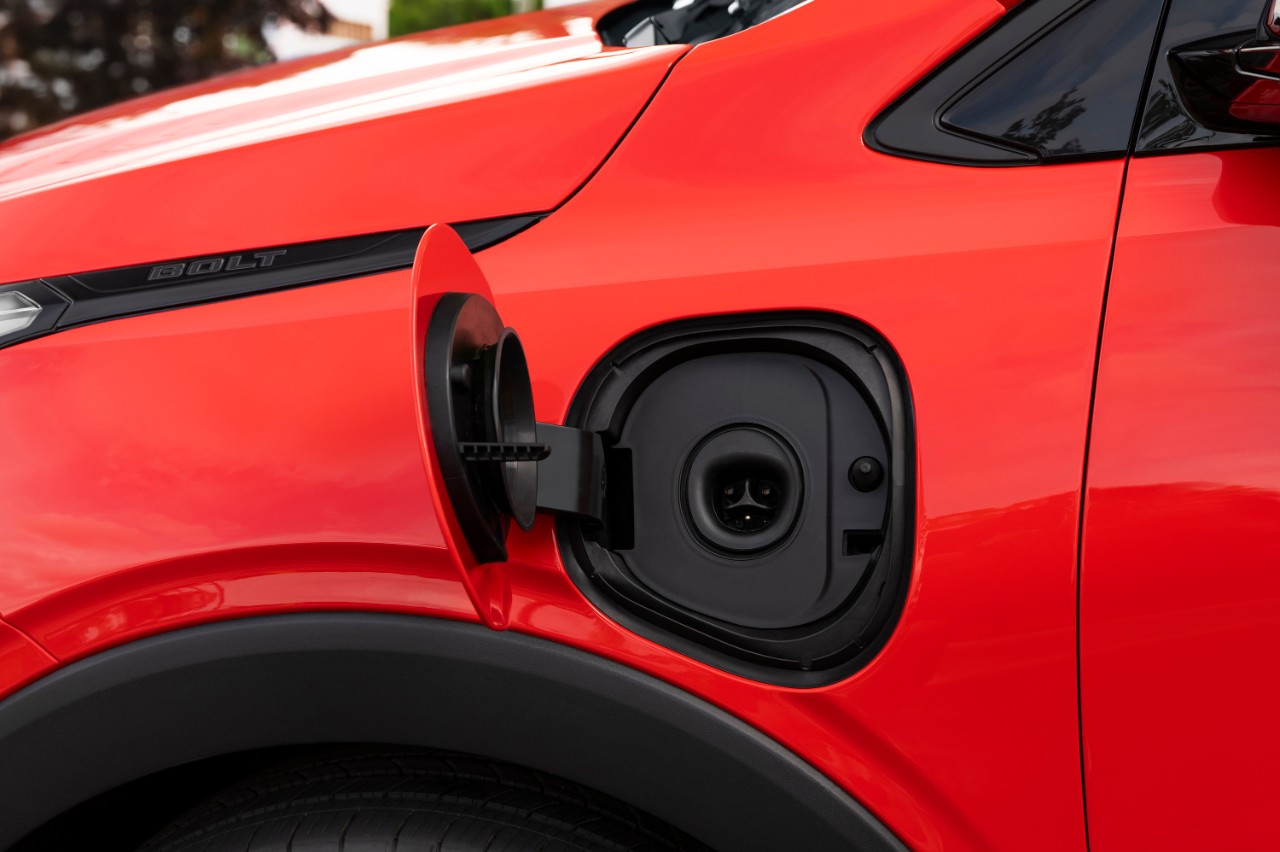
The returning Bolt packages its battery into a short, tall hatchback body that is easier to load than a conventional sedan.
The EV4 Wind Wins The Range Argument
The EV4 Light’s 391 km estimate does not beat the Bolt, despite the Kia’s sleeker body. Its smaller 58.3-kWh pack is the reason it can start slightly lower. For a home-charging commuter, that can still be the right trade: buy only the battery you need and charge overnight.
The EV4 Wind changes the conversation. Its 81.4-kWh pack lifts the estimate to 552 km, 130 km beyond the Bolt’s maximum published figure. The Wind also adds a heat pump according to Kia’s Canadian specifications, a useful detail when cabin heating and winter efficiency matter.
Canadian buyers should not treat 552 km as a guaranteed winter-highway result. No rated figure works that way. But extra rated range creates margin for cold weather, winter tires, headwinds, missed charging opportunities, and days when the battery did not start at 100 percent.
That margin is valuable if the EV4 will be the household’s only car. It is much less valuable if the vehicle spends nearly every night beside a home charger and rarely leaves the city.
Charging Is Closer Than The Peak Number Suggests
Both cars have a native NACS port, which is the cleanest hardware direction for a new EV in Canada. But a familiar plug does not make every charging session identical.
Chevrolet says the Bolt can accept up to 150 kW and move from 10 to 80 percent in 25 minutes under suitable conditions. Kia quotes 29 minutes for the EV4 Light and 31 minutes for the EV4 Wind when using a sufficiently powerful DC charger.
The Bolt therefore has the shorter published stop. The EV4 Wind adds substantially more energy during its session because it has the larger battery, so four or six minutes alone cannot rank their complete road-trip performance. A useful comparison also asks how many kilometres each car adds, how the charging curve holds after the peak, and whether navigation gets the battery to the right temperature before arrival.
Chevrolet says Google Maps can provide charging recommendations and automatically prepare the Bolt’s battery when a DC fast charger is on the route. Kia lists a battery heating system and navigation across the EV4 lineup, but shoppers should confirm automatic charger-route preconditioning behaviour on the exact trim and software version they are buying.
For a deeper checklist, read MotorLinks’ NACS road-trip guide for Canadian EV buyers.
Cabin Tech Could Decide It Before Range Does
The Bolt and EV4 represent two different infotainment philosophies.
Chevrolet centres the Bolt around an 11.3-inch touchscreen, an 11-inch driver display, Google built-in, and OnStar connectivity. Available Super Cruise capability is scheduled later in 2026, with a three-year trial before a subscription is required. Buyers interested in that feature should confirm that the specific vehicle has the required hardware and when it will be active.
Kia gives the EV4 dual 12.3-inch displays plus a dedicated five-inch climate screen. More importantly for some shoppers, Kia explicitly lists wireless Apple CarPlay and Android Auto as standard. The base Light also includes heated front seats, dual-zone climate control, rear air vents, navigation, and a broad driver-assistance suite.
Neither approach is universally better. The Bolt’s tightly integrated Google routing can make EV trip planning easier. The EV4’s phone projection reduces the learning curve for drivers who already organize their digital life around CarPlay or Android Auto. Sit in both and use the systems before signing; this is one difference that a range chart cannot settle.
Price The Real Car, Not The MSRP Row
The $1,004 MSRP gap between the Bolt LT and EV4 Light is too small to crown a value winner by itself.
Freight, air-conditioning tax, paint charges, dealer fees, accessories, manufacturer rebates, finance rates, lease residuals, insurance, and delivery timing can move the result. Federal and provincial incentive eligibility can move it much more.
Ask for a written quote on the exact in-stock or allocated vehicle. Separate mandatory charges from optional protection packages. Confirm the pre-tax transaction value used for any incentive application, and do not assume a rebate shown on a manufacturer page will still apply at delivery.
MotorLinks maintains a Canadian EV incentive and affordability guide for the current program framework. Use that as the starting point, then verify the final deal with the dealer and the relevant government program.
Which One Should You Buy?
Buy the Bolt LT if your priorities are compact size, easy cargo loading, a shorter published fast-charge stop, and the option of Super Cruise. It is the safest all-round recommendation when 422 km is enough.
Buy the EV4 Light if you want the lowest starting MSRP, prefer a sedan, charge at home, and value wireless phone projection. Its 391-km estimate is adequate for many commuters, but the Light is not the range champion.
Buy the EV4 Wind if this is your main car and the additional 130 km over the Bolt will be used. The range and heat pump give it the strongest winter-road-trip case, while the $42,995 MSRP remains close enough to the Bolt to keep the comparison honest.
Wait or shop elsewhere if you need all-wheel drive immediately, tow-rated capability, or true compact-SUV cargo space. The front-wheel-drive cars compared here are efficient affordable EVs, not substitutes for every crossover.
Bottom Line
The Chevrolet Bolt and Kia EV4 prove that affordable EV shopping is becoming a choice between strengths rather than a hunt for one tolerable compromise.
The Bolt is the better small utility vehicle: practical shape, competitive range, native NACS, quick published charging, and available hands-free assistance. The EV4 Light is the lean commuter play. The EV4 Wind is the long-distance value pick, with a 552-km estimate that gives Canadian drivers meaningful breathing room.
Start with how the car will be used, then compare written quotes. If you choose by the hardest normal day rather than the biggest headline, the right answer becomes much clearer.
FAQ
Should Canadians buy the Chevrolet Bolt or Kia EV4?
Choose the Bolt for hatchback practicality, the shorter published fast-charge time, and available Super Cruise. Choose the EV4 Wind for maximum range, or the EV4 Light for the lowest MSRP and standard wireless phone projection.
Which has more range, the Bolt or EV4?
Chevrolet Canada estimates up to 422 km for the 2027 Bolt. Kia Canada estimates 391 km for the EV4 Light and 552 km for the EV4 Wind Long Range.
Do both cars have NACS charging ports?
Yes. Both Canadian-market vehicles have a native NACS port. Buyers should still confirm compatible charging networks, payment setup, route planning, and any adapter needed for non-NACS equipment.
Is the EV4 Wind worth the extra money over the Bolt?
It can be if the extra range solves a real winter, highway, or home-charging constraint. If 422 km already covers your use and cargo flexibility matters more, the Bolt is the stronger value.