Can Aptera's 40 Miles of Solar Range Work in Canada?
Aptera's solar EV can add up to 40 miles of range on a strong day, but Canadian buyers should plan around sun exposure, winter losses, and plug-in charging.
Photo: Aptera
Aptera’s promise of up to 40 miles (64 km) of solar-powered driving per day sounds almost tailor-made for a Canadian commuter who is tired of thinking about charging. Park outside, let the body-mounted cells collect sunlight, and drive home on energy that never passed through a wall plug.
The technology is real. The “40 miles” should still be read as a best-case result, not a daily allowance.
Aptera reported in June that a production-intent validation vehicle collected 4.42 kWh in one day during testing in Southern California. Using the company’s efficiency target of 100 Wh per mile, that energy represents about 44 miles of driving. The result is encouraging, but it was an internal test on a strong solar day in a much sunnier environment than a Canadian winter. Aptera said third-party laboratory validation was still scheduled.
For a Canadian buyer, the practical answer is straightforward: the solar system could cover a useful portion of commuting, particularly in summer and in sunnier parts of the Prairies, but do not buy an Aptera on the assumption that it will deliver 40 free miles every day. Treat the solar array as a highly convenient range extender attached to an extremely efficient plug-in EV.
Quick Verdict
Aptera’s full 40-mile solar claim could be achievable in Canada on an excellent summer day, but it is not a realistic year-round planning number. Long summer daylight helps. Shade, indoor parking, clouds, low winter sun, snow coverage, and increased cold-weather energy use work against it.
The ideal Canadian Aptera owner would have:
- An outdoor parking space with long, unobstructed sun exposure.
- A modest daily commute that can flex with seasonal solar production.
- Access to a normal electrical outlet or EV charger when solar falls short.
- Realistic expectations about winter rather than a “never plug in” assumption.
Apartment dwellers with an open, sunny surface lot may find the solar feature unusually valuable because it can add energy where there is no charger. Drivers who park underground at home and in a covered garage at work will get very little benefit, no matter how sunny the city is.
| Factor | Best case for solar range | What reduces it |
|---|---|---|
| Sun exposure | Vehicle remains outdoors in direct sun for much of the day | Indoor parking, trees, buildings, carports, and partial shade |
| Season | Long, clear summer days | Short winter days and low sun angles |
| Panel surface | Cells are clean and fully exposed | Snow, ice, dirt, leaves, and road film cover cells |
| Parking | Open location with useful exposure across the curved body | A fixed spot shaded for the strongest part of the day |
| Vehicle efficiency | Actual consumption stays close to Aptera's 100 Wh/mile target | Cabin heating, winter tires, slush, wind, speed, and cold-battery losses increase consumption |
What Aptera Actually Proved
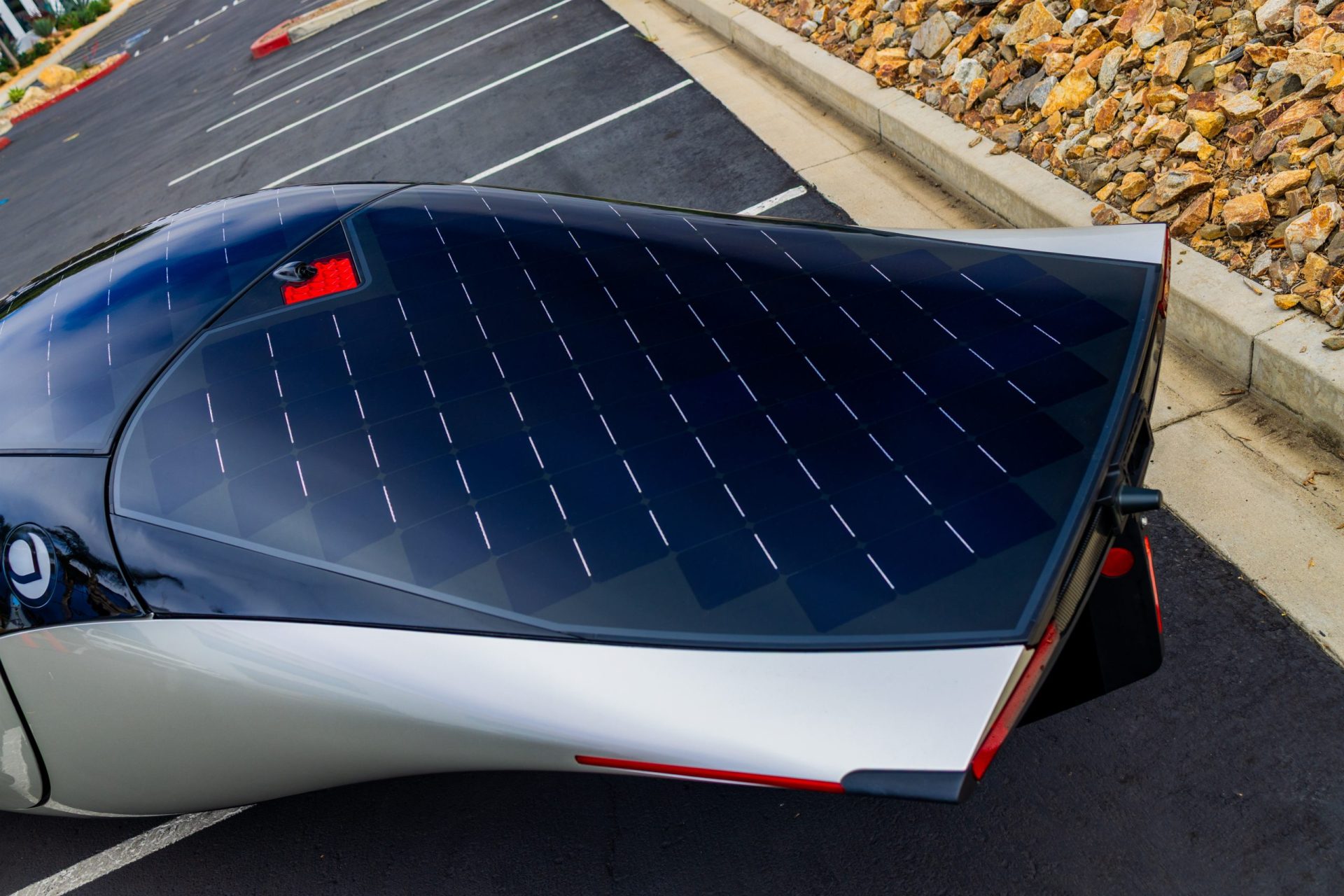
Aptera says its body carries about 700 watts of integrated solar cells. Unlike a conventional EV with a token solar roof, the three-wheeler was shaped around low energy consumption: the company is targeting about 100 Wh per mile, or roughly 6.2 kWh/100 km. That efficiency is the key to the whole idea.
A conventional electric crossover can consume several times more energy per kilometre. Put the same small solar array on a heavier, less aerodynamic vehicle and it may produce only a handful of useful kilometres. Aptera can turn a few kilowatt-hours into meaningful range because it needs so little energy to move.
In its June 25 solar validation release, Aptera reported more than 4 kWh of production and a peak daily result of 4.42 kWh. The company converted that into up to 44 miles using its 100 Wh/mile design target.
That distinction matters. The test measured solar energy collected. The driving distance is a calculation based on targeted vehicle efficiency, not a separate 44-mile road test performed on solar energy alone. Aptera also said it had engaged a third-party laboratory to validate and rate the solar system, with those results still to come.
The correct takeaway is neither “the claim is fake” nor “every owner gets 44 miles.” Aptera has shown that the integrated array can collect enough energy on a favourable day to make the original claim plausible. Real owners will live on a wide curve below that peak.
Why Canada Changes The Math
Canada is not one solar market. Natural Resources Canada’s solar resource maps show meaningful differences by location, month, and panel orientation. Southern Alberta and Saskatchewan can have strong annual solar resources, while coastal cloud patterns and northern winters create a different experience.
Those maps cannot be converted directly into exact Aptera kilometres. They model photovoltaic systems at defined orientations, while Aptera spreads cells across curved horizontal and angled surfaces on a vehicle that may be parked in any direction. They are useful for one conclusion: location and season materially change the energy available.
Summer is the easy case. A car left outside through a long July day in Calgary, Regina, Winnipeg, Toronto, or Ottawa may collect meaningful energy, even if it does not reach the Southern California peak. A commuter who drives 25 km each way will not necessarily replace the full trip from solar, but a sunny workday could offset a useful part of it.
Winter is harder. The issue is not simply cold solar cells. Natural Resources Canada notes that photovoltaic cells can perform well at low temperatures. The bigger obstacles are fewer daylight hours, a lower sun angle, cloud, shade, and snow or ice covering the cells. NRCan’s PV guidance says shade can drastically reduce output, and its solar factsheet says panels need to be unshaded and clear of snow and dust to work efficiently.
At the same time, the vehicle may use more energy per kilometre for cabin heat, battery conditioning, winter tires, dense cold air, snow, and slush. Even if the array produces a respectable amount of electricity, each kilowatt-hour may not carry the vehicle as far as it would on a mild day.
Aptera integrated solar system
13


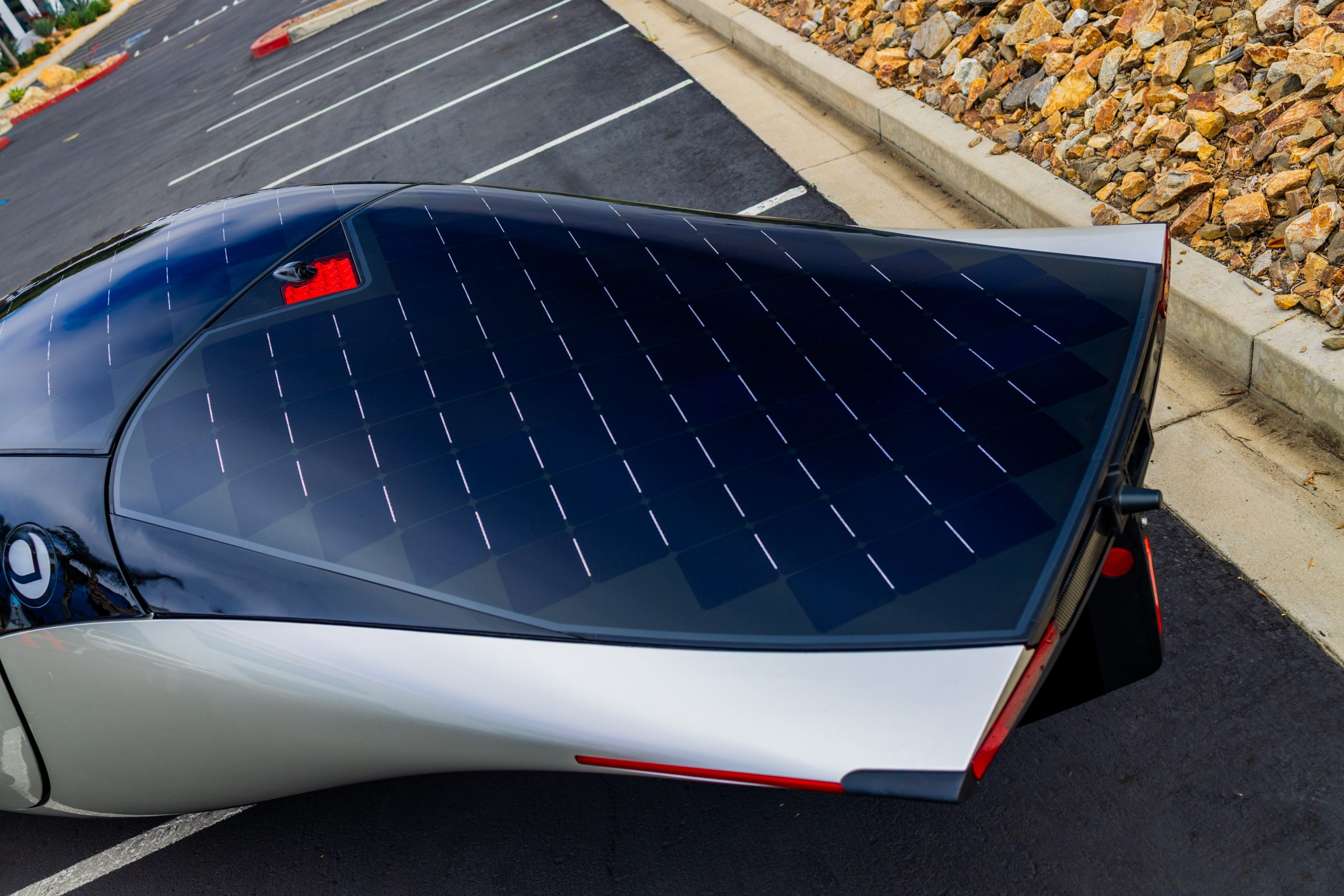
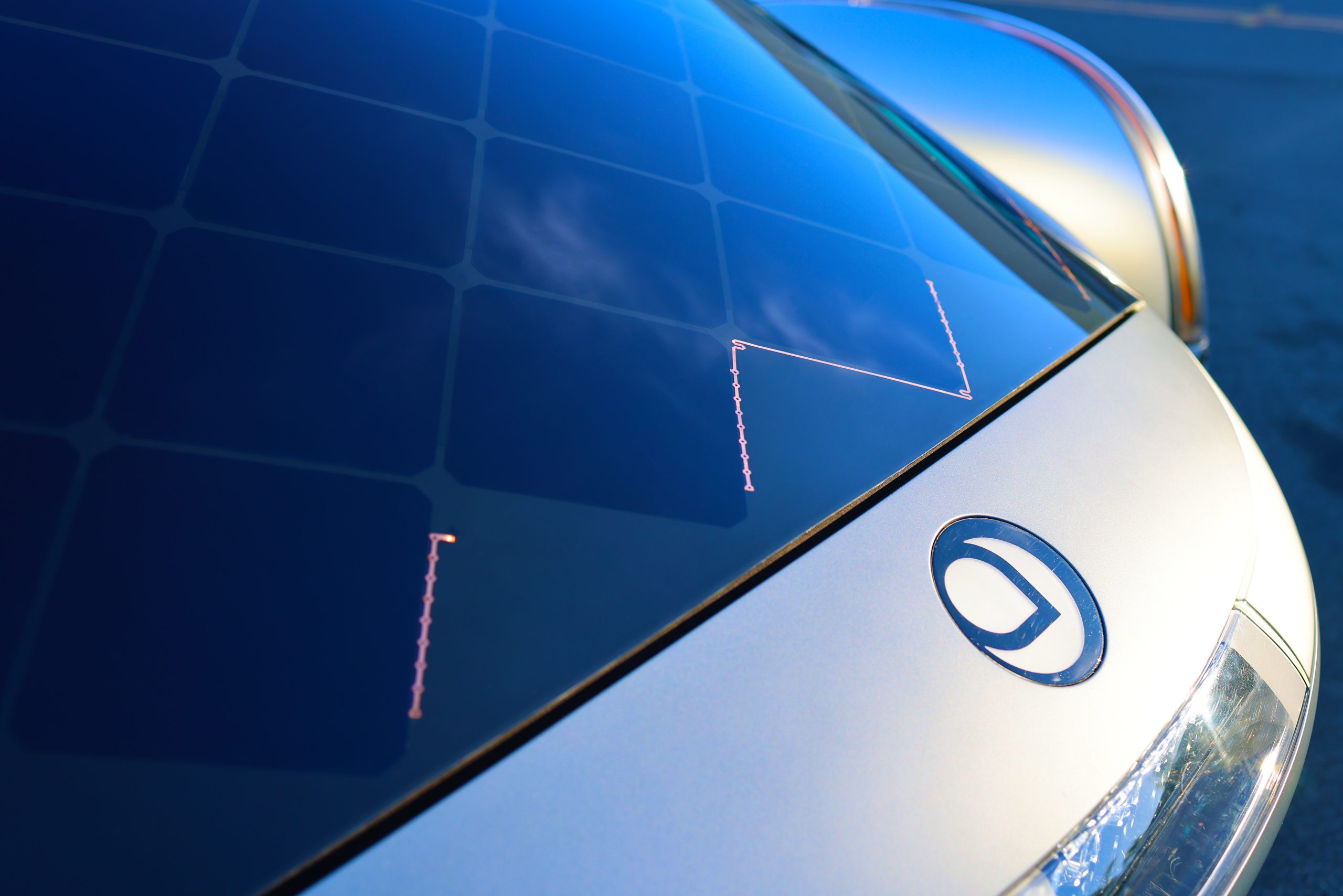

Aptera spreads photovoltaic cells across the curved roof and rear hatch rather than relying on one small flat panel. Image: Aptera Motors.
Use The Energy Number, Not The Marketing Number
The cleanest way to understand Aptera’s solar range is to start with harvested energy:
Solar driving miles = solar energy in kWh × 1,000 ÷ actual Wh/mile
If the car collects 2 kWh and uses 125 Wh/mile in the conditions you are driving, that is 16 miles, or about 26 km, of solar-derived range. That example is not a Canadian forecast; it simply shows why both halves of the equation matter.
The dashboard should eventually make this easy by reporting collected energy and added range. Until production vehicles are independently tested through multiple seasons, precise city-by-city promises would be false confidence. A Toronto owner with an open driveway could outperform a Calgary owner whose car sits in a garage all day. Parking can outweigh geography.
Solar Is Most Useful When Charging Access Is Worst
Aptera’s most interesting Canadian use case may not be the suburban homeowner with a 240-volt charger. That driver already wakes up to a full battery whenever needed.
The stronger case is someone who parks outdoors but cannot install a charger: a renter, condo resident, campus commuter, or employee using a surface lot. Even a partial solar contribution can stretch the interval between public charging sessions. On a highly efficient vehicle, a modest amount of collected energy is worth more kilometres than it would be on a conventional EV.
That does not eliminate infrastructure. Aptera describes the vehicle as having about 400 miles (644 km) of battery range in Launch Edition form and says its solar system can add up to 40 miles per day. The battery is the dependable energy store; the sun is a variable input. Owners still need a plan for prolonged cloud, winter, road trips, heavy energy use, and any day the vehicle spends under cover.
Even a standard household outlet could be more useful than it sounds because Aptera’s targeted consumption is so low. A modest overnight charge can add meaningful driving range without demanding the high-power home equipment used by a large electric truck or SUV. Faster public charging remains relevant on trips, but solar should be judged primarily by how much routine plugging it avoids.
The Canadian Questions Aptera Still Has To Answer
Solar output is only one part of whether Aptera works here.
The company’s July 14 RepairPal partnership covers a U.S. network and doesn’t confirm Canadian service coverage. Aptera has received a U.S. EPA Certificate of Conformity, but the company still describes its vehicle as being in testing and validation. Canadian delivery timing, compliance, registration, warranty support, parts supply, insurance, pricing, and local repair access remain unresolved for shoppers north of the border.
Those practical questions are more important than squeezing the final few kilometres out of the solar array. A vehicle can have brilliant energy efficiency and still be a poor purchase if it cannot be registered easily, repaired locally, insured affordably, or supported with parts.
Canadian reservation holders should wait for written answers on:
- Canadian certification and province-specific registration.
- Final delivered price in Canadian dollars.
- Warranty coverage and high-voltage service locations.
- Collision repair for the composite body and solar panels.
- Winter testing data, including consumption and charging.
- Independent solar-yield data across different climates.
Until then, MotorLinks’ Canadian EV incentive and affordability guide is the more useful place to compare vehicles that can be bought and supported now.
Bottom Line
Aptera’s solar idea is credible because the vehicle is designed to use unusually little energy. The company’s 4.42-kWh validation day shows that its integrated array can collect enough electricity under favourable conditions to support the headline range claim.
Canada does not invalidate the concept. It makes the result more seasonal.
A sunny summer day with outdoor parking could add a substantial amount of range. A cloudy December day with snow on the panels may add very little, while the vehicle consumes more energy to travel the same distance. Most Canadian owners should expect solar to reduce plug-in frequency, not eliminate plugging all year.
That is still genuinely useful. An EV that quietly harvests energy while sitting in a surface lot solves a problem no charging app can. Just buy the 40-mile claim as a peak capability, not a subscription the sun renews every morning.
Can an Aptera add 40 miles of solar range per day in Canada?
Possibly on an excellent summer day with long, unobstructed sun exposure. Canadian owners should not expect 40 miles every day or year-round because season, cloud, shade, snow, parking orientation, and actual vehicle consumption all affect the result.
Does Aptera need to be plugged in?
Yes. Aptera is a plug-in electric vehicle with an integrated solar charging system. Solar can reduce how often an owner plugs in, but it does not replace dependable charging for every driver or season.
Does cold weather stop solar panels from working?
No. Natural Resources Canada says photovoltaic cells can perform well at low temperatures. Short winter days, low sun angles, cloud, shade, and snow coverage are the larger solar constraints, while cold-weather vehicle energy use can reduce how far each collected kilowatt-hour carries the car.
Is Aptera available in Canada now?
No confirmed mainstream Canadian retail launch is in place. Canadian buyers still need firm information on certification, registration, pricing, warranty, service, insurance, parts, and delivery timing before treating Aptera as a normal purchase option.