2028 Toyota Highlander EV vs IONIQ 9 and EV9: Canada's Three-Row Electric SUV Choice Gets Harder
Toyota's 2028 Highlander EV gives Canadian families another three-row electric SUV to watch, but Hyundai IONIQ 9 and Kia EV9 still have availability and pricing advantages.
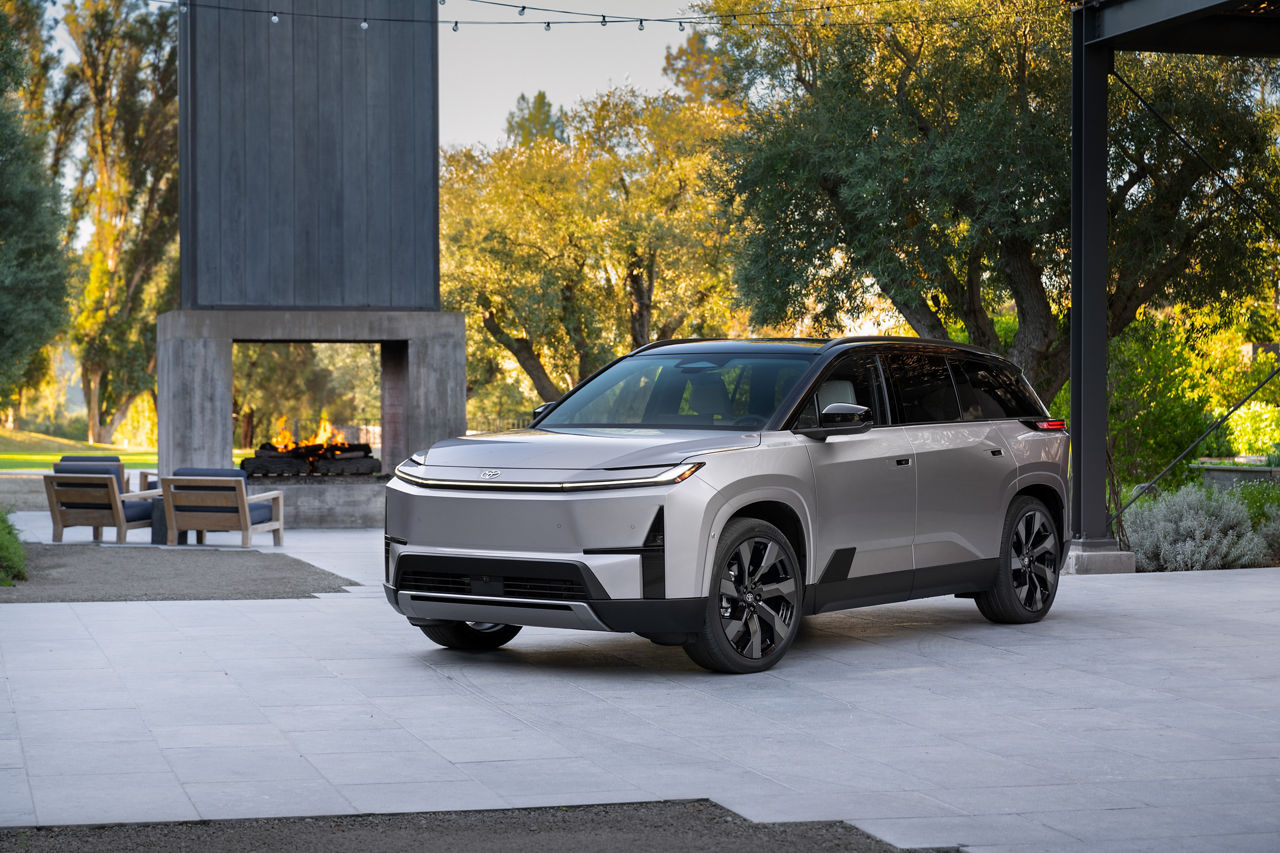
Photo: Toyota
Toyota just made the Canadian three-row EV conversation a lot more interesting.
The 2028 Toyota Highlander EV is not another luxury moonshot or a weird compliance crossover. It is a familiar family nameplate turning fully electric, with seating for up to seven, available all-wheel drive, a North American Charging Standard port, and a top manufacturer-estimated range figure of 511 km.
That matters because the mainstream three-row EV market is still thin. Hyundai has the IONIQ 9. Kia has the EV9. Subaru has its related Getaway on the way. Lexus and Cadillac cover the premium side. But a Toyota Highlander EV lands right in the part of the market where families already understand the badge.
The catch is timing. Toyota Canada says the 2028 Highlander is now expected to go on sale in early 2027, with pricing to be announced closer to launch. So this is not a simple “buy it today” answer. It is a shortlist decision.
Quick Verdict
Wait for the 2028 Toyota Highlander EV if you want a Toyota three-row EV, value brand familiarity, and can hold off until pricing is clear. The specs look genuinely useful: up to 511 km of estimated range, 338 hp on AWD models, a 95.8-kWh battery on key trims, NACS charging, and family packaging with up to 1,290 litres of cargo space behind the second row.
Buy or quote the Hyundai IONIQ 9 now if you want the longest published Canadian range figure and a more premium-leaning cabin. Hyundai Canada lists the IONIQ 9 from $59,999 MSRP plus fees, with a 539-km range claim based on its 110.3-kWh battery.
Keep the Kia EV9 on the list if you want the most proven mainstream option. Kia Canada highlights up to 491 km of range, fast charging from 10 to 80 percent in as little as 20 minutes, NACS access, three rows, and up to 5,000 lb of towing when properly equipped.
The short version: Highlander EV for Toyota trust and wait-and-see value; IONIQ 9 for range; EV9 for the settled family-EV play.
Canada Snapshot
| Item | 2028 Toyota Highlander EV | 2026 Hyundai IONIQ 9 | 2026 Kia EV9 |
|---|---|---|---|
| Market status | Model year 2028; expected early 2027; pricing coming closer to launch | On Hyundai Canada showroom pages with Canadian MSRP listed | On Kia Canada showroom pages with Canadian product details listed |
| Range headline | Up to 511 km manufacturer-estimated on XLE AWD with 95.8-kWh battery | 539 km listed for Essential RWD based on a 110.3-kWh battery | Up to 491 km listed by Kia Canada |
| Charging headline | NACS; 10-80% DC fast charging in around 30 minutes under ideal conditions | 800V architecture is listed in Hyundai Canada product material; confirm adapter and charging details by trim | NACS charge port; Kia says 10-80% in as little as 20 minutes |
| Seating and cargo | Six or seven seats depending on grade; 1,290 L behind second row and 450 L behind third row | Six or seven passenger three-row SUV | Six or seven passenger three-row SUV with available power-folding third row |
| Best buyer | Toyota loyalist or family shopper who can wait for final pricing | Range-focused buyer who wants a new three-row EV now | Buyer who wants the most established mainstream three-row EV option |
Toyota Highlander EV, Hyundai IONIQ 9 and Kia EV9 gallery
12

The 2028 Highlander EV gives Toyota Canada a three-row battery-electric SUV with up to 511 km of manufacturer-estimated range.
Why The Highlander EV Is A Bigger Deal Than The Specs Suggest
Toyota has been cautious with battery-electric vehicles, but the Highlander name changes the emotional math.
Canadian families know what a Highlander is supposed to do. It hauls kids, friends, hockey bags, luggage, dogs, groceries, and weekend gear without asking the owner to explain their vehicle choice at every stop. Turning that formula into an EV gives Toyota a more approachable answer than a niche electric nameplate.
The published numbers are strong enough to take seriously. Toyota Canada lists five Canadian grades, with 77.0-kWh and 95.8-kWh battery options. The XLE FWD is estimated at 458 km, the XLE AWD with the smaller battery at 431 km, the XLE AWD with the larger battery at 511 km, and the XLE Premium AWD and Limited AWD at 473 km.
Charging is also cleaner than older Toyota EV assumptions would suggest. The Highlander EV has NACS, Level 1 and Level 2 AC charging support, an included dual-voltage 120V/240V charging cable, Plug & Charge capability on selected networks, and a battery preconditioning feature. Toyota quotes around 30 minutes from 10 to 80 percent on DC fast charging under ideal conditions.
The unresolved part is price. If Toyota prices the Highlander EV close to the IONIQ 9 and EV9, it becomes a serious family-EV alternative. If it lands too high once freight, dealer fees, packages, and financing are included, the Toyota badge may not be enough.
Where Hyundai Still Looks Strong
The IONIQ 9 has the clearest range headline here.
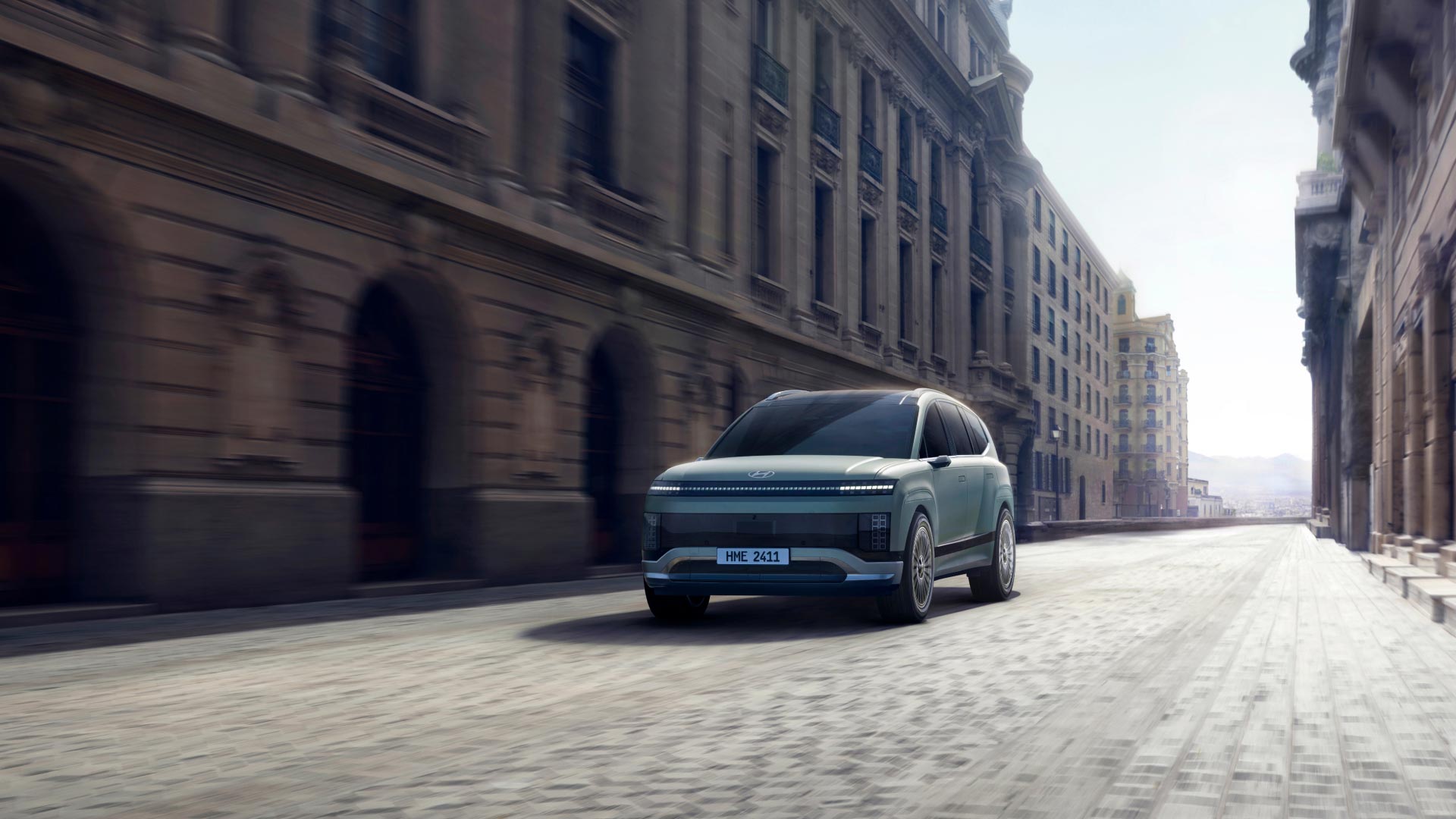
Hyundai Canada lists the 2026 IONIQ 9 as a three-row electric SUV with seating for six or seven passengers. Its retail material shows a base $59,999 MSRP plus fees, and the legal notes list 539 km of all-electric driving range based on a 110.3-kWh battery.
That is a useful lead over Toyota’s current top 511-km estimate and Kia’s 491-km figure. In a three-row EV, extra range is not just bragging rights. Big SUVs carry people, cargo, winter tires, roof boxes, and highway speeds. A larger buffer can make road trips feel less planned and less fragile.
Hyundai also has a cabin-positioning advantage. The IONIQ 9 reads as the smoother, more lounge-like family EV, while the EV9 is more upright and the Highlander looks more Toyota-practical. Buyers stepping out of a premium gas SUV may find the Hyundai’s softer design easier to accept.
The caution is price escalation. The base number gets the conversation started, but the IONIQ 9 most families actually want may not be the cheapest trim on the page. Written quotes matter.
Why The EV9 Still Belongs On Every List
The Kia EV9 has something the Toyota Highlander EV does not have yet: a track record.
Kia Canada positions the 2026 EV9 as an all-electric three-row SUV with up to 491 km of range, NACS charging access, and a 10-to-80-percent fast-charge claim as low as 20 minutes. It also offers the boxy, honest SUV shape that works well for family duty, plus towing of up to 5,000 lb when properly equipped.
That makes the EV9 hard to dismiss, even if the Highlander has a huge badge advantage. The Kia has already taught shoppers what a mainstream three-row EV can be: roomy, quick, useful, and not reserved for luxury-brand money.
The EV9 is also the most familiar comparator for dealer negotiations. If Toyota wants Highlander EV shoppers to wait, its final pricing will have to make sense against a Kia that already has inventory, leases, discounts, real owner feedback, and a clear place in the market.
The Incentive And Quote Math Could Decide Everything
This segment will not be settled by range alone.
Canadian EV incentives, provincial programs, dealer participation, trim caps, transaction values, and lease terms can change the real answer. A vehicle that looks expensive by MSRP can become competitive with the right program support or dealer offer. A vehicle that looks affordable can miss the mark if the available trim is too expensive or delivery timing does not line up.
That is especially important for the Highlander EV because Toyota has not announced Canadian pricing yet. The best move is to track the launch, then compare written quotes against the IONIQ 9 and EV9 on the same assumptions:
- Exact trim, battery, drivetrain, seating layout, wheels, and options.
- Freight, dealer fees, accessories, and tire or charging packages.
- Incentive eligibility based on transaction value and province.
- Delivery timing and whether the vehicle arrives before a program changes.
- Home-charging setup, adapter needs, winter tires, and insurance.
Before signing anything, cross-check the MotorLinks Canadian EV incentive guide, then ask each dealer to show the incentive math in writing.
Which One Should Canadians Shortlist?
Choose the Toyota Highlander EV if your household already likes Toyota SUVs and you can wait for final pricing. Its range, cargo space, NACS charging, V2L capability, and familiar name give it a very strong opening argument.
Choose the Hyundai IONIQ 9 if maximum published range and a more polished cabin feel are the priorities. It is the most range-forward choice in this trio on current Canadian figures.
Choose the Kia EV9 if you want the option with the most real-world visibility right now. It may not have Toyota’s badge familiarity or Hyundai’s range headline, but it is the most established mainstream three-row EV in the group.
Skip all three, or at least pause, if you do not need three rows often. A two-row EV SUV will usually be cheaper, lighter, easier to park, and more efficient. Big electric SUVs are great when you use their space. They are expensive overkill when you do not.
Bottom Line
The 2028 Toyota Highlander EV is the three-row electric SUV Canadian families should watch most closely through the end of 2026. It takes a trusted nameplate, adds credible EV range, and gives Toyota a direct answer to Hyundai and Kia.
But it is not the automatic pick yet. Pricing, availability, incentives, and dealer quotes will decide whether the Highlander EV becomes the smart family buy or just the familiar new option.
For now, the best advice is simple: wait if you specifically want Toyota, quote the IONIQ 9 if range matters most, and keep the EV9 as the benchmark every new three-row EV has to beat.
Should Canadians wait for the 2028 Toyota Highlander EV?
Wait if you want a Toyota three-row EV and can hold off until pricing is announced. If you need a vehicle sooner, compare the Hyundai IONIQ 9 and Kia EV9 because both already have clearer Canadian retail information.
How much range does the Toyota Highlander EV have?
Toyota Canada lists manufacturer-estimated range from 431 km to 511 km, depending on trim, battery, drivetrain, and wheel package. The headline 511-km figure applies to the XLE AWD with the 95.8-kWh battery.
Does the Toyota Highlander EV use NACS?
Yes. Toyota Canada says the 2028 Highlander has a North American Charging Standard charge port and can DC fast charge from 10 to 80 percent in around 30 minutes under ideal conditions.
Is the Highlander EV cheaper than the IONIQ 9 or EV9?
That is not known yet. Toyota Canada says pricing will be announced closer to the on-sale date, so Canadians should wait for written dealer quotes before calling it cheaper or more expensive than Hyundai IONIQ 9 or Kia EV9.
Related Articles
- Hyundai IONIQ 9 vs Kia EV9: Which Three-Row EV Makes More Sense in 2026?
- 2028 Subaru Getaway vs Kia EV9 vs Hyundai IONIQ 9: Which Three-Row EV Looks Like the Smartest Family Buy?
- Canada EV Rebates and Cheapest Electric Cars in 2026
Update, October 2026: Toyota Canada now lists the electric Highlander as a 2028 model arriving in early 2027, with up to 511 km (manufacturer estimate). Automatic battery preconditioning needs a Drive Connect subscription, and Plug & Charge needs Remote Connect.