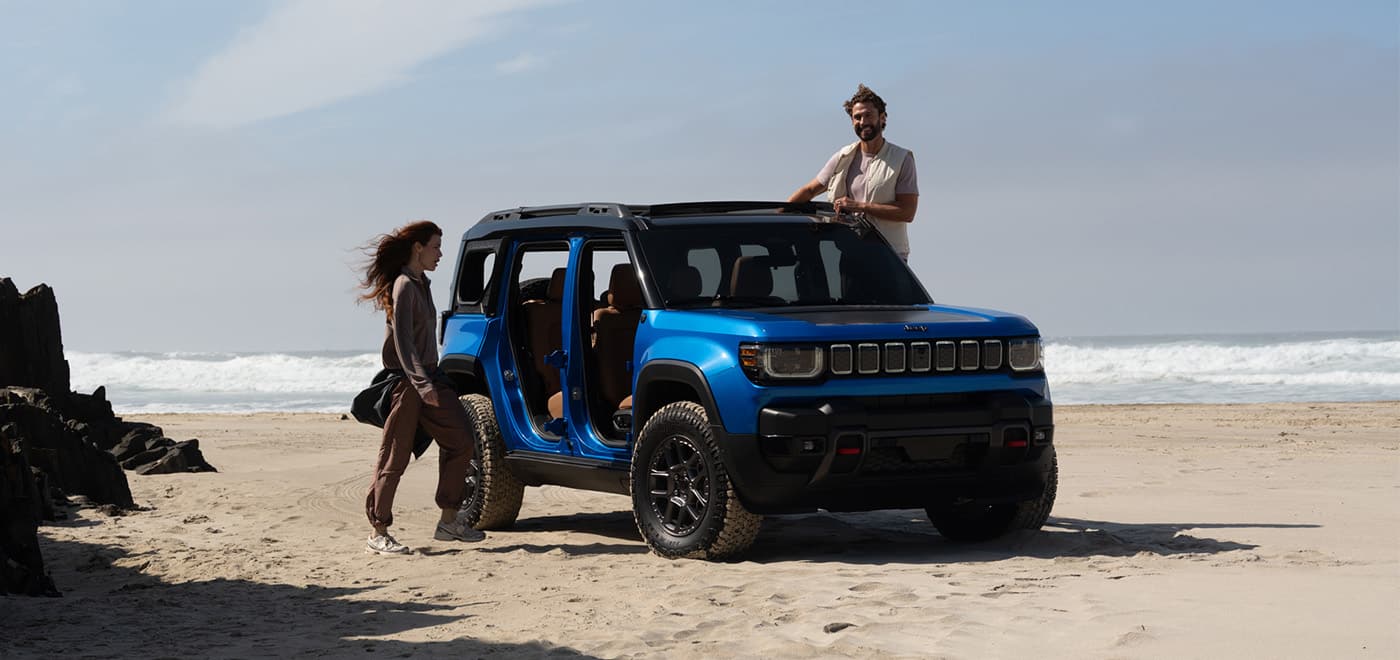
2026 Jeep Recon EV Range Explained: Why This Off-Roader Is Not a Model Y Rival
The 2026 Jeep Recon EV brings 650 hp, removable doors, Trail Rated hardware, and limited-quantity availability, but its range math only makes sense if buyers understand the off-road trade-off.
Photo: Stellantis
The 2026 Jeep Recon EV is finally real enough for shoppers to judge, and the answer is more interesting than the usual “range good, range bad” argument.
Jeep’s official U.S. page says the Recon is here in limited quantities, positions it as the only fully electric utility vehicle with removable doors, removable rear-quarter glass, removable swing-gate glass, and an available Sky One-Touch power top, and calls it the only fully electric Trail Rated vehicle of its kind. Stellantis’ launch release put the big numbers up front: 650 hp, 620 lb-ft of torque, standard electric four-wheel drive, an estimated range of up to 250 miles depending on trim, and a $65,000 U.S. starting MSRP before destination.
Then the range reality check arrived. Electrek reports the launch Recon Moab is now available to order from $66,995 in the U.S. and has an official 222-mile EPA-estimated range. Jeep Canada, meanwhile, lists the Recon with a 370-km range headline.
That sounds disappointing if you judge it like a Tesla Model Y, Hyundai IONIQ 5, or Chevrolet Equinox EV. But that is the wrong fight. The Recon is really an electric Wrangler-adjacent off-roader with a usable daily range, not a mainstream family EV trying to win the efficiency chart.
Quick Verdict
Shortlist the Jeep Recon EV if you specifically want an electric Jeep with removable-open-air hardware, serious trail positioning, huge torque, and home-charging convenience. It is for the buyer who wants a quieter off-road machine and is willing to trade range efficiency for capability and personality.
Skip it if your priority is maximum highway range, lowest cost per kilometre, or the most practical electric SUV for commuting and family hauling. A conventional EV crossover will go farther on less battery, and a plug-in hybrid Wrangler may still make more sense for buyers who frequently drive remote routes far from reliable fast charging.
The clean answer: Recon for electric Jeep character; mainstream EVs for range-per-dollar.
Jeep Recon Snapshot
| Item | 2026 Jeep Recon EV | Buyer takeaway |
|---|---|---|
| Core pitch | Fully electric, Trail Rated, open-air Jeep SUV with removable doors and glass | This is a niche off-road EV, not a mainstream efficiency crossover |
| Power | Stellantis lists 650 hp and 620 lb-ft of torque | Plenty of output for trail control and quick road performance |
| Range context | Jeep originally described up to 250 miles depending on trim; Electrek reports 222 miles EPA-estimated for the Moab launch trim; Jeep Canada lists 370 km | Range is the main compromise, especially for highway and cold-weather use |
| Battery and architecture | Stellantis describes a 100-kWh, 400V battery pack with steel underbody protection | The pack is large, but the off-road shape and hardware hurt efficiency |
| Off-road hardware | Moab trim has 33-inch tires, 9.1 inches of ground clearance, rear electronic locking differential, Rock mode, and Selec-Speed Control | Capability is the reason to buy it |
| Best buyer | Jeep loyalist or outdoor driver with home charging and realistic trip planning | Great fit for a specific use case; weak fit as a general EV value play |
2026 Jeep Recon EV gallery
13
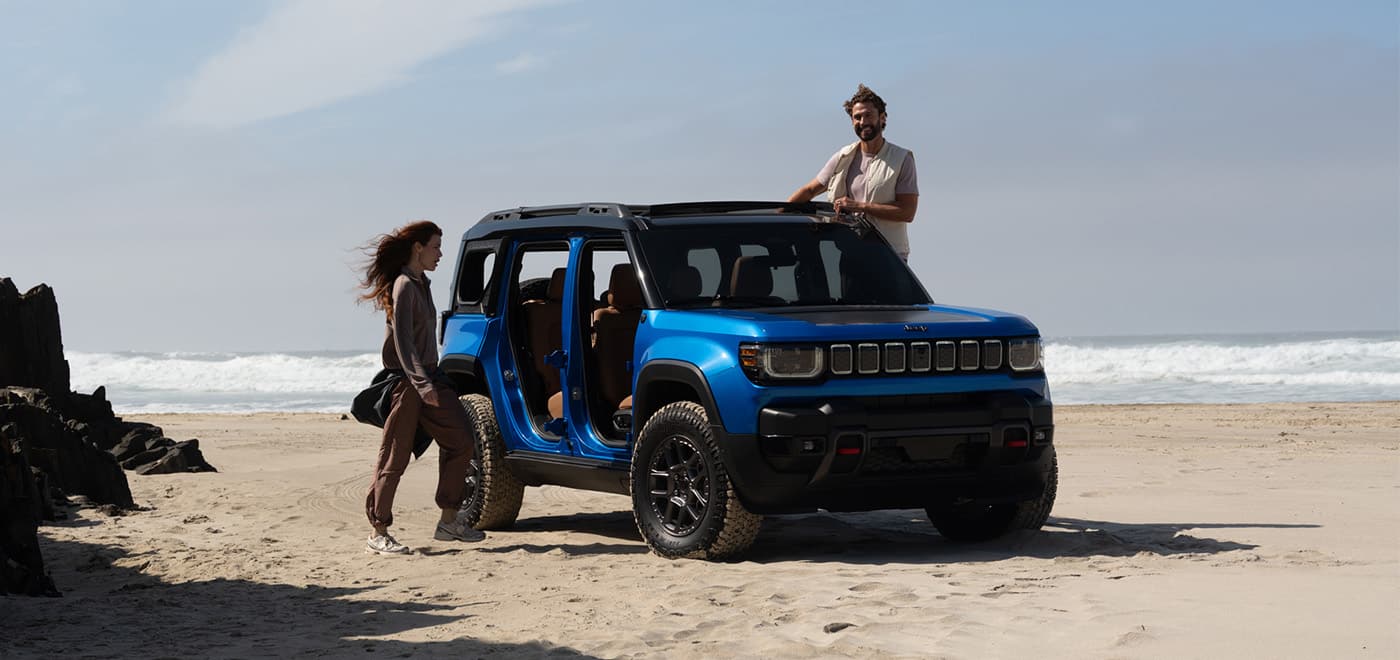


The Recon is an EV with a Jeep-specific job: open-air trail capability first, slippery EV efficiency second.
Why The Range Number Looks Low
The Recon’s range number looks modest because Jeep chose a difficult job for an EV.
Range loves aerodynamic shapes, low rolling resistance, smooth underbodies, modest tires, and restrained weight. The Recon goes in the opposite direction. It has an upright Jeep body, trail-focused stance, standard electric four-wheel drive, a full-size rear-mounted spare, a protected battery pack, and Moab-specific hardware aimed at traction rather than maximum efficiency.
Stellantis says the Moab trim uses front and rear electric drive modules, with the rear unit getting a 15:1 final drive ratio to multiply torque in low-speed off-road situations. It also gets a rear electronic locking differential, Rock mode within Jeep’s Selec-Terrain system, and low-speed Selec-Speed Control for climbs and descents. The battery is protected by steel underbody shields, and the Moab rides on 33-inch tires with 9.1 inches of ground clearance.
All of that is useful if the driver actually leaves pavement. None of it is free when the vehicle is pushing through air at highway speed.
That is why the Recon should not be read as a failed Model Y alternative. It is closer to a Wrangler-style EV experiment: take the Jeep freedom-and-trail formula, make it electric, and accept that range efficiency will not be the headline.
Where The Recon Makes Sense
The Recon makes the most sense for a household with home charging, a second vehicle or realistic road-trip expectations, and a genuine interest in Jeep capability.
For local adventures, cottage roads, trailheads, snow days, and daily commuting, a 222-mile EPA estimate or 370-km Canadian headline can be workable. Most owners do not drive that far every day, and home charging changes the ownership rhythm. You leave with range in the morning instead of building errands around a gas stop.
Electric torque is also genuinely interesting off-road. Smooth low-speed control, instant response, quiet movement, and reduced mechanical complexity at the wheels can all suit technical driving. Jeep clearly knows that, which is why the Recon’s spec sheet spends so much energy on torque delivery, Rock mode, differential hardware, and underbody protection.
The open-air part matters too. Jeep says the Recon is designed with removable doors, rear-quarter glass, and swing-gate glass, and offers an available Sky One-Touch power top. For some buyers, that is not a gimmick. It is the reason they wanted a Jeep in the first place.
Where Buyers Should Be Careful
The caution starts with trip planning.
A range estimate is not a guaranteed highway number. Cold weather, winter tires, roof accessories, speed, elevation, mud, snow, cargo, towing, and repeated climbs can all pull real range down. That matters in Canada, where “adventure vehicle” can mean a long drive in cold conditions to a place with limited charging.
Fast-charging access is the second question. The Recon’s 400V architecture is not automatically a deal-breaker, but it does not have the same technical ceiling as the quickest 800V EVs. If your use case includes frequent highway fast charging, compare the Recon against your actual routes, not just the nearest charger on a map.
Price is the third issue. A roughly $67,000 U.S. launch trim is not an affordability story, and Canadian transaction prices may land high once freight, dealer fees, taxes, accessories, tires, charging hardware, and financing are included. This is not the EV Jeep that makes electric off-roading mainstream. It is the early, expensive, high-output version.
That is fine if the buyer understands the trade. It is risky if the buyer is simply chasing the idea of an electric Wrangler and assuming the operating experience will match a mainstream crossover.
Recon Or Wrangler 4xe?
For many Jeep shoppers, the real comparison is not Recon versus Model Y. It is Recon versus Wrangler 4xe.
The Wrangler 4xe plug-in hybrid keeps gasoline range for remote travel and still gives short electric driving for commuting or trail creeping. It is the less pure EV answer, but it can be the more practical one if your weekends involve long rural drives, winter cabin routes, towing, or places where public charging is still thin.
The Recon is the cleaner electric statement. It should be cheaper to charge at home, quieter on the trail, and more interesting for buyers who specifically want a full EV. But it asks more from the owner: better planning, more confidence in charging access, and more honesty about range loss in bad conditions.
If you mostly drive locally and can charge at home, the Recon is the more exciting future-facing Jeep. If you regularly go deep into areas without dependable charging, a plug-in hybrid may fit the route better, subject to the actual vehicle’s condition, charging routine and service support.
What Canadian Buyers Should Check
Canadian shoppers should start with three practical checks.
First, confirm the exact trim and delivery timing. Early availability can be limited, and the first wave may not represent the eventual full lineup. Jeep Canada lists the Recon, but the real answer is the quote from the dealer holding or ordering the vehicle.
Second, build the charging plan before signing. Home Level 2 charging should be part of the budget unless your driving pattern is unusually light. If you rely on public charging, map the routes you actually drive in winter, not the routes the brochure makes sound easy.
Third, compare the Recon against other electric adventure options and plug-in hybrids. A Subaru Trailseeker, Toyota bZ Woodland, Rivian R2, Wrangler 4xe, Grand Cherokee 4xe, or even a conventional hybrid SUV may serve the same household better depending on price, range, trails, and cargo needs.
The Recon is not automatically wrong because its range is lower than mainstream EVs. It is wrong only if the buyer expected mainstream-EV efficiency from a boxy, open-air, trail-rated Jeep.
Bottom Line
The 2026 Jeep Recon EV is exactly the kind of vehicle the EV market needs more of: specific, characterful, and built for a customer rather than a spreadsheet average.
The catch is that specificity cuts both ways. The Recon’s 650 hp, electric four-wheel drive, removable-open-air hardware, Trail Rated positioning, and Moab off-road kit are the point. The range compromise is the bill for that personality.
Buy it because you want an electric Jeep and have the charging plan to support it. Do not buy it because you think it will out-efficiency a mainstream crossover. The Recon’s job is not to be the longest-range EV SUV. Its job is to prove that an electric Jeep can still feel like a Jeep.
Is the 2026 Jeep Recon EV worth buying with its range?
It can be, but only for the right buyer. The Recon makes sense if you want a Trail Rated, open-air electric Jeep and can charge at home. It is not the best choice if you mainly want maximum highway range, low cost, or mainstream EV efficiency.
How much range does the Jeep Recon EV have?
Jeep originally described the Recon with up to 250 miles of estimated range depending on trim. Electrek reports the launch Moab trim now has an official 222-mile EPA-estimated range, while Jeep Canada lists 370 km for the Canadian page.
What makes the Recon different from other electric SUVs?
The Recon is built around off-road character: standard electric four-wheel drive, Trail Rated positioning, removable doors and glass, 33-inch tires on the Moab trim, a rear electronic locking differential, Rock mode, Selec-Speed Control, and steel underbody battery protection.
Should Canadians buy the Recon or a Wrangler 4xe?
Choose the Recon if you want the full-EV Jeep experience and have reliable charging. Choose the Wrangler 4xe if you often travel far from chargers, need gasoline backup, and have checked the specific vehicle and service support.
Related Articles
- 2027 Subaru Solterra vs 2026 Subaru Trailseeker: Which Electric Subaru Fits Canada?
- EV Trucks in 2026: The Buyer’s Guide After Ford’s Lightning Exit
- 400V vs 800V: Why Your EV’s Architecture Matters More Than You Think
Update, October 2026: Stellantis’ up-to-250-mile launch target varied by trim; the 222-mile figure reported later applies to the Moab launch version.