Mitsubishi Eclipse Sportback EV Explained: Why a Nissan Leaf Twin Could Still Matter
Mitsubishi's new Eclipse Sportback EV is based on the Nissan Leaf, but the bigger story is dealer coverage, pricing pressure, and whether a familiar platform can make affordable EV shopping less thin.
Mitsubishi just gave the Eclipse name a very different second act.
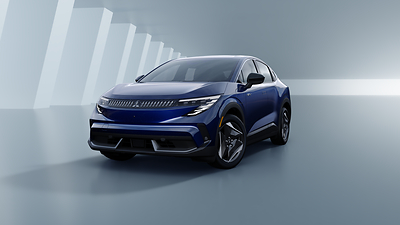
The new 2027 Mitsubishi Eclipse Sportback EV is not a revived sport coupe, and Mitsubishi is not pretending otherwise. In its June 9 announcement, Mitsubishi says the EV will be sourced from Alliance partner Nissan and based on the next-generation Nissan Leaf, with cosmetic changes to make it feel like a Mitsubishi.
That sounds like a simple rebadge story. It is more useful than that.
The affordable EV market still has a thin middle: lots of expensive crossovers, not enough genuinely approachable choices, and too many shoppers waiting for final pricing, incentives, charging access, and dealer support to line up. A Leaf-based Mitsubishi will not rewrite the segment by itself. But it could give Mitsubishi dealers a real EV again, give buyers one more mainstream alternative, and put more pressure on the lower end of the electric crossover market.
Quick Verdict
Do not treat the Eclipse Sportback EV as a mystery performance revival. Treat it as a Nissan Leaf-based electric subcompact SUV with Mitsubishi styling and dealer-network implications.
That could still be valuable. If Mitsubishi prices it close to the Leaf, keeps the charging setup simple, and confirms competitive Canadian availability, the Eclipse Sportback could become a sensible second look for shoppers who want an affordable EV but prefer Mitsubishi’s dealer experience, warranty positioning, or styling.
The catch is that Mitsubishi has not released final technical specs, range, battery details, pricing, or an exact on-sale date. Buyers should watch it, not wait blindly.
What Mitsubishi Has Confirmed
| Item | What is confirmed | Why it matters |
|---|---|---|
| Vehicle | 2027 Mitsubishi Eclipse Sportback EV | Mitsubishi gets a fully electric North American model after years without a mainstream BEV in showrooms |
| Platform/source | Sourced from Nissan and based on the next-generation Nissan Leaf | The mechanical foundation should be more proven than a clean-sheet low-volume EV program |
| Timing | Second half of 2026, with late-summer or early-fall sales timing cited by Mitsubishi | It is close enough to matter for buyers shopping upcoming affordable EVs |
| Design changes | Unique front and rear fascias, lights, lighting signatures, wheels, and Triple Diamond branding | The known differences are mostly visual until Mitsubishi releases its own specs |
| Specs and price | Not announced yet by Mitsubishi | Range, incentives, charging details, and final value cannot be judged from the badge alone |
The important phrase is “based on.” Mitsubishi is not saying this is merely inspired by the Leaf. It says the vehicle is sourced from Nissan and based on the next-generation Leaf, then differentiated with Mitsubishi styling.
That is not automatically bad. Platform sharing can be exactly what smaller-volume brands need in the EV era. Batteries, crash engineering, software, charging validation, and compliance work are expensive. If a shared foundation gets another credible EV into showrooms faster and cheaper than a ground-up Mitsubishi project, buyers may be better served by the honest shortcut.
Why The Leaf Connection Helps
The outgoing Leaf had one big problem in the modern EV conversation: it felt like an early-generation EV long after the market had moved on.
The new Leaf is different. Nissan Canada says the 2026 Leaf’s 75-kWh liquid-cooled lithium-ion battery provides up to 488 km of EPA-estimated range for the Leaf S+, and the company highlights improved thermal management for hot and cold weather. Nissan also says the Leaf has a NACS fast-charging port, access to compatible Tesla Superchargers without an adapter, a separate J1772 port for home and workplace Level 2 charging, and access to more than 25,000 in-network public chargers across Canada through the Nissan Energy Charge Network.
Those are the right building blocks for a mainstream EV in 2026. They do not automatically become Mitsubishi specs, because Mitsubishi has not published that sheet yet. But they explain why the Eclipse Sportback is worth watching. A Leaf-based EV in 2026 is no longer shorthand for compromised range and outdated charging.
Mitsubishi Eclipse Sportback EV gallery
13
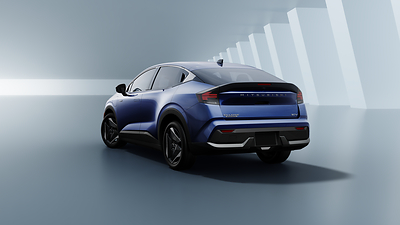
The Eclipse Sportback EV revives the Eclipse name, but Mitsubishi is clear that the new EV is based on the next-generation Nissan Leaf.
Why Mitsubishi Dealers Need This
Mitsubishi has been more electrified than many shoppers remember. The i-MiEV was early, the Outlander PHEV became a real plug-in hybrid SUV success story, and the brand has long leaned on practical, value-oriented crossovers.
But in North America, Mitsubishi has not had a mainstream battery-electric showroom answer for the current EV market. That matters because buyers who walk into a Mitsubishi store can cross-shop Outlander PHEV, but not a modern BEV that lines up against the Leaf, Hyundai Kona Electric, Chevrolet Equinox EV, Kia EV4, Toyota bZ, or Tesla Model 3.
The Eclipse Sportback changes that conversation. It gives Mitsubishi dealers an EV to explain, finance, service, and conquest with. Even if the vehicle shares most of its hardware with Nissan, the dealer relationship can still influence real purchases. A buyer may choose the store they trust, the warranty pitch they like, the trade-in offer they get, or the local service department that feels easiest to deal with.
That is the unglamorous part of EV adoption that often gets missed. More EVs in more ordinary dealer networks can matter as much as one more eye-popping spec sheet.
The Name Is Awkward, But The Strategy Makes Sense
Yes, calling this an Eclipse will annoy people who remember the original coupe.
The Eclipse name first arrived in North America in 1990, and for many enthusiasts it still means a compact sport coupe, not a Leaf-derived electric crossover. Mitsubishi is taking a familiar-name risk here, much like Ford did with Mustang Mach-E, Toyota did with Crown, and many brands have done when old badges moved into new body styles.
The difference is that Mitsubishi needs attention. A totally new EV name would be cleaner, but it might also disappear instantly in a crowded market. “Eclipse Sportback” at least gives the vehicle a hook, even if it is not the hook old-school fans wanted.
The product strategy is more defensible than the nostalgia play. Mitsubishi’s Momentum 2030 plan calls for electrification, a renewed product lineup, a modernized retail model, and stronger dealer partnerships. The company says it plans at least one new or significantly revised vehicle each year through fiscal 2030, and an off-road-focused Outlander derivative is also planned for early 2027.
In that context, the Eclipse Sportback is not just a badge revival. It is one piece of a broader attempt to make Mitsubishi showrooms feel less thin.
What Canadian Buyers Should Watch
For Canadian shoppers, the useful questions are practical:
- Will Mitsubishi Canada confirm the same timing as the broader North American announcement?
- What is the starting price after freight, fees, and taxes?
- Does the exact trim qualify for federal or provincial incentives?
- Does it keep the Leaf’s best charging advantages, including native NACS fast charging?
- How much range does the Mitsubishi version get after styling, wheels, tires, and equipment are finalized?
- Will Mitsubishi dealers be ready to service the EV hardware locally?
That last point matters. Shared Nissan hardware may help parts and engineering confidence, but buyers still need clear Mitsubishi warranty support, technician training, software-update handling, and charging guidance.
Use the Motorlinks Canadian EV incentive guide as a starting point before assuming any rebate. Incentive eligibility can turn a “good deal” into a mediocre one very quickly if the final trim, price cap, or program status does not line up.
Should You Wait?
If you need an EV soon, do not freeze your shopping list for the Eclipse Sportback. The 2026 Nissan Leaf already exists as the obvious related choice, while the Chevrolet Equinox EV, Hyundai Kona Electric, Kia EV4, Tesla Model 3, and Toyota bZ all answer different versions of the affordable-EV question.
If your timeline is flexible, the Mitsubishi is worth keeping on the radar. It could be especially interesting if local Mitsubishi dealers offer strong financing, useful warranty messaging, or better availability than nearby Nissan stores.
The best version of this story is simple: Mitsubishi gets a credible EV without spending years reinventing the platform, and buyers get another real option in a segment that needs more price pressure.
The weak version is also simple: Mitsubishi changes the nose, charges too much, and asks shoppers to care about a badge revival that does not improve the ownership math.
Final pricing will decide which version this becomes.
Bottom Line
The Mitsubishi Eclipse Sportback EV is not exciting because it is radically new. It is interesting because it might make a proven EV foundation available through another mainstream dealer network, under a brand that badly needs an electric showroom answer.
That is not as romantic as bringing back an Eclipse coupe. But for real EV shoppers, a sensibly priced Leaf-based Mitsubishi with good charging access could matter more than nostalgia.
Just wait for the numbers before falling for the name.
FAQ
Is the Mitsubishi Eclipse Sportback EV just a Nissan Leaf?
Mitsubishi says the Eclipse Sportback EV is sourced from Alliance partner Nissan and based on the next-generation Nissan Leaf. The company says it will have Mitsubishi-specific cosmetic changes, but final Mitsubishi specs and pricing have not been released yet.
When does the Mitsubishi Eclipse Sportback EV go on sale?
Mitsubishi says the 2027 Eclipse Sportback EV is planned for the North American market in the second half of 2026, with sales expected in late summer or early fall 2026.
Will the Eclipse Sportback EV have the same range as the Nissan Leaf?
Do not assume that yet. Nissan Canada lists up to 488 km of EPA-estimated range for the Leaf S+ with a 75-kWh battery, but Mitsubishi has not published Eclipse Sportback range, battery, trim, wheel, or pricing details.
Should Canadians wait for the Mitsubishi Eclipse Sportback EV?
Wait only if your timeline is flexible and you want another affordable EV to compare. The smarter move is to keep shopping current options while watching for Mitsubishi Canada pricing, incentive eligibility, range, and charging details.