
Toyota bZ vs RAV4 Plug-in Hybrid: Which Electrified Toyota Makes More Sense in Canada?
Toyota now gives Canadian shoppers two very different electrified SUV answers: the all-electric bZ and the 80-km RAV4 Plug-in Hybrid. Here is how to choose.
Toyota has made its Canadian electrified SUV choice more interesting, but also more confusing.
The 2026 Toyota bZ is no longer the awkward first-draft bZ4X. Toyota Canada says the renamed bZ is now on sale with a $45,990 starting MSRP, standard NACS DC charging, a larger 14-inch multimedia screen, and NRCan-estimated range figures that reach 468 km on the XLE AWD. It is the cleaner answer if you want to stop buying gas.
The 2026 Toyota RAV4 Plug-in Hybrid is the flexible answer. Toyota Canada lists the redesigned RAV4 PHEV from $48,750 MSRP, with 324 net horsepower, all-wheel drive on every grade, and a manufacturer-estimated 80 km of all-electric driving range. It can behave like an EV on routine commutes, then keep going like a hybrid when winter, distance, or charging access gets annoying.
So the decision is not simply EV versus PHEV. It is whether your household is ready to make charging the default, or whether you still need gasoline as a built-in backup plan.
Quick Verdict
Choose the Toyota bZ if you have dependable home or workplace charging, drive mostly predictable routes, and want the simplest fully electric Toyota crossover. The XLE FWD is the affordability play, while the XLE AWD is the better Canadian-weather fit if the price works.
Choose the RAV4 Plug-in Hybrid if this is your only vehicle, you do frequent highway trips, you deal with rural routes or cottage drives, or you cannot trust public charging to fit your life yet. It gives up full-EV simplicity, but its 80-km electric range could cover a lot of weekday driving without making every long trip a charging exercise.
For many Canadian families, the RAV4 Plug-in Hybrid is the lower-stress answer. For drivers with charging sorted, the bZ is the more committed and cleaner EV move.
Toyota bZ and RAV4 Plug-in Hybrid official images
13
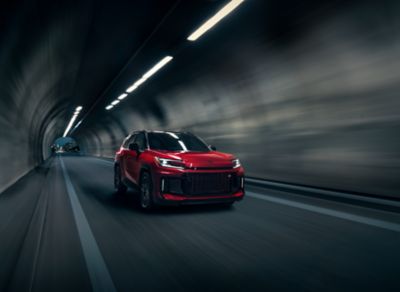
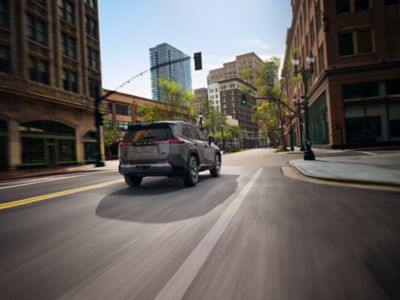
The bZ is Toyota Canada's straightforward battery-electric SUV answer, now with NACS DC charging and more useful range than the old bZ4X.
The Numbers Tell Two Different Stories
| Question | 2026 Toyota bZ | 2026 Toyota RAV4 Plug-in Hybrid |
|---|---|---|
| Starting MSRP in Canada | $45,990 for bZ XLE FWD | $48,750 for RAV4 PHEV SE |
| Estimated vehicle price listed by Toyota Canada | $49,648 for bZ XLE FWD | $52,408 for RAV4 PHEV SE |
| Electric range signal | NRCan-estimated 380 km FWD, 468 km XLE AWD, 436 km Limited AWD | Manufacturer-estimated 80 km all-electric range |
| Powertrain | Battery-electric SUV | Plug-in hybrid with gas engine, electric motors, and larger drive battery |
| Output | Toyota Canada says AWD bZ models deliver up to 338 hp | 324 net hp on every RAV4 Plug-in Hybrid grade |
| Charging hardware | NACS DC charging port; Toyota says 10-80% DC charging in around 30 minutes under ideal conditions | 7 kW onboard charger, dual-voltage charging cable, and J1772 connector |
| Best fit | Drivers ready to live fully electric | One-car households and road-trip buyers who want EV commuting plus gas backup |
The bZ’s pitch is range and simplicity. Toyota’s current Canadian bZ page lists 380 km for the XLE FWD, 468 km for the XLE AWD, and 436 km for the Limited AWD under NRCan testing. It also warns, correctly, that cold weather, speed, cargo, driving habits, and battery aging can reduce real-world range.
The RAV4 Plug-in Hybrid’s pitch is not total EV range. It is enough electric range to make many ordinary days gas-free. Toyota Canada says the sixth-generation plug-in hybrid system reaches 80 km of electric driving, then continues as a hybrid once the battery is depleted. That is a very different ownership pattern.
Buy the bZ if Charging Is Already Solved
The bZ makes the most sense when charging is boring.
If you can plug in at home most nights, the Toyota bZ becomes a simple commuter, school-run, grocery, and weekend vehicle. You start most days with a full battery, avoid gas stations, and use public DC fast charging mainly for road trips. The standard NACS DC charging port matters because North America is moving toward that connector, and Toyota says the 2026 bZ can charge from 10 to 80 percent in around 30 minutes under ideal DC fast-charging conditions.
The bZ also has a cleaner price story at the entry point. Toyota Canada lists the XLE FWD at $45,990 MSRP, with an estimated vehicle price of $49,648 before taxes, licence, insurance, and registration. That keeps the base bZ in the affordability conversation, though shoppers still need to verify current incentive eligibility and final transaction value at the dealer.
The trade-off is commitment. A fully electric SUV asks more of the household. Winter range, highway speed, charging availability, condo rules, installation cost, and public-charger reliability all matter. If those answers are weak, the bZ can become the more demanding vehicle even if the spec sheet looks attractive.
Buy the RAV4 Plug-in Hybrid if Flexibility Matters More
The RAV4 Plug-in Hybrid is for buyers who want to electrify the easy kilometres without betting the whole household on charging.
An 80-km electric range estimate is enough to cover a lot of commuting, school drop-offs, errands, and local driving if the owner plugs in consistently. After that, the gas engine takes over. That makes the RAV4 PHEV especially appealing for Canadian families that do winter highway trips, rural drives, ski weekends, cottage runs, or long stretches where charger reliability is still uneven.
It is also more familiar as a family SUV. The RAV4 name matters because buyers already understand the size, seating position, cargo role, dealer network, and resale story. Toyota Canada says every 2026 RAV4 Plug-in Hybrid has all-wheel drive, Toyota Safety Sense 4.0, and the newer Toyota Multimedia system. SE and XSE grades are rated to tow up to 3,500 lb, which gives it a practical edge over many small EVs.
The obvious downside is price. The RAV4 Plug-in Hybrid SE starts at $48,750 MSRP, but Toyota Canada’s listed estimated vehicle price is $52,408 before taxes, licence, insurance, and registration. That means Canadian shoppers need to do the paperwork carefully. Do not assume a headline MSRP, rebate list, or forum deal tells the whole story.
EVAP and Incentives Can Swing the Math
Canadian buyers should not treat either Toyota’s MSRP as the final answer.
The federal Electric Vehicle Affordability Program now makes final transaction value more important than casual shopping conversations suggest. Depending on the vehicle, trim, dealer fees, accessories, lease term, and Canadian-content rules, eligibility can change the effective deal by thousands of dollars.
That is why this comparison should happen with a quote in hand. Ask the dealer for the EVAP final transaction value before the incentive is applied. Ask which accessories and fees are included. Ask whether the dealership is enrolled and how the lease term affects the incentive amount. Then compare the bZ and RAV4 Plug-in Hybrid after the paperwork, not before.
For a deeper walk-through, use the MotorLinks Canadian EV incentive guide. The short version is simple: if the incentive math is uncertain, do not build your budget around it until the dealer can show it in writing.
The Charging Difference Is the Real Lifestyle Difference
The bZ wants you to think like an EV owner. That is not a bad thing. It just changes the rhythm.
Home charging becomes the main fuel source. DC fast charging becomes the road-trip tool. Route planning matters more, especially in winter. The upside is that when charging works, the daily experience is quiet, clean, and low-maintenance in a way a plug-in hybrid cannot quite match.
The RAV4 Plug-in Hybrid wants you to think like a hybrid owner who plugs in. It is less pure, but more forgiving. Forget to charge and you still have a normal hybrid SUV. Head into rural Ontario, northern Quebec, or a prairie cold snap and the gas engine is not a failure mode; it is part of the design.
That makes the RAV4 PHEV easier to recommend to buyers who are EV-curious but not EV-ready. It also makes the bZ more satisfying for buyers who are ready to be done with gasoline.
The MotorLinks Take
Toyota’s two-SUV setup is smarter than forcing one answer onto every Canadian buyer.
The bZ is the right move if charging fits your life and you want the lower-complexity, fully electric path. It is much more credible now that Toyota has addressed range, charging hardware, power, and interior tech.
The RAV4 Plug-in Hybrid is the better fit if the vehicle has to handle everything: commuting, winter, family hauling, road trips, and places where charging still feels hit-or-miss. It is not as clean as a full EV, but it may be the more usable bridge for a lot of Canadian households.
The best answer comes down to one question: will charging be easy most of the time?
If yes, shop the bZ hard. If no, the RAV4 Plug-in Hybrid is probably the Toyota that will cause fewer compromises.
FAQ
Is the Toyota bZ fully electric?
Yes. The Toyota bZ is a battery-electric SUV. It does not have a gasoline engine, so owners need a practical charging plan.
Is the RAV4 Plug-in Hybrid an EV?
It can drive on electricity for local trips, but it is not a full battery-electric vehicle. It is a plug-in hybrid with a gasoline engine, electric motors, and a larger battery than a regular hybrid.
Which Toyota is better for winter road trips?
For many households, the RAV4 Plug-in Hybrid is the safer winter road-trip choice because the gas engine removes charging dependence. The bZ can still work well if you have reliable charging routes and enough real-world range buffer.