Nissan LEAF vs Chevrolet Equinox EV: Which Affordable EV Makes More Sense in 2026?
The redesigned Nissan LEAF undercuts the Chevrolet Equinox EV on price, but Chevy counters with more range, more SUV space, and stronger family practicality. Here is how the affordable EV math works in 2026.
Photo: Nissan
Affordable EV shopping in 2026 has a different feel than it did even two years ago. The question is no longer, “Can I find something electric under $40,000?” It is, “Which affordable EV actually fits my life?”
That is what makes the 2026 Nissan LEAF and 2026 Chevrolet Equinox EV such an interesting comparison. Nissan has turned the LEAF into a sharper, more crossover-like EV with a $29,990 starting MSRP, a 75-kWh battery, and up to 303 miles of EPA-estimated range in S+ trim. Chevrolet answers with a bigger SUV package: the Equinox EV starts at $34,995, offers up to 319 miles of EPA-estimated range with front-wheel drive, and brings much more cargo flexibility.
So the LEAF wins the headline price battle. The Equinox EV wins the space-and-range battle. The smarter buy depends on whether you need a low-cost commuter EV that can road trip occasionally, or a more complete family crossover that happens to be electric.
Quick Verdict
Buy the Nissan LEAF if price comes first. Its known $29,990 starting MSRP before destination and 303-mile EPA-estimated range make it the cleaner value for commuters, second vehicles, and first-time EV buyers who can charge at home.
Buy the Chevrolet Equinox EV if this is your main family vehicle. It costs more, but the larger SUV footprint, available AWD, 319-mile FWD range estimate, and cargo flexibility make it easier to live with as a gas-crossover replacement.
The Numbers Show Two Different Value Plays
| Item | 2026 Nissan LEAF | 2026 Chevrolet Equinox EV |
|---|---|---|
| Starting price | $29,990 MSRP for S+ FWD, before destination | $34,995 starting price listed by Chevrolet |
| Best range figure | Up to 303 miles EPA-estimated for LEAF S+ | Up to 319 miles EPA-estimated with FWD; 307 miles with available AWD |
| Battery | 75-kWh battery listed across trims | GM does not lead with pack size on the retail page; range is the cleaner comparison point |
| DC fast-charge claim | 35-minute peak DC fast-charge time listed by Nissan | Public charging access through the myChevrolet app, including Tesla Superchargers with a GM-approved NACS DC adapter |
| Charging ports | Driver-side J1772 for Level 1/2 and passenger-side NACS for DC fast charging | CCS vehicle hardware with NACS adapter path for Tesla Supercharger access |
| Seating/cargo | Five seats in a compact crossover-style package | Five seats and 57.2 cu. ft. max cargo volume listed by Chevrolet |
The important thing is not that one EV destroys the other. They are both credible. They just solve the affordable-EV problem from different ends.
The LEAF is about lowering the cost of entry without making range feel like a punishment. A sub-$30,000 MSRP and 303-mile range estimate would have sounded wildly optimistic in the old LEAF era. Now it gives Nissan a clean commuter-and-first-EV pitch.
The Equinox EV is about making the switch feel normal for crossover shoppers. It costs more, but it also looks and functions more like the compact SUV many buyers already planned to purchase. That matters if the vehicle has to carry kids, hockey bags, airport luggage, a stroller, a dog crate, or all the boring real-life stuff that makes an EV either work or not work.
Buy the Nissan LEAF if Price Comes First
The LEAF’s strongest argument is simple: it gets you into a new, long-range EV for less money.
Nissan’s trim page lists the S+ at $29,990 plus $1,575 destination, or $31,565 before other fees and taxes. Compare delivered prices on the same basis. Chevrolet’s cited $34,995 starting figure is not a matched written transaction quote here, and its current product page has moved to the next model year.
The range figure is also good enough that Nissan no longer has to apologize for the LEAF. The S+ is rated at up to 303 miles, while the SV+ and Platinum+ give up some range as equipment and wheels increase. If your driving is mostly commuting, errands, school runs, and weekend trips, the LEAF’s range should be more than enough with home charging.
The charging-port setup is clever, too. Nissan lists a driver-side J1772 port for routine Level 1 and Level 2 charging, plus a passenger-side NACS port for DC fast charging. That is a tidy bridge between home charging reality and the North American move toward Tesla-style fast-charging hardware.
The trade-off is that the LEAF still reads smaller and lighter-duty than the Chevy. If you want maximum cargo room, available AWD, or a vehicle that feels closer to a conventional family SUV, the LEAF is not the strongest answer.
Affordable EV gallery: Nissan LEAF and Chevrolet Equinox EV
11
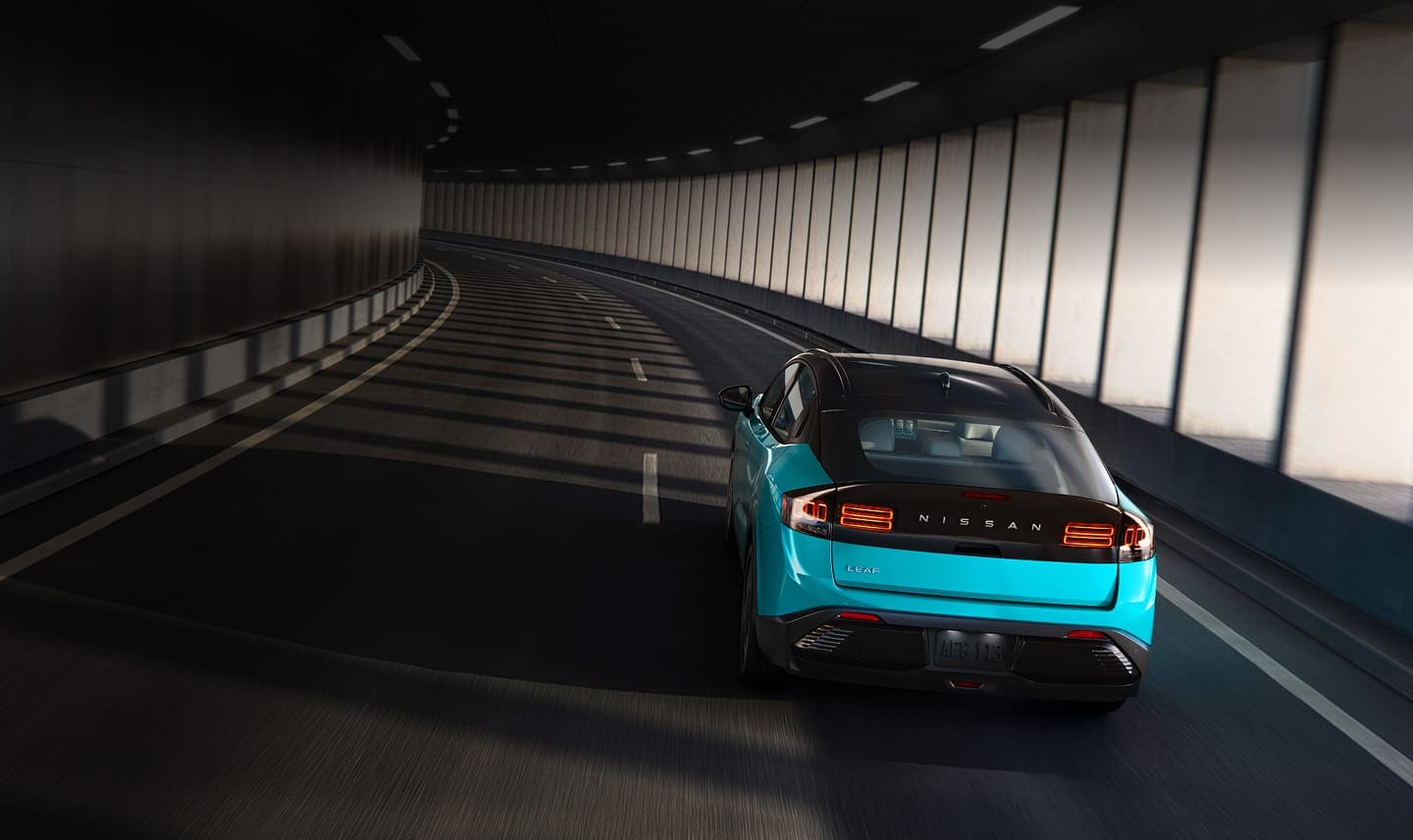
The redesigned LEAF is no longer just a basic hatchback. Nissan has pushed it toward crossover territory, with a lower entry price than most long-range EVs.
Buy the Chevrolet Equinox EV if This Is the Family Car
The Equinox EV’s case starts with size. Chevrolet lists 57.2 cubic feet of maximum cargo volume and seating for up to five, which gives it a more familiar compact-SUV shape and mission.
It also has the range edge. Chevrolet lists 319 miles of EPA-estimated range for front-wheel-drive models and 307 miles with available AWD. That makes the Equinox EV easier to recommend to buyers replacing a gas crossover, especially if this will be the household’s main vehicle rather than a second car.
The base price is higher, but the extra money buys a more useful package. The Equinox EV has a bigger-screen, more SUV-like cabin presentation, broader family practicality, and an available AWD setup that Nissan does not offer on the LEAF.
The charging story is a little less elegant on hardware but still workable. Chevrolet says the myChevrolet app provides access to more than 250,000 public chargers and more than 20,000 Tesla Superchargers, with a GM-approved NACS DC adapter. That is not as clean as having a native NACS DC port, but it gets buyers into the network that increasingly matters for North American road trips.
For shoppers in Canada, the Equinox EV’s bigger price can also make incentive math more important. Before choosing either vehicle, it is worth checking the current Canadian EV incentive guide, because provincial programs and eligibility rules can change the real-world gap between two affordable EVs.
The Charging Difference Is About Convenience, Not Just Speed
On paper, Nissan’s 35-minute DC fast-charge figure does not make the LEAF a charging superstar. It is respectable for the price, but not Hyundai IONIQ 5 or Kia EV6 territory.
The Equinox EV is also not sold primarily as a charging-speed hero. Chevrolet’s retail pitch focuses more on range, home charging, public-charger access, and app integration than on one headline 10-to-80-percent number.
That means the practical question is less about peak kilowatts and more about routine. Do you charge at home most nights? Do you have a predictable commute? Do you take a handful of longer trips each year rather than weekly highway hauls? If yes, both EVs can make sense.
If you road trip often, the Equinox EV’s bigger cabin and slightly longer range give it the edge. If you mostly charge at home and want the lowest new-EV buy-in, the LEAF’s lower price and dual-port setup are more compelling.
The Bottom Line
The Nissan LEAF is the smarter buy if your priority is getting into a genuinely usable new EV for the least money. It has the cleaner entry price, a strong 303-mile range estimate in S+ trim, and a charging-port setup that fits where North America is heading.
The Chevrolet Equinox EV is the smarter buy if this needs to be your main family vehicle. It costs more, but it gives you more range, more space, available AWD, and the everyday shape buyers already understand from compact SUVs.
If this were my money for a second household vehicle or a commuter-first EV, I would start with the LEAF. For one-car families, road-trippers, and anyone replacing a gasoline crossover, I would stretch to the Equinox EV.
That is a good sign for the market. Affordable EVs are no longer defined only by compromise. They are finally starting to separate by use case — and that makes the buying decision much more useful.
Is the Nissan LEAF cheaper than the Chevrolet Equinox EV?
The quoted LEAF S+ base MSRP is lower, but it excludes $1,575 destination. Its $31,565 subtotal still excludes other fees and taxes. The earlier $34,995 Chevrolet reference needs a matched model-year and fee basis before calculating an exact saving.
Which affordable EV is better for families?
The Chevrolet Equinox EV is the stronger family pick because it has more SUV-like cargo space, available AWD, and a cabin mission closer to a mainstream compact crossover.
Which one should Canadian buyers consider first?
Canadian shoppers should compare local transaction prices and current incentive eligibility before deciding. Motorlinks’ Canadian EV incentive guide is the better starting point than U.S. MSRP alone.