The Two-Speed EV Market: Why America Is Falling Behind the Global Electric Revolution
Global EV sales surged 23% in October while the U.S. dropped 41%. California's 29.1% ZEV share compared to a 6.9% national EV rate tells the whole story — America's EV future depends on closing the infrastructure and policy gap.
Numbers released in mid-October crystallized something that automotive analysts have been watching for months: the global electric vehicle market is not slowing down. It’s accelerating — just not in the United States.
Global EV sales rose 23% year-over-year in October 2025, reaching approximately 1.9 million units. China was up 36%, Europe up 32% (with plug-in hybrids surging 47%). North America? Down 41%, to roughly 100,000 units. The global surge and the U.S. decline are happening simultaneously — and the divergence tells you almost everything about where the EV transition is heading.
The Policy Gap Is the Problem
Strip away the noise and the explanation is relatively simple: China and Europe have consistent, long-term policy support for EVs. China subsidizes production and purchase, bans internal combustion engines in major cities, and has built a domestic supply chain that now makes EVs cheaper to manufacture there than anywhere else in the world. Europe has the 2035 combustion engine ban, generous purchase incentives in key markets, and a network of charging infrastructure that is growing rapidly.
The United States had the federal EV tax credit — up to $7,500 off the purchase price of a new EV — and that credit expired at the end of September 2025. Without it, the economics of EV ownership for mainstream buyers became significantly less attractive. No replacement policy has emerged. The result was predictable: a sharp pull-forward in September sales followed by an equally sharp collapse in October.
California’s Exception Proves the Rule
The most striking data point from October came from California, which posted a record 29.1% ZEV market share in Q3 2025 — meaning nearly one in three new cars sold in the state was a zero-emission vehicle. That compares to a national EV share of approximately 6.9% in October, down from 8.1% a year earlier.
California’s success isn’t a mystery: a state-level purchase rebate, a robust charging infrastructure network, automaker compliance with ZEV mandates that requires them to sell EVs in the state, and a critical mass of consumers who’ve had positive EV ownership experiences.
The lesson is uncomfortable for the rest of the country: what California has, the rest of America largely doesn’t. And the policy environment in most other states — and at the federal level — is moving in the opposite direction.
What Falling Behind Actually Means
This isn’t just an abstract economic argument. The consequences of a two-speed EV market are practical and concrete:
Battery supply chain. CATL, BYD, and other Asian manufacturers are building gigafactories in Europe and have aggressive expansion plans globally. The U.S. has the Inflation Reduction Act’s domestic content requirements, but the pace of new battery manufacturing in the U.S. still lags what’s being built in Germany, Poland, and Hungary.
Technology leadership. China’s EV manufacturers are iterating faster. BYD’s latest generation of vehicles offers 500+ miles of range, 800V ultra-fast charging, and interior technology that Western brands are still catching up to — at significantly lower price points.
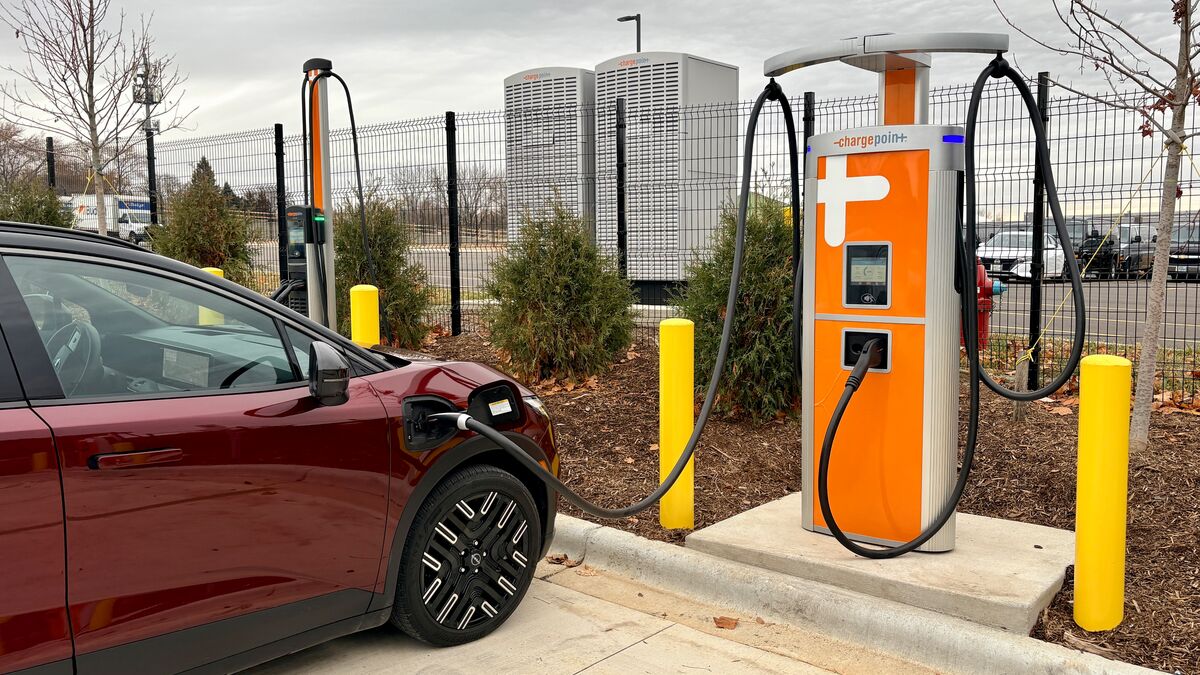
Charging infrastructure. China has roughly 2.7 million public EV charging connectors. Europe has over 800,000. The U.S. has approximately 230,000 public charging connectors total — and not all of those are fast chargers. On a per-vehicle basis, the gap is even more stark.
The Path Forward Isn’t Complicated — It Just Requires Commitment
The irony of the U.S. EV situation in late 2025 is that the technology is proven and the infrastructure is growing, but the policy signals are sending buyers mixed messages. Every major automaker — GM, Ford, Stellantis, Toyota, Hyundai — has committed to an EV future. Every one of them is now retooling that plan around a slower U.S. adoption curve.
The infrastructure investments being made by private companies in 2025 — 18,000+ new fast charging ports, retailer partnerships,automaker-owned networks — suggest that the building blocks are in place for a resurgence when policy stabilizes. The question is whether that stabilization comes before consumer enthusiasm fades.
For now, the global EV revolution is very much underway. The U.S. is just choosing to watch from the sidelines.
Amazon links for EV infrastructure and accessory readers: