The Best Electric Vehicles Under $35,000 in 2026: Your Buying Guide
With the federal EV tax credit landscape shifting, the sub-$35,000 EV segment has never been more important — or more complicated. Here's a clear-eyed guide to the best affordable electric vehicles available now and what's coming soon.
The $35,000 EV used to mean compromise: limited range, dated interiors, compromised charging speed. That was the story five years ago. In 2026, it means something genuinely different. A crop of well-engineered, genuinely practical electric vehicles now occupy this price point — and if you’re buying a new car in this range, going electric isn’t a sacrifice. It’s often the better choice.
Here’s where the affordable EV market stands as we close out 2025.
The Chevrolet Bolt EV — The Unlikely Legend Grows
The vehicle that proved affordable EVs could be genuinely good just got better. The 2026 Chevrolet Bolt EV starts at $32,995 and delivers an EPA-estimated 293 miles of range from its revised 77 kWh Ultium battery pack — a substantial jump from the previous generation’s 259 miles.
Chevrolet also addressed the charging speed issue that plagued earlier Bolts. The 2026 model supports DC fast charging at up to 150 kW, meaning a 10-80% charge takes around 25 minutes. It’s front-wheel drive only, but the Bolt’s compact dimensions and tight turning radius make it genuinely city-friendly in a way that most EVs at this price simply aren’t.
The trade-off is that it’s a hatchback, not an SUV. If you need the high seating position and cargo flexibility of a small crossover, look elsewhere. But if you want the most range per dollar in the segment, the Bolt is the benchmark.
Nissan Leaf — Aging Gracefully
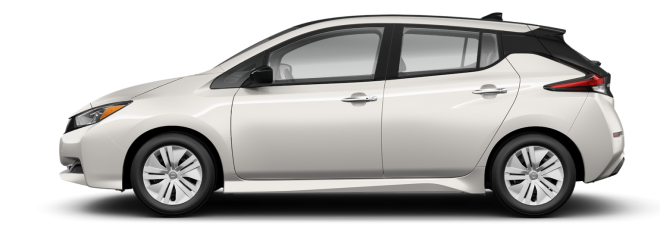
The Nissan Leaf was the first mass-market EV in America, and it’s still hanging around — now in its third generation. The 2026 Leaf starts at $31,485 and delivers an EPA-estimated 212 miles of range in base S trim. That’s not competitive with the Bolt or Equinox EV, but it’s honest transportation.
The Leaf uses the older CHAdeMO DC charging standard — a meaningful disadvantage in 2026, when virtually every other EV has moved to CCS or NACS. Public fast charging infrastructure for CHAdeMO is shrinking, and that’s a real concern for anyone who takes road trips seriously.
Where the Leaf still makes sense: as a second vehicle for a household that already has a combustion-powered car for longer trips. At $31,485, it’s the cheapest new EV on the market that doesn’t require a massive compromise in build quality or driving dynamics.
Chevrolet Equinox EV — The Value Play
The Equinox EV started at $44,995 when it launched in 2024. Chevrolet has been aggressive on pricing, and the 2026 Equinox EV now starts at $34,995 — making it one of the best-value propositions in the segment.
The Equinox EV is a compact crossover with 285 miles of EPA-estimated range, an interior that genuinely rivals some luxury brands, and GM’s Super Cruise hands-free driving assistance available as an option. The 150 kW DC fast charging support is competitive, and GM’s growing Ultium Charge 360 network gives owners access to over 134,000 chargers in North America.
The catch: the Equinox EV’s software has had a troubled launch, with owners reporting connectivity issues, app problems, and infotainment glitches. GM has issued several over-the-air updates, and the situation has improved, but it’s worth knowing before you sign. The other catch is dealer markups — not every Chevy dealer has embraced the EV transition with enthusiasm.
Toyota bZ4X — The Hybrid Brand’s EV Effort
Toyota built its reputation on hybrids, and the bZ4X has been a cautious first step into full EVs. The 2026 model received meaningful updates — increased battery capacity, improved charging performance, and a revised XLE trim that addresses many of the ergonomic quirks that plagued the launch version.
The bZ4X starts at $38,995, making it a stretch past the $35,000 threshold. But Toyota’s grip on the federal EV tax credit eligibility (via domestic assembly) means it still qualifies for the $3,750 credit, bringing effective out-of-pocket cost to approximately $35,245. Not quite in the target range, but close.
The bZ4X offers 252 miles of range in FWD configuration, with AWD adding a dual motor powertrain and slightly reduced range. Subaru’s Solterra is essentially the same vehicle under the skin, so if you’re cross-shopping, know that they’re mechanically identical.
Subaru Uncharted — The Rugged Alternative
Subaru’s first purpose-built EV is the Uncharted, a compact all-wheel-drive SUV starting at $34,995. It delivers 221 miles of range from a 72.8 kWh battery — not class-leading, but Subaru’s brand equity for outdoor-lifestyle buyers is real.
The Uncharted is the only vehicle in this segment that comes standard with all-wheel drive and genuine off-road capability — 8.3 inches of ground clearance, standard X-Mode traction management for low-grip surfaces, and a towing rating of 3,500 pounds. If your definition of “affordable EV” includes “can get to the trailhead,” the Uncharted is worth a look.
What’s Coming in 2026-2027
Several notable affordable EVs are on the near horizon:
Kia EV3 — Targeting a starting price around $35,000 with 300+ miles of range and 800V charging architecture. U.S. on-sale is targeted for late 2026.
Toyota C-HR BEV — A second Toyota BEV model arriving in 2026, positioned below the bZ4X in size and price.
Nissan Leaf replacement — A new-generation Leaf is confirmed for 2027, built on a new dedicated EV platform with significantly improved range and charging speed.
The Tax Credit Situation
This is where things get complicated. The federal EV tax credit for new vehicles has been subject to policy uncertainty throughout 2025-2026. As of October 2025, the credit remains available but with stricter qualification requirements — vehicles must meet domestic battery content and assembly thresholds to qualify.
Vehicles like the Chevrolet Bolt EV and Equinox EV (assembled in the U.S.) qualify for the full $7,500 credit in base trims. The Toyota bZ4X qualifies for $3,750. The Nissan Leaf, assembled in Tennessee, qualifies for $3,750. The Subaru Uncharted, assembled in Indiana, qualifies for the full credit.
Leased vehicles continue to qualify for the credit through the dealer, which is why some dealers are aggressively marketing EV leases even as the purchase credit landscape has tightened.
Bottom Line
If you’re buying new and your budget tops out around $35,000, the Chevrolet Bolt EV is the clear pick for most buyers — best range, best charging speed, and a price that undercuts the field. The Equinox EV is the better choice if you need a small crossover and can tolerate some software growing pains. The Subaru Uncharted is the answer if your priorities include capability beyond paved roads.
Whatever you choose, the sub-$35,000 EV is in a genuinely better place than it was even two years ago. The math on running costs — electricity versus gasoline, lower maintenance requirements — increasingly favors electric. The infrastructure has improved. And the vehicles themselves have gotten substantially better. This isn’t the era of compliance EVs anymore.
Get set up for EV ownership:
Note: Vehicle charging standards vary. Confirm your model’s port type before purchasing adapters — most 2025-2026 models from GM, Toyota, Hyundai, and Kia use NACS in North America. The Nissan Leaf uses CHAdeMO for DC fast charging.