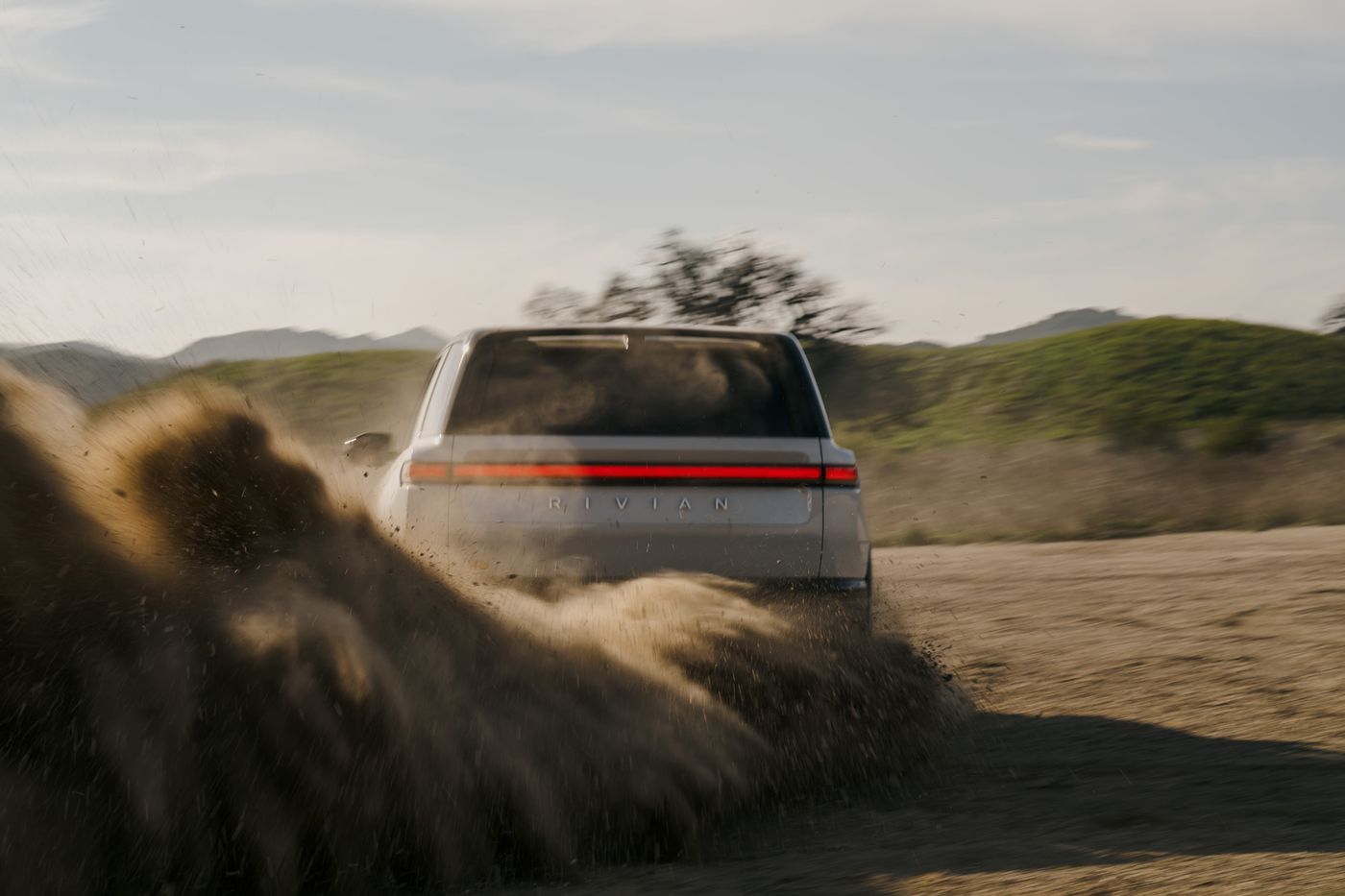
Rivian R2 Review: The EV You've Been Waiting For Is Here
Rivian's most accessible model yet brings the adventure-ready DNA of the R1T in a smaller, smarter, and surprisingly affordable package.
The Rivian R2 is the car that fixes almost everything people complained about with the original R1T and R1S — and adds a price tag that doesn’t require a trust fund. Starting at $47,700 before incentives, the R2 undercuts the R1S by nearly $30,000 while retaining much of what makes Rivian’s vehicles so compelling. We’ve spent a week with the dual-motor Performance trim and here’s the full picture.
First Impressions: Same Vibe, Smaller Footprint
The R2 is unmistakably a Rivian. The signature headlight bar, the athletic stance, the squatty-but-commanding proportions — it reads as adventure-ready in a way few other EVs manage. At 185.6 inches long, it’s about 16 inches shorter than the R1S, which makes it feel genuinely urban-friendly without sacrificing the upright visibility that makes Rivians feel so composed off-road.
The doors have a satisfying thunk. The flush door handles pop out smoothly. Little details — a bottle opener in the center console, a flashlight built into the driver’s door, gear-ready cargo hooks — remind you Rivian’s engineers actually use their own products.
Powertrain and Performance
The dual-motor all-wheel-drive R2 Performance puts out 665 lb-ft of torque and 550 horsepower. Let that number sink in. That’s more torque than a Hellcat. Floor the throttle and you get a measured 3.0-second 0-60 time that pins you back in a way that never gets old.
The single-motor R2 (rear-wheel drive, 410 hp, 310 lb-ft) is the value play at $47,700, with a 0-60 of 4.5 seconds — still brisk enough to embarrass most sports cars at a traffic light.
Both variants use the same 106 kWh LFP battery, good for an EPA-estimated 315 miles (RWD) and 290 miles (AWD Performance). Our test car averaged 2.9 miles per kWh over mixed driving, landing right in line with Rivian’s claims.
Charging
The R2 supports DC fast charging at up to 220 kW — not the fastest in class, but a meaningful upgrade over the R1 platform’s 200 kW peak. On a Electrify America session, we saw 20% to 80% in 26 minutes. At home on a Level 2 charger, expect a full overnight charge in roughly 11 hours.
On the Road
The R2’s suspension tuning is the real star. The standard four-corner air suspension (a $1,600 option on lower trims, standard on Performance) does something remarkable: it’s genuinely comfortable in the city and surprisingly capable on gravel. In Sport mode the R2 hunkers down and feels more sedan than SUV. In Conserve it softens to the point where you forget you’re driving a 5,200-pound brick.
The regenerative braking has two modes. One-pedal drive is excellent — it’s intuitive from the first push of the accelerator and brings the car to a complete stop smoothly. The blended braking mode feels more traditional but lacks the finesse of the one-pedal setup.
On the highway, the R2 is quiet. Wind noise is minimal, road noise is well suppressed, and the cabin feels isolated in a way that justifies Rivian’s luxury aspirations.
Interior: Less Flash, More Function
Inside, the R2 takes a different approach than the R1S. The 15.6-inch landscape touchscreen handles almost everything — there’s no driver’s instrument cluster, just a small 7-inch display for speed and vehicle info behind the steering wheel. It’s a bold move that works once you acclimate, though it takes a few days to stop glancing right for basic readouts.
The front seats are excellent: 8-way adjustable, heated and ventilated, with a massage function on the Performance trim. Rear seat legroom is generous for a vehicle this size, and the flat floor means a fifth passenger won’t complain. The rear cargo area swallows 34.1 cubic feet behind the second row; fold the seats and you get 68.4 cubic feet.
A particular highlight: the R2’s camp kitchen option, which slides into the deep frunk (yes, even with the smaller platform). It’s designed to hold a full dual-burner setup, and the frunk drains so you can rinse it out after a weekend in the dirt.
Technology
Rivian’s software has matured significantly. The R2 ships with the latest version of the Rivian OS, which adds native Apple CarPlay and Android Auto — something owners of first-gen R1s have been requesting for years. The highway assist system (Rivian’s version of hands-free adaptive cruise) works well on mapped highways and smoothly handles lane changes initiated by the driver.
Over-the-air updates are delivering new features regularly. In our week, the car received a small but meaningful calibration update that improved the automatic emergency braking response.
Should You Buy One?
The Rivian R2 faces stiff competition from the Tesla Model Y Long Range, the Hyundai Ioniq 5, and the forthcoming Chevrolet Blazer EV. But it wins on personality and practicality in equal measure. It’s the EV you buy when you want something that feels like it was designed by people who actually go outside.
At $47,700 to $57,700 depending on trim and options, the R2 isn’t cheap — but it’s roughly $20,000 less than a comparably equipped R1S, and it drives like a Rivian in every way that matters.
The R2 won’t be for everyone. If you need maximum range or third-row seating, look elsewhere. But for buyers who want an EV that feels genuinely different — built for actual adventure rather than just commuting — the R2 is one of the best options on the market right now.