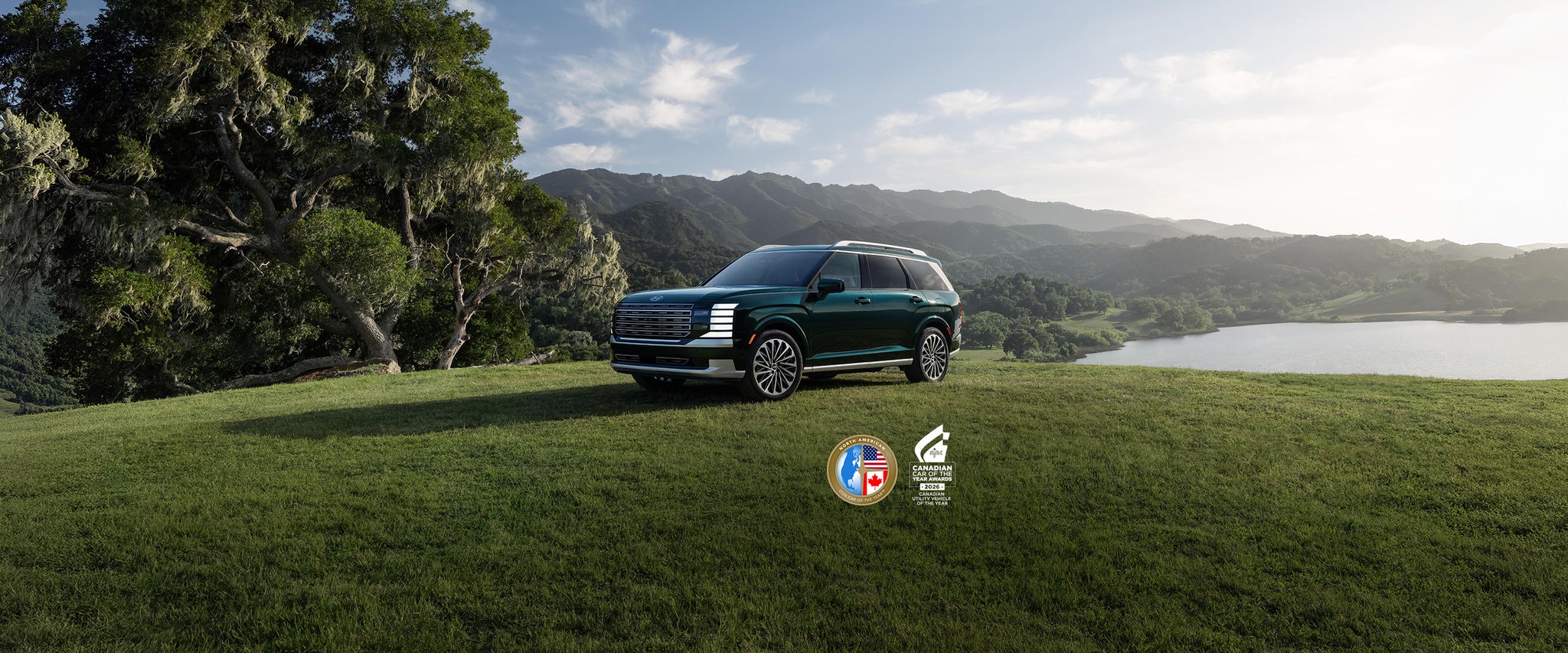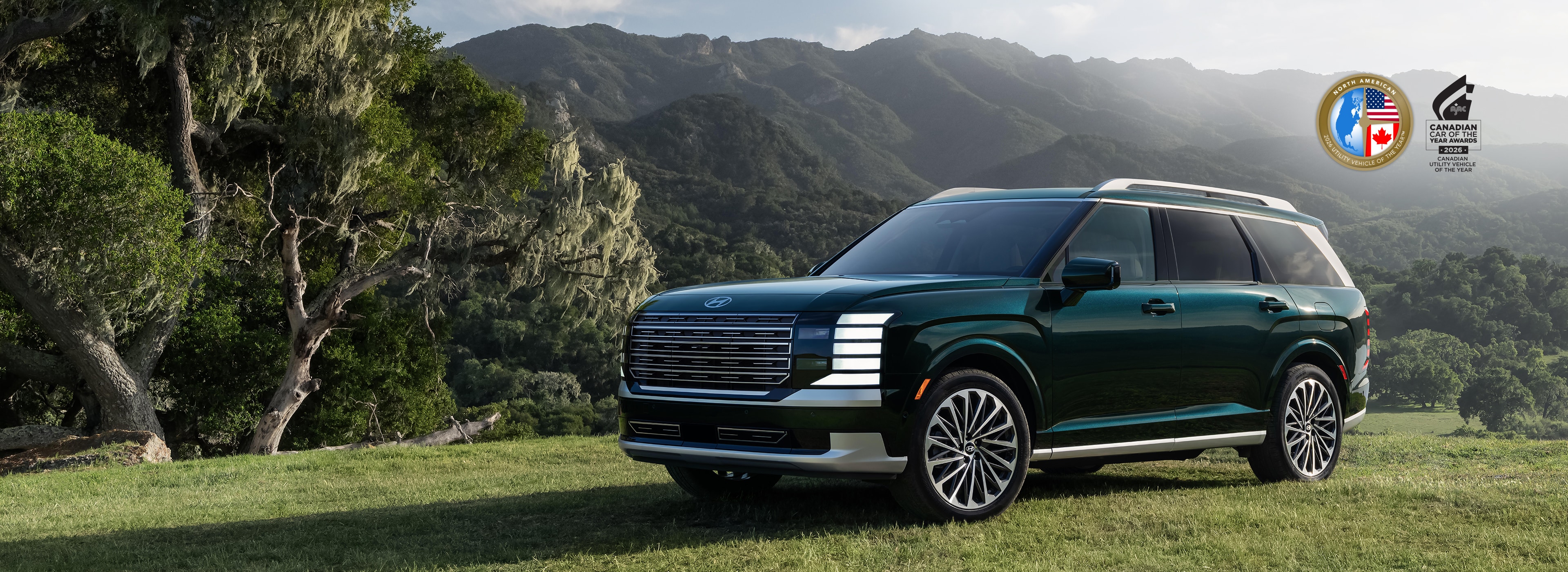
2026 Hyundai Palisade, Kia Telluride, and Ford Explorer three-row family SUV comparison

3-Row Family SUV Showdown: 2026 Kia Telluride vs Hyundai Palisade vs Ford Explorer

The 2026 Kia Telluride, Hyundai Palisade, and Ford Explorer represent the best three-row SUVs for Canadian families. We compare space, powertrains, tech, and value.

By Marcus Holloway

What’s New for 2026

Kia Telluride: The 2026 Telluride is largely a carryover ahead of an expected redesign in 2027. Changes include revised engine mapping for smoother acceleration and minor trim adjustments. The 3.8L V6 (291 hp, 262 lb-ft) carries over unchanged. A new Nightfall Edition trim adds blackout styling elements for buyers who want a more aggressive look.

Hyundai Palisade: The Palisade gets its most significant update yet for 2026. All-new styling inside and out, a revised interior with higher-quality materials, and — crucially — a new Hybrid variant. The Palisade Hybrid pairs a 1.6L turbocharged four-cylinder with an electric motor for a combined 244 hp. The redesign also brings an updated infotainment system and additional driver assistance features.

Ford Explorer: The 2026 Explorer adds the long-awaited Tremor trim — an off-road-focused variant with raised suspension, all-terrain tyres, and a front skid plate. The ST-Line and Platinum trims receive minor styling updates. The turbocharged 2.3L four-cylinder (300 hp) remains the volume engine.

Pricing and Specs

Kia Telluride $31,654 5,000 291
Hyundai Palisade $38,631 5,000 291
Ford Explorer $37,482 5,600 300

Powertrains

Kia Telluride: 3.8L GDI V6 — 291 hp, 262 lb-ft, 8-speed automatic, FWD standard / AWD available. No hybrid option. Towing: up to 5,000 lbs with the V6.

Hyundai Palisade: 3.5L GDI V6 — 291 hp, 262 lb-ft (gas), or the new 1.6L Turbo Hybrid — 244 hp combined. 8-speed automatic on gas, 6-speed automatic on hybrid. AWD standard on Hybrid, optional on gas. Towing: up to 5,000 lbs on gas, slightly less on hybrid.

Ford Explorer: Multiple powertrains — 2.3L turbocharged I4 (300 hp, 310 lb-ft), 3.3L V6 (295 hp), 3.0L EcoBoost V6 (400 hp in ST). 10-speed automatic. RWD standard on base, AWD standard on most Canadian trims. Towing: up to 5,000 lbs on the 2.3L, up to 5,600 lbs with the 3.0L EcoBoost.

Interior Space

Interior Space Comparison
SeatingThird Row LegroomCargo Behind 3rd
Kia Telluride 8 886 mm 595 L
Hyundai Palisade 7/8 905 mm 628 L
Ford Explorer 6/7 930 mm 515 L

The Palisade has the most spacious third row in the class, and the redesigned 2026 interior adds captain’s chairs with a centre console between the second row on upper trims. The Telluride is competitive — the third row is genuinely usable for adults on shorter trips. The Explorer’s third row is the tightest, best suited for children.

All three SUVs have fold-flat second and third rows, but the Palisade’s rear-seat entertainment system option (dual 10.2-inch screens) gives it an edge for families with restless kids on long road trips.

Technology

The redesigned 2026 Palisade leads here with a 12.3-inch curved display integrating the instrument cluster and central touchscreen. Hyundai’s latest infotainment supports wireless Apple CarPlay and Android Auto, and the available Bose premium audio system is excellent. The Palisade Hybrid also adds a 100W AC inverter (a genuine road-trip asset).

The Telluride uses a 10.25-inch central touchscreen with similar smartphone integration. Its UVO Connect system has improved over previous years but still lags the Palisade’s newer hardware.

The Explorer’s SYNC 4 system on its 10.1-inch touchscreen (12.3-inch on Platinum) is functional and supports wireless CarPlay and Android Auto. Ford’s BlueCruise hands-free driving assist is available — a genuine advantage over the Korean rivals for highway-heavy commuters.

All-Wheel Drive and Winter Capability

For Canadian winters, all three deserve credit. The Telluride and Palisade both offer a locking centre differential on their AWD systems — useful for slippery conditions beyond what a standard open-differential AWD can handle. The Explorer’s Intelligent 4WD with terrain management (on the ST-Line and above) is the most sophisticated system of the three for mixed conditions, and the available all-terrain tyres on the new Tremor trim extend its season.

The Verdict

Best Value: Kia Telluride — The lowest starting price, generous standard features, and a strong powertrain warranty (5 years/100,000 km) make it the best value in the segment.

Best Third Row and New Hybrid: Hyundai Palisade — The redesigned 2026 interior is genuinely upscale, the Hybrid is the most efficient option in the segment, and the third row is the most adult-friendly.

Best Performance and Highway Assist: Ford Explorer — The EcoBoost V6 (400 hp) in the ST trim is the most powerful option here, and BlueCruise hands-free driving is a genuine convenience for long-distance driving.

Best for Families Needing Towing: Ford Explorer — The highest tow rating in the group (5,600 lbs with the 3.0L EcoBoost) and the most power under load.

If pure family-hauling value is the priority, the Telluride is hard to beat. If interior quality and efficiency matter more, the redesigned Palisade Hybrid is the pick. And if you’re hauling a trailer through Muskoka in winter, the Explorer with EcoBoost and 4WD is your best tool.


Motorlinks covers the vehicles Canadians actually buy. See our best EVs and SUVs for first-time buyers for more options.

We think you might be interested in…

Armor All 2-in-1 Foam Cannon Kit — Heavy-duty foam cannon with wash and wax formula for a touchless pre-wash. Keeps three-row SUVs spotless through muddy boots and road trips. (Amazon)

Adam’s Advanced Graphene Ceramic Coating — Professional-grade graphene ceramic coating for long-lasting paint protection. Hydrophobic and UV-resistant. (Amazon)

VIOFO A119M Pro 4K Dash Cam — 4K HDR dash cam with 4.6-star rating. Captures sharp video day and night — essential for family road trips. (Amazon)

We may earn a small commission from qualifying purchases.