The True Cost of Charging at Home vs. Public Chargers (And Why It Matters)
With public fast charging significantly more expensive than home charging, we break down the real cost of fueling an EV in different scenarios and what it means for the ownership math.
One of the most persistent arguments in favor of electric vehicles is the lower cost of “fueling” compared to gasoline. With average U.S. residential electricity rates around 14 cents per kWh and average gasoline prices hovering around $3.40 per gallon in late 2025, the math favors EVs — but only if you do most of your charging at home. Once you factor in public fast charging, the advantage narrows considerably.
The Home Charging Math
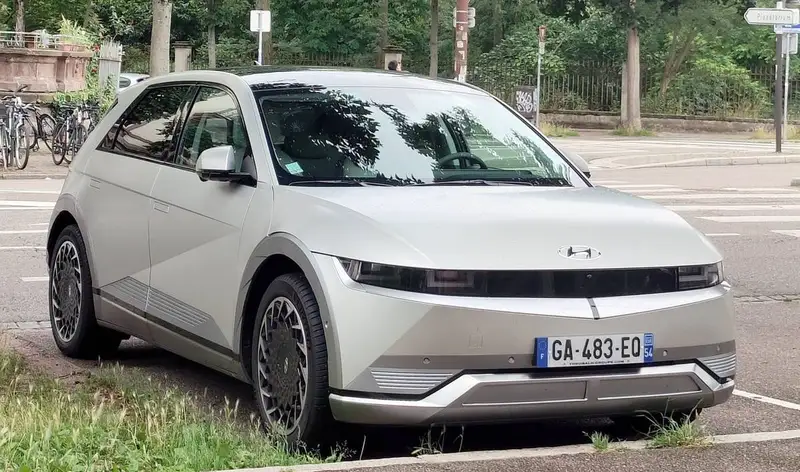
A typical mid-size EV like the Hyundai IONIQ 5 or Ford Mustang Mach-E consumes approximately 28-32 kWh per 100 miles. At a residential electricity rate of 14 cents per kWh, that works out to roughly $4.20 per 100 miles — or the equivalent of about 48 MPG at $3.40/gallon.
If you drive 12,000 miles per year, your annual home charging cost at average rates comes to approximately $500-$560 in electricity. Compare that to a comparable gas-powered SUV averaging 24 MPG at $3.40/gallon over the same distance: $1,700 annually. The savings are real — roughly $1,200 per year, or $100 per month.
But that’s an idealized scenario. Most EV owners charge at home using a Level 1 (120V) or Level 2 (240V) home charger. Level 1 adds about 3-5 miles of range per hour — fine for plug-in hybrids or overnight top-ups, but insufficient for most full BEVs with 250+ mile batteries. Level 2, which requires a 240V circuit (the same type used by electric dryers or ranges), delivers 25-35 miles of range per hour. A full 0-100 percent charge on a 75 kWh battery takes 6-8 hours on Level 2.
The installation cost for a Level 2 home charger, including electrical work, typically runs $500-$2,000 depending on panel capacity and distance from the breaker box. Federal tax credits and utility rebates can offset some of this — many utilities offer $200-$500 rebates for Level 2 charger installation. But the upfront cost is real, particularly for apartment dwellers and renters who can’t install private chargers.
The Public Fast Charging Reality
Public DC fast charging tells a very different story. According to DOE data from late 2025, the average cost of DC fast charging in the U.S. is approximately 43-48 cents per kWh — roughly three to four times residential rates. At that price, the IONIQ 5 or Mach-E costs $12-$15 per 100 miles on public fast chargers — about the same as a 24 MPG vehicle at $3.40/gallon.
The reason: fast charging is expensive to build, operate, and maintain. A single 150 kW DC fast charger can cost $100,000-$250,000 to install. The electricity demand requires dedicated utility service, often with demand charges that can add hundreds of dollars per month regardless of how much electricity is actually dispensed. These costs are passed on to drivers.
Some charging networks charge per-minute rather than per-kWh, which can be even more punishing for vehicles with limited charging speeds. Plugging a 150 kW-capable vehicle into a 50 kW charger (still labeled “fast”) and paying by the minute is a particularly bad deal.
Tesla’s Supercharger network has historically charged less than third-party networks — averaging around 28-35 cents per kWh in many markets — though Tesla has raised prices in 2025. Electrify America’s pricing has been more volatile, ranging from 36 to 55 cents per kWh depending on membership status and location.
The Hybrid Approach
The reality for most EV owners is a mix: approximately 80 percent of charging at home or work, and 20 percent on the road. This keeps the annual fuel cost in the $600-$800 range for most drivers — still meaningfully cheaper than gasoline, but not the dramatic savings often advertised in EV marketing.
The exception is apartment and condo dwellers. Roughly 35 percent of Americans live in multi-family housing without access to private garage charging. For these owners, public charging is the only option, and the economics are materially worse. Some cities and states have begun requiring new apartment construction to include EV-ready parking spaces, but the installed base of apartment charging remains critically limited.
The Bottom Line
EV home charging is genuinely cheaper than gasoline — at average U.S. residential electricity rates. The advertised “fill up for $10” talking point is real, but only if you have a place to charge overnight. For homeowners with Level 2 access, the savings are substantial and compound over years of ownership. For everyone else, the savings are real but more modest.
Motorlinks publishes regular EV cost-of-ownership analyses. Bookmark our EV ownership guide for ongoing updates.